






Manila Bulletin
 Philippines
National
Cyclone-enhanced 'habagat' rainfall makes up a third of total rain during Philippines' southwest monsoon season — study
Philippines
National
Cyclone-enhanced 'habagat' rainfall makes up a third of total rain during Philippines' southwest monsoon season — study
Philippines
National
Cyclone-enhanced 'habagat' rainfall makes up a third of total rain during Philippines' southwest monsoon season — study
Cyclone-enhanced 'habagat' rainfall makes up a third of total rain during Philippines' southwest monsoon season — study
Published Jul 18, 2025 03:28 pm


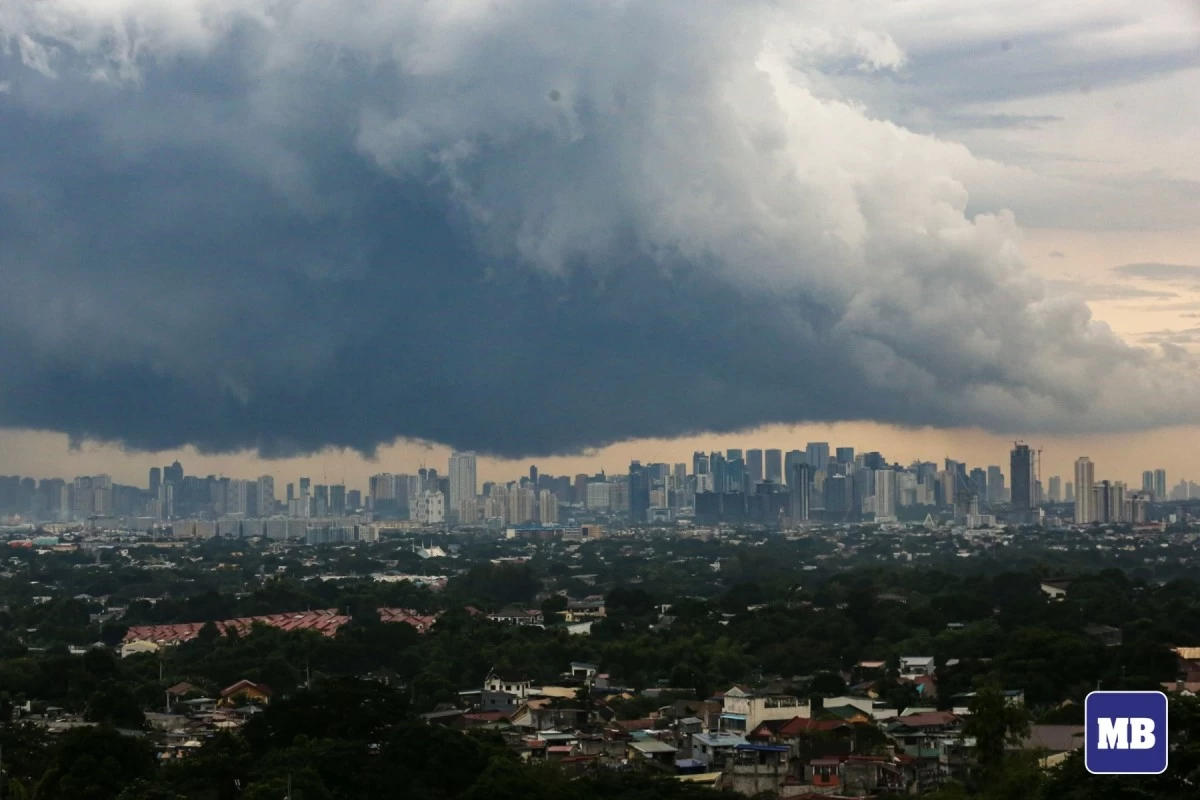
(SANTI SAN JUAN/MANILA BULLETIN FILE PHOTO)
While the southwest monsoon, or “habagat,” remains the main source of rain from July to September, scientists say the “indirect” effect of distant tropical cyclones accounts for about a third of total rainfall during this season.
Researchers from Ateneo de Manila University (AdMU); Manila Observatory; Philippine Atmospheric, Geophysical and Astronomical Services Administration; and Japanese partner institutions analyzed 62 years of weather data and found that tropical cyclones hundreds of kilometers away can strengthen the habagat, resulting in heavy rains, even without making landfall.
On average, 33.1 percent of rainfall during the habagat season is attributed to this “indirect” effect, more than twice the 15.4 percent caused by tropical cyclones that directly hit the country.
The remaining 51.5 percent comes from the monsoon itself, without tropical cyclone influence.
Cyclone origin matters
The study pointed out that the cyclone’s genesis point, or location where a tropical cyclone forms, also affects its potential to enhance rainfall.
Tropical cyclones that form farther from the Philippines tend to move northeast of Luzon, where they more effectively intensify monsoon winds.
In contrast, cyclones that form closer often take a shorter westward track and have a weaker effect.
“During the peak months of the southwest monsoon season, from July to September, the prevailing winds over the Philippines are from the southwest. In itself, these moisture-laden southwesterly winds can still produce isolated rainfall events over land,” explained Dr. Lyndon Mark Olaguera, assistant professor at AdMU’s Department of Physics and climate scientist at the Manila Observatory.
“When a tropical cyclone passes to the northeast of the Philippines, these southwesterly winds intensify since the tropical cyclone can pull these winds as a result of its counterclockwise circulation. Stronger southwesterly winds usually mean more intense rainfall over land,” he said.
Most at risk
The researchers cited Typhoon Gaemi (locally known as Super Typhoon Carina) in July 2024 as an example of a tropical cyclone that stayed well away from the Philippine landmass but significantly enhanced the habagat.
During that event, Quezon City received nearly a month’s worth of rain within 24 hours, resulting in floods that killed 48 people and caused over P8 billion in damages.
Olaguera said the western coast of Luzon is particularly vulnerable to indirect cyclone rains.
“This is because winds from the enhanced southwest monsoon are from the southwest; therefore, the western coast is the region that gets affected the most,” he explained.
“Additionally, the high mountains near the western coast of Luzon, like the Cordillera Mountains and the Zambales mountain range, force these moist, southwesterly winds upwards as they flow over the mountains. When these winds are forced upwards, they cool and condense, thus producing rainfall,” he said.
Forecasting challenges
While direct landfalling cyclones remain deadlier, Olaguera emphasized the need to pay closer attention to the impacts of cyclone-enhanced monsoon events.
“More importance should be given to tropical cyclones that enhance the southwest monsoon since the rainfall experienced during these indirect events is comparable to the rainfall experienced during direct tropical cyclone events,” he said.
He noted that indirect effects are harder to predict, as not all distant cyclones enhance the monsoon enough to cause extreme rainfall.
“More research should be done in order to increase the forecast accuracy of these enhanced southwest monsoon events,” he added.
Recommendations
To improve early warning systems, Olaguera recommended expanding the Philippine Area of Responsibility (PAR) westward and northward to include more tropical cyclones that can affect the country’s weather even from afar.
“Extending the northern border to 30°N will include regions where tropical cyclones are still able to produce rainfall over the Philippines. An example is Typhoon Haikui (2012), since it produced extreme rainfall over the Philippines despite being around the latitudes of 26-28°N,” he said.
He also cited Typhoon Danas (2025), which briefly exited the PAR but still caused rainfall over Luzon while located outside the current monitoring zone.
He also recommended the monitoring of moisture flows originating from as far as west, such as the Arabian Sea or Bay of Bengal, which could help in the forecasting of enhanced southwest monsoon events.