







Young lifesavers: Marikina students get CPR training
Published Jul 17, 2025 01:26 pm


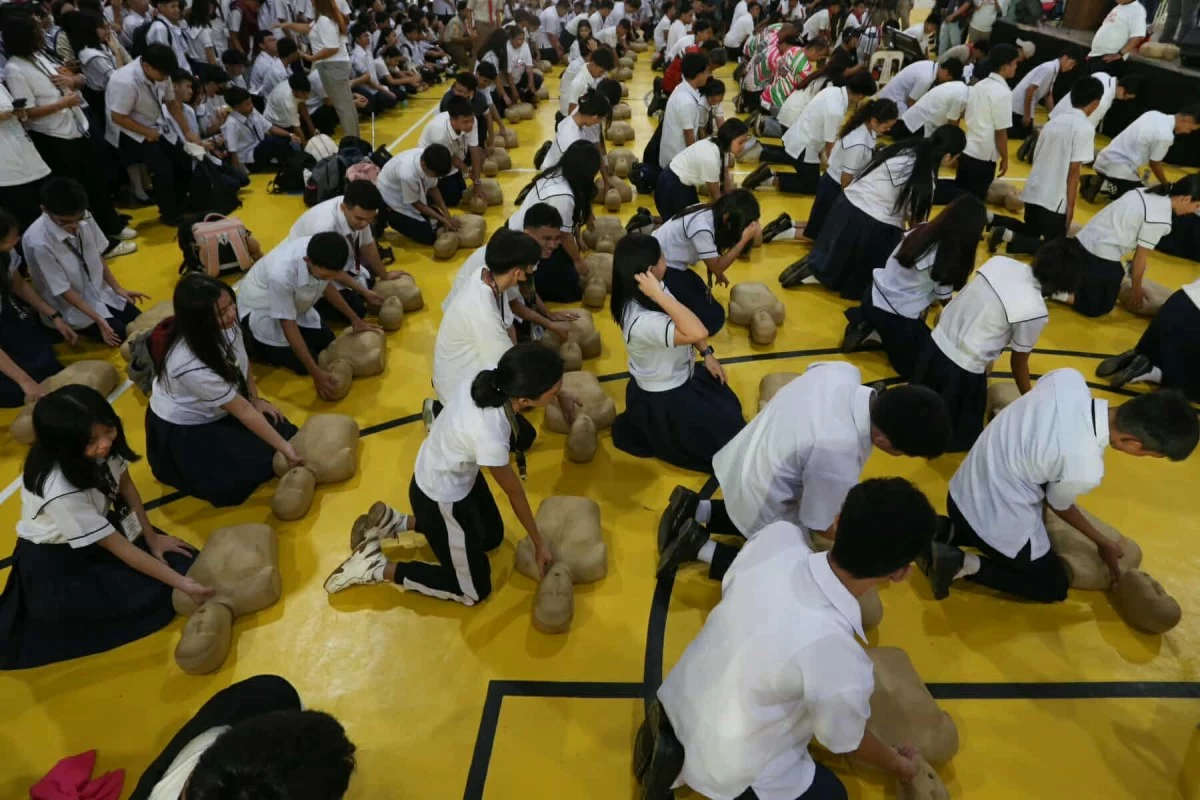
Students of Nangka High School in Marikina City took part in the 2nd National CPR Day and Nationwide Mass CPR Training organized by the Philippine Heart Association, in partnership with the Marikina City government, on Thursday, July 17, 2025. The National Cardiopulmonary Resuscitation (CPR) Day is observed every July 17, as mandated by Republic Act No. 10871, also known as the Samboy Lim Law. (Photos by Santi San Juan)
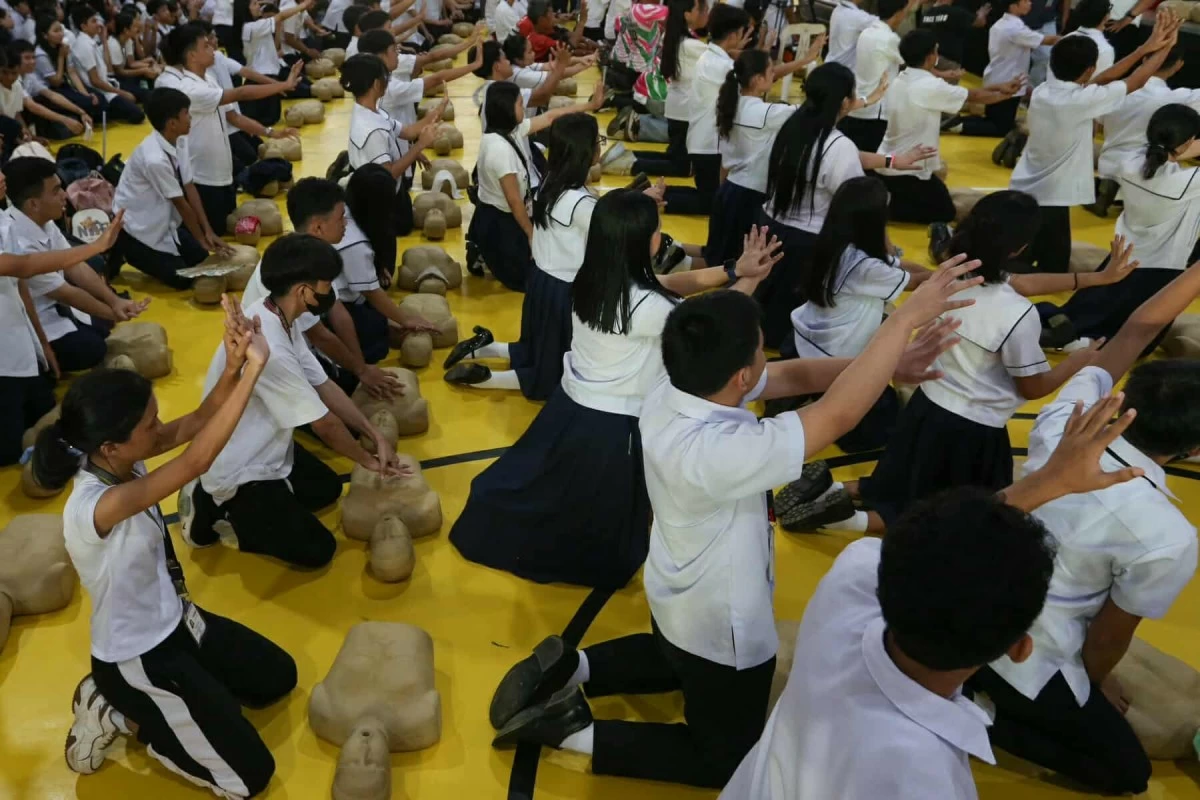
Students of Nangka High School in Marikina City took part in the 2nd National CPR Day and Nationwide Mass CPR Training organized by the Philippine Heart Association, in partnership with the Marikina City government, on Thursday, July 17, 2025. The National Cardiopulmonary Resuscitation (CPR) Day is observed every July 17, as mandated by Republic Act No. 10871, also known as the Samboy Lim Law. (Photos by Santi San Juan)
The saying “age does not matter” also applies to saving lives, as even young students can be trained to respond to cardiac emergencies through cardiopulmonary resuscitation (CPR), a lifesaving skill that can be used anytime, anywhere, on anyone.
This is what the Philippine Heart Association (PHA) hopes to achieve: to produce more savvy youth who will become the next generation of CPR champions and advocates of lifesaving preparedness, as it partnered with Nangka High School in Marikina City as the central site on Thursday, July 17, to mark this year’s National CPR Day celebration.
Around 300 students from Grade 7 to Grade 10, senior high school, and teachers participated in the CPR training, where they were taught the proper way of performing chest compressions.
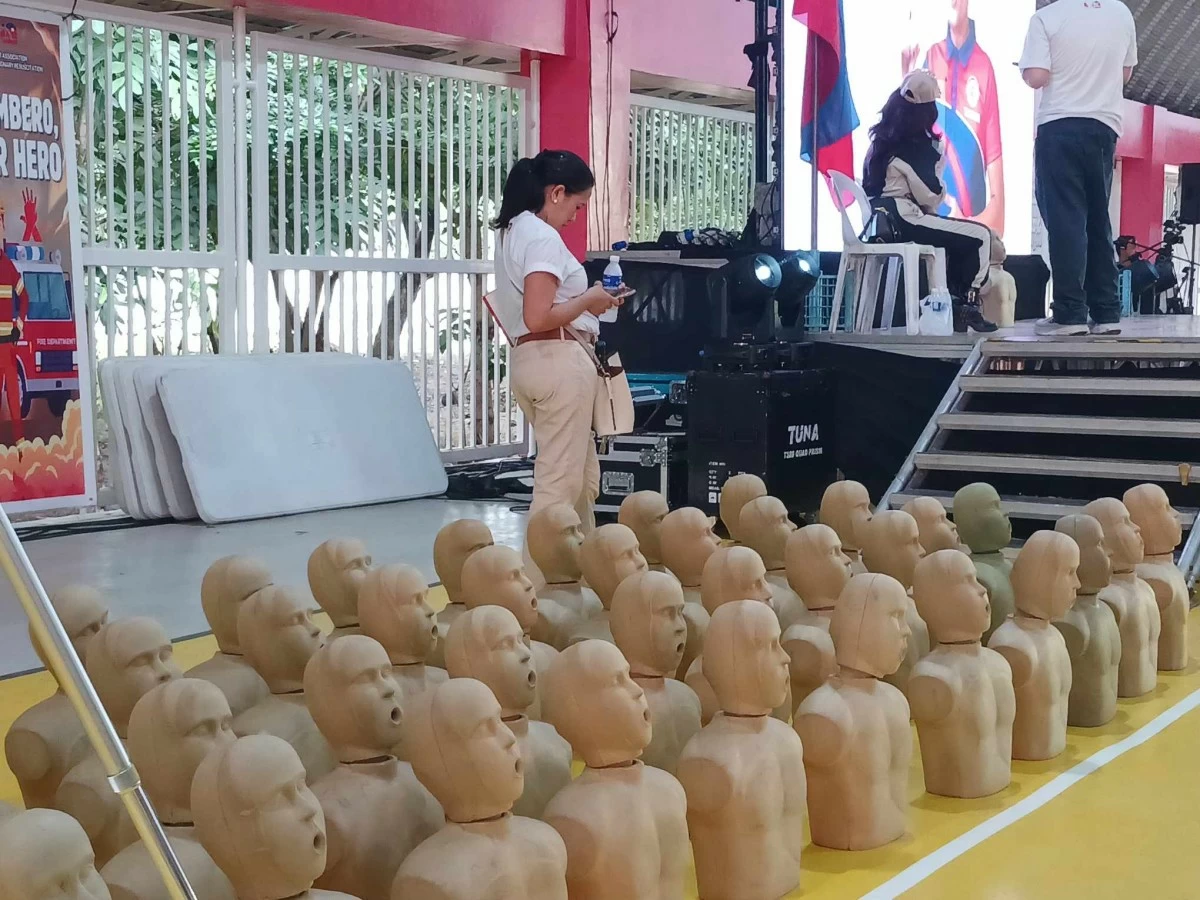
Photos by Richielyn Canlas
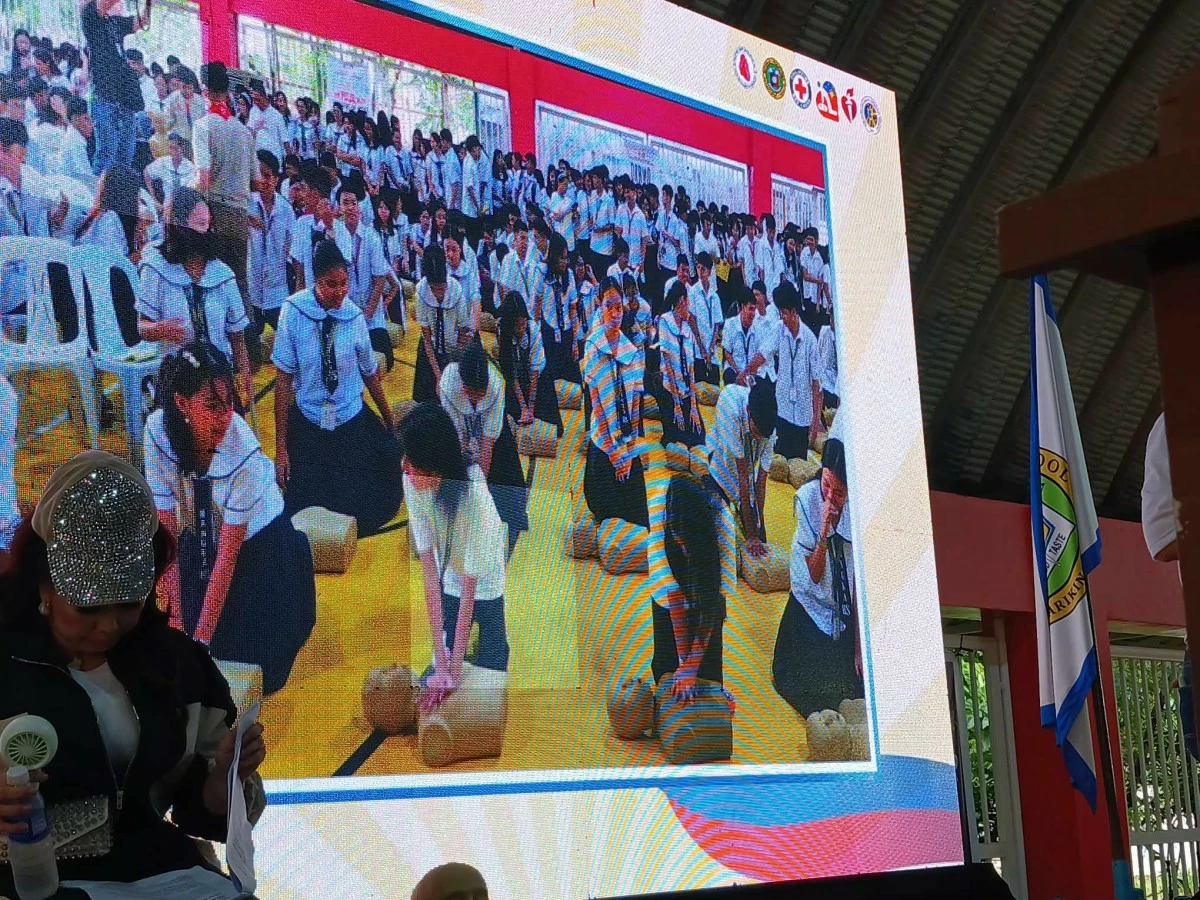
Photos by Richielyn Canlas
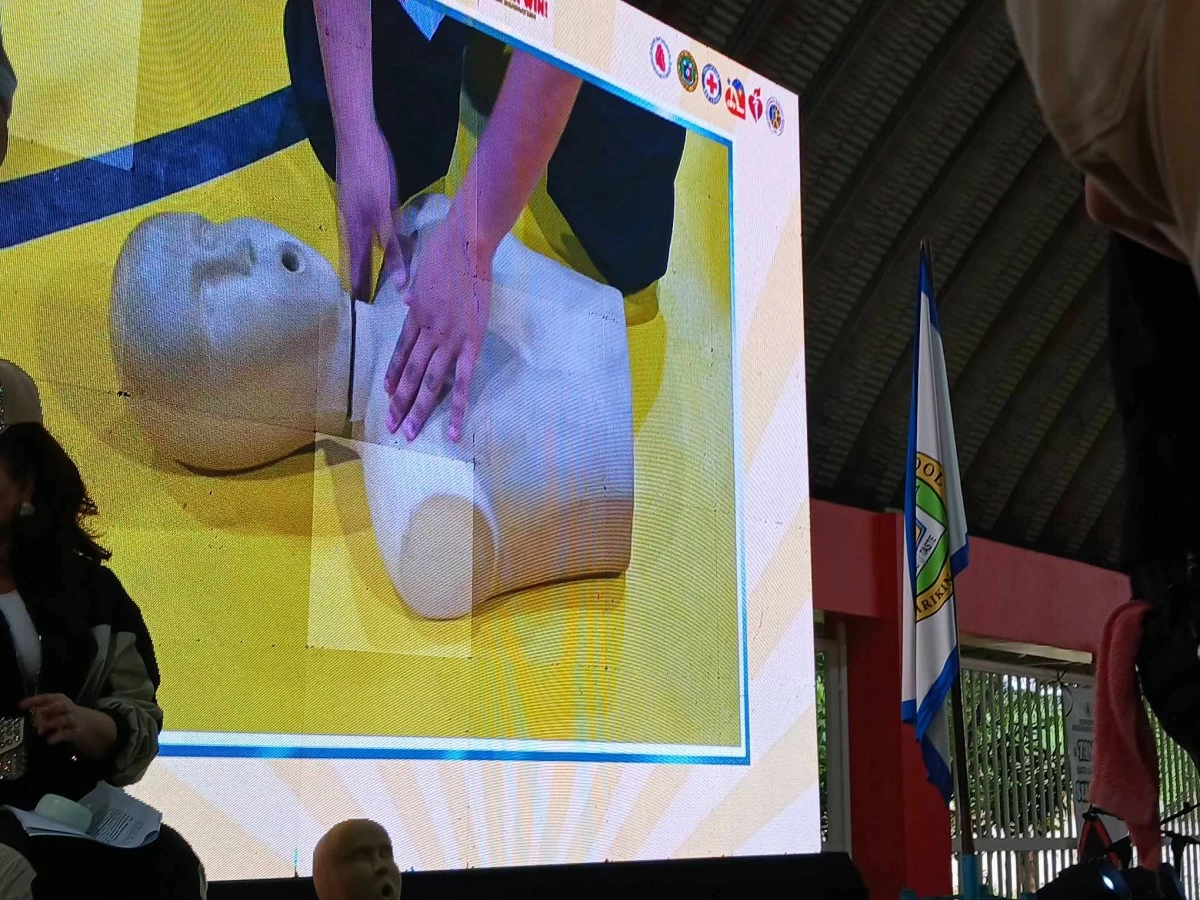
Photos by Richielyn Canlas
They also learned the importance of automated external defibrillators (AEDs) being accessible in public places, which can significantly increase the survival rate of cardiac arrest victims when used alongside CPR.
PHA Council on CPR Chair Dr. Don Robespierre “HeartRob” Reyes said, “Globally, out of 10 cardiac arrest cases, most likely, only one will survive due to the following factors: lack of emergency responders and absence of an emergency medical system, most especially in developing countries like the Philippines.”
The PHA also said that students can share their CPR knowledge with their families, while one adult can take the lead as the household’s trained responder during emergencies.
Related story: Baguio student saves elderly man's life
It also highlighted other priority groups such as teachers, firefighters, policemen, barangay health workers, and barangay tanods, who are often the first to witness emergencies and should be among the first to be trained as lifesavers.
The PHA observes National CPR Day every July 17, following President Ferdinand Marcos Jr.’s declaration in March 2024, institutionalizing the date as an annual nationwide observance. The CPR Act lapsed into law in 2016.
Calls for implementation of CPR Act
As the country marks a decade since the launch of the CPR-Ready Philippines Campaign (CPR-Ready PH), the PHA called on the national and local governments to implement the CPR Act, or Republic Act 10871, which mandates all public and private schools to incorporate age-appropriate basic life support training in the high school curriculum.
It added that all Filipinos should equip themselves with lifesaving skills and become first responders in emergencies.
The campaign, which began in 2015 with the Department of Health (DOH) as its pioneering ally, is now marking its 10th year of bringing CPR education to various settings, from cities and towns to popular travel destinations such as resorts and hotels, schools, military camps, public parks, the Senate of the Philippines, and media offices, among others.
PHA will also reprise “Usapang Puso sa Puso (heart-to-heart talk),” a nationwide simultaneous broadcast featuring live field reports from institutions, local government units, and recognized training providers, spotlighting on-the-ground CPR efforts from Luzon to Mindanao.
In addition, it said that a key factor in CPR-ReadyPH’s growth has been its collaboration with prominent figures in media and entertainment, whose public influence helped raise awareness for the advocacy, like actor and politician Richard Gomez, who has served as CPR-ReadyPH ambassador since 2017 and played an active role in promoting the campaign.
From 2017 to 2018, he led efforts to make Ormoc City, where he was then mayor, become CPR-ready and officially earned its CPR-ready status in 2019.
As a congressman, Gomez continues to support CPR advocacy, just like Senator Lito Lapid. The two lawmakers filed a bill that pushes for the AED Bill, wherein AEDs should be placed in public areas to ensure a faster response during cardiac emergencies, especially in places where many people gather, as the immediate use of it alongside CPR can significantly increase a person's chances of survival.
“More progress, more work ahead in the past 10 years, CPR-ReadyPH has achieved impressive gains from mass CPR training in public and private places and schools, even though the CPR Act has yet to be implemented, from legislative advocacy to celebrity engagement,” PHA said.
However, despite the progress, it said that many Filipinos still do not know how to perform CPR.
“CPR and AEDs should not be considered as privileges but part of the Philippine culture of preparedness, which includes putting the Emergency Medical System in place,” it explained.