






Manila Bulletin
 Business
The Economy
North-South commuter railway's ₱229-billion operations project gets go-ahead
Business
The Economy
North-South commuter railway's ₱229-billion operations project gets go-ahead
Business
The Economy
North-South commuter railway's ₱229-billion operations project gets go-ahead
North-South commuter railway's ₱229-billion operations project gets go-ahead
By Derco Rosal
Published Jul 16, 2025 01:32 pm


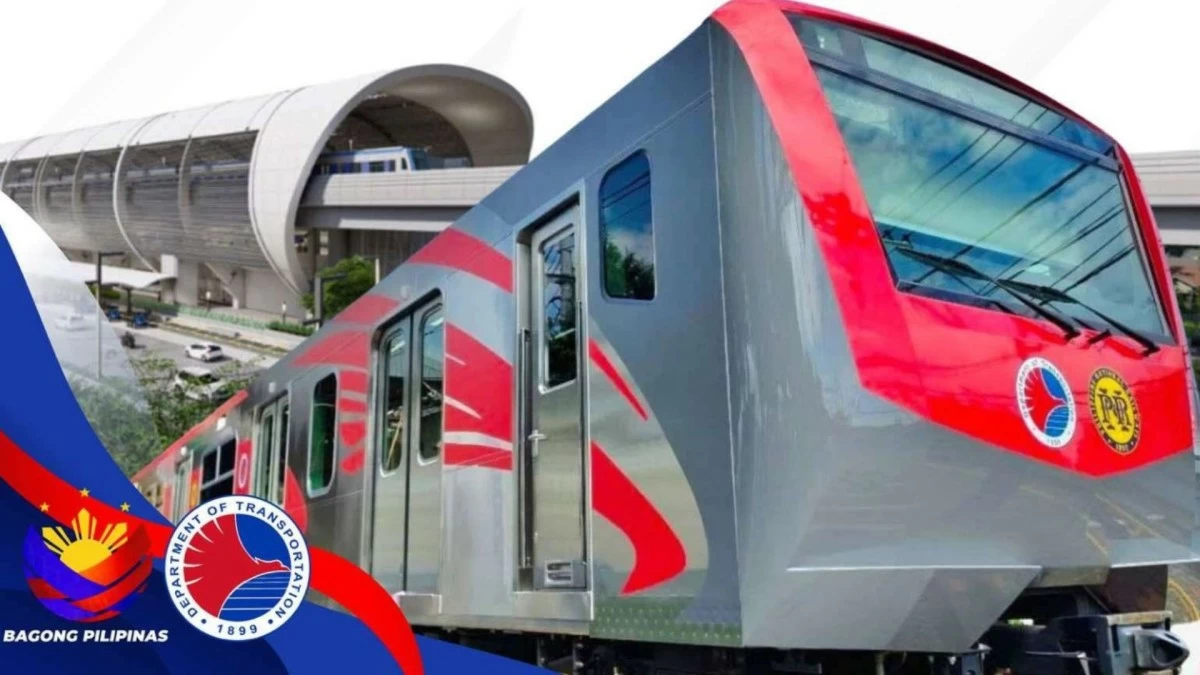
North-South Commuter Railway (NSCR)
The Economy and Development (ED) Council has approved the North-South Commuter Railway (NSCR) operations and maintenance project, valued at around ₱229.3 billion, during its second meeting on Tuesday, July 15.
Department of Economy, Planning, and Development (DEPDev) Secretary Arsenio M. Balisacan said the project is “a major step toward faster, greener, and more connected transportation for Filipinos as the system will also be integrated with the Metro Manila Subway.”
He added that this will also promote sustainable and commercial development along its corridors.
The approval of the NSCR operations and maintenance project is under a public-private partnership (PPP) arrangement.
“This decision marks a major milestone in the government’s efforts to modernize public transportation and improve regional connectivity across Luzon,” DEPDev said in a statement on Wednesday, July 16.
The NSCR is a 147-kilometer elevated railway line that will ease travel across three regions: Central Luzon, Metro Manila, and Cavite, Laguna, Batangas, Rizal, and Quezon (collectively known as CALABARZON)
“With construction already in advanced stages along the alignment, the project is expected to benefit as many as 800,000 passengers daily in its opening year, eventually serving up to one million commuters,” the DEPDev said.
The railway project will have 35 stations, comprising 31 elevated, three at-grade, and one underground. Depots in Clark, Valenzuela, and Calamba will be placed to facilitate maintenance and operations.
The NSCR will operate two types of train services: commuter trains, with 51 trainsets that can carry up to 2,242 passengers each, and Limited Express trains, with seven trainsets that can accommodate 386 passengers each.
These train services aim to improve travel speeds, operating at 120 to 130 kilometers per hour—much faster than the current 20 to 40 kilometers per hour.
For instance, travel time from Clark to Calamba will be reduced to about three hours from the usual four via the commuter service, while the limited express will reduce the Clark to Alabang trip to around two hours.
DEPDep said pre-operations for the project will run from March 2026 to July 2027. The concession period for Phase 1 partial operations—from Clark International Airport (CIA) to Valenzuela, covering 13 stations—will start in December 2027 and last until September 2028.
Meanwhile, the concession period for the partial operations of Phase 2—which extends the line to Nichols and adds a segment from Alabang to Calamba, covering a total of 32 stations—will run from October 2028 to December 2031. Full operations are set to begin in January 2032.
Also, during the ED Council meeting, chaired by President Ferdinand R. Marcos Jr., midterm updates of the Philippine Development Plan (PDP) 2023-2028 were also tackled.
According to DEPDev, the midterm update of the plan “refines and recalibrates the country’s key policies, strategies, programs, and legislative priorities to ensure alignment with evolving economic conditions and development goals.”
DEPDev led the midterm update of the plan to review progress and revise targets. DEPDev is gathering feedback from various agencies to finalize the updated plan, which is set for public release by the end of July 2025.