ADVERTISEMENT

KCC PH invites public to discover Korean elements behind hit film 'Kpop Demon Hunters'

Published Jul 16, 2025 10:26 am  |  Updated Jul 16, 2025 02:09 pm
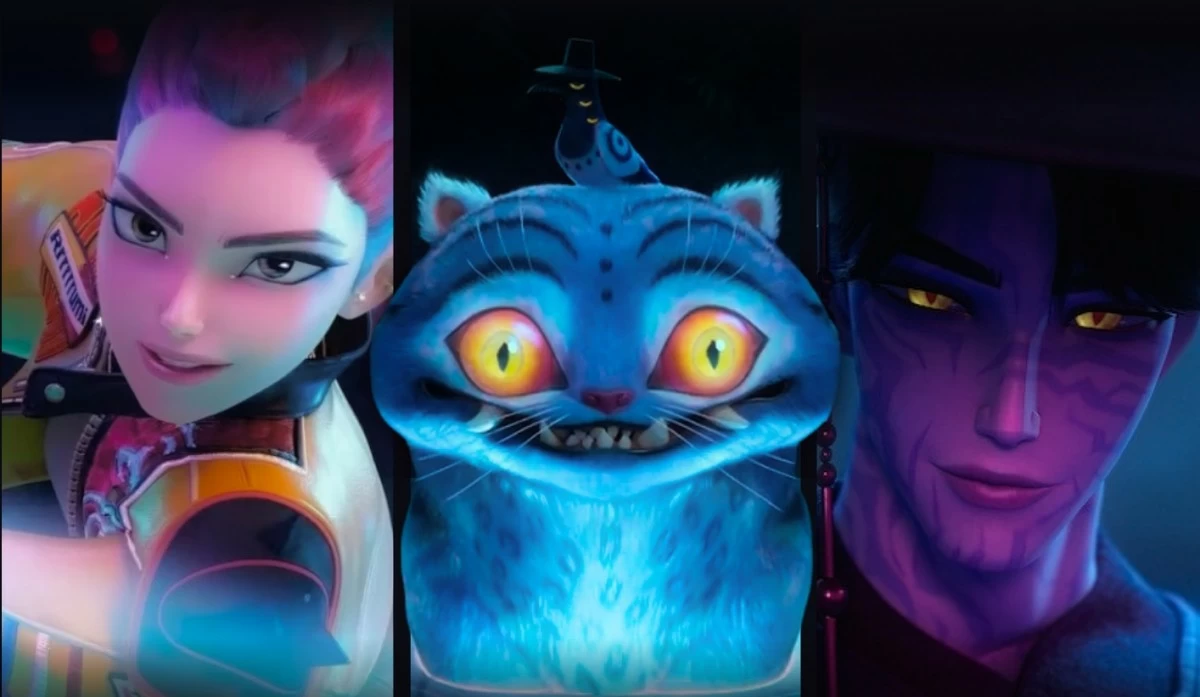
“KPop Demon Hunters" (Netflix)
The Korean Cultural Center (KCC) in the Philippines is inviting audiences to discover the Korean cultural symbols in the hit Netflix animated film “KPop Demon Hunters.”
From July 18 to Aug. 4, KCC will host a four‑part program—”Step Into the World of K‑Pop Demon Hunters”—that invites fans to trace the movie’s visual icons back to their cultural roots.
“When viewers fall in love with Sussie & Derpy, marvel at the sleek black ‘gat,’ or spot the ‘maedeup’ bracelet on screen, they’re actually looking at centuries‑old symbols of Korean life,” said Kim Myeongjin, KCC Philippines director. “Our role is to open the door from pop culture to cultural appreciation, so the Filipino audience can experience the stories, skills, and values woven into these elements.”
The visual world of “K-Pop Demon Hunters” draws heavily from Korean folklore and traditional aesthetics.
Sussie and Derpy, the magpie and tiger duo that have captured viewers’ hearts, are modern interpretations of an iconic Korean painting.
The mysterious “gat,” worn by the film’s demon idols, has long stood as a symbol of intellect and dignity during the Joseon dynasty in Korea.
The hand-knotted “maedeup” bracelet shown in a key emotional scene is rooted in centuries of traditional Korean knots, which were worn and decorated people and places of Korea. .
The three elements serve as the cultural foundation for KCC’s four-part public event series.
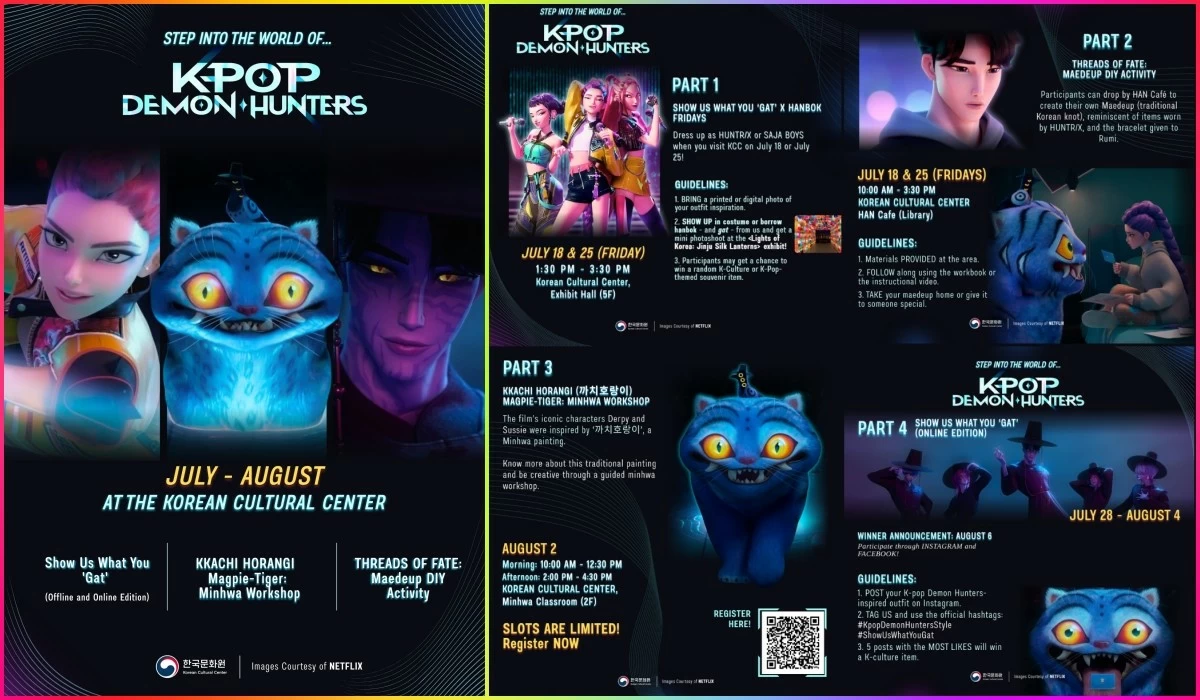
EVENT LINEUP: “STEP INTO THE WORLD OF K-POP DEMON HUNTERS”
Part I. Show Us What You Gat × Hanbok Fridays
Date and venue: July 18 and  25, 1:30–3:30 p.m, 5F Exhibition Hall, KCC
Experience
Come dressed as your favorite “K‑Pop Demon Hunters” character or dress in the traditional hanbok and “gat” - provided by KCC. Plus, a mini photoshoot at the “Lights of Korea: Jinju Silk Lanterns” exhibit awaits participants.
Cultural Focus
The “gat” is an exceptional handicraft item made from different materials like bamboo and horsehair tail which are woven together to create a semi-transparent hat. The hat was tied under the chin with black silk straps. “Gat” strings hanging down to the chest were also attached for added style.
Part II. Maedeup DIY Activity
Date & Venue - July 18 and  25, 10 a.m. to 3:30 p.m., Library, KCC
Experience
Learn to knot a charm similar to the bracelet Rumi gave Jinu!
Cultural Focus
“Maedeup” is created by hand-knotting and tightening plaited cords, which have also been made by twisting yarns together by hand. “Maedeup” has always been present in the lives of Koreans and can be seen in clothing and accessories, furniture, household items, and ceremonial or royal court items.
Part III. Kkachi Horangi (Magpie–Tiger) Minhwa Workshop
Date & Venue - Aug. 2, 10 a.m. to 2 p.m., Art Classroom, KCC
Experience
Paint your whimsical magpie‑and‑tiger scene under the guidance of our art class instructor. Limited to 20 participants per session.
Cultural Focus
The magpie and tiger that make up the Kkachi Horangi (Magpie and Tiger) painting are all beloved motifs in Korean culture. The tiger holds a deep emotional connection with the Korean people, and the magpie is cherished as a bird that brings good fortune. For these reasons, Kkachi Horangi has long been regarded as a quintessential example of Korean folk painting.
Registration
Slots are limited, so pre-registration is highly required
Part IV. Show Us What You Gat — Online Edition
Date and venue - July 28–Aug. 4, Instagram and Facebook
Experience
Post your best film‑inspired outfit, tag KCC, and use #ShowUsWhatYouGat. Five fan favorites to be announced on August 6 will win exclusive gat‑themed prizes.
Cultural Focus
Sharing Korean heritage in the digital sphere, powered by fan creativity.
Each visual motif featured in “K-Pop Demon Hunters” tells a story that stretches back hundreds of years, and KCC hopes to inspire more Filipinos to learn about the stories.
“Cultural appreciation is about recognizing the deeper meaning behind what we see on screen,” added Director Kim. “We want this event to be a fun and meaningful celebration of creativity, tradition, and the bond between Korean and Filipino audiences.”
HOW TO JOIN
All activities are free and open to the public. However, Minhwa workshop slots are limited, and interested participants can sign through .
ADVERTISEMENT
.most-popular .layout-ratio{ padding-bottom: 79.13%; } @media (min-width: 768px) and (max-width: 1024px) { .widget-title { font-size: 15px !important; } }

{{ articles_filter_1561_widget.title }}

.most-popular .layout-ratio{ padding-bottom: 79.13%; } @media (min-width: 768px) and (max-width: 1024px) { .widget-title { font-size: 15px !important; } }

{{ articles_filter_1562_widget.title }}

.most-popular .layout-ratio{ padding-bottom: 79.13%; } @media (min-width: 768px) and (max-width: 1024px) { .widget-title { font-size: 15px !important; } }

{{ articles_filter_1563_widget.title }}

{{ articles_filter_1564_widget.title }}

.mb-article-details { position: relative; } .mb-article-details .article-body-preview, .mb-article-details .article-body-summary{ font-size: 17px; line-height: 30px; font-family: "Libre Caslon Text", serif; color: #000; } .mb-article-details .article-body-preview iframe , .mb-article-details .article-body-summary iframe{ width: 100%; margin: auto; } .read-more-background { background: linear-gradient(180deg, color(display-p3 1.000 1.000 1.000 / 0) 13.75%, color(display-p3 1.000 1.000 1.000 / 0.8) 30.79%, color(display-p3 1.000 1.000 1.000) 72.5%); position: absolute; height: 200px; width: 100%; bottom: 0; display: flex; justify-content: center; align-items: center; padding: 0; } .read-more-background a{ color: #000; } .read-more-btn { padding: 17px 45px; font-family: Inter; font-weight: 700; font-size: 18px; line-height: 16px; text-align: center; vertical-align: middle; border: 1px solid black; background-color: white; } .hidden { display: none; }
function initializeAllSwipers() { // Get all hidden inputs with cms_article_id document.querySelectorAll('[id^="cms_article_id_"]').forEach(function (input) { const cmsArticleId = input.value; const articleSelector = '#article-' + cmsArticleId + ' .body_images'; const swiperElement = document.querySelector(articleSelector); if (swiperElement && !swiperElement.classList.contains('swiper-initialized')) { new Swiper(articleSelector, { loop: true, pagination: false, navigation: { nextEl: '#article-' + cmsArticleId + ' .swiper-button-next', prevEl: '#article-' + cmsArticleId + ' .swiper-button-prev', }, }); } }); } setTimeout(initializeAllSwipers, 3000); const intersectionObserver = new IntersectionObserver( (entries) => { entries.forEach((entry) => { if (entry.isIntersecting) { const newUrl = entry.target.getAttribute("data-url"); if (newUrl) { history.pushState(null, null, newUrl); let article = entry.target; // Extract metadata const author = article.querySelector('.author-section').textContent.replace('By', '').trim(); const section = article.querySelector('.section-info ').textContent.replace(' ', ' '); const title = article.querySelector('.article-title h1').textContent; // Parse URL for Chartbeat path format const parsedUrl = new URL(newUrl, window.location.origin); const cleanUrl = parsedUrl.host + parsedUrl.pathname; // Update Chartbeat configuration if (typeof window._sf_async_config !== 'undefined') { window._sf_async_config.path = cleanUrl; window._sf_async_config.sections = section; window._sf_async_config.authors = author; } // Track virtual page view with Chartbeat if (typeof pSUPERFLY !== 'undefined' && typeof pSUPERFLY.virtualPage === 'function') { try { pSUPERFLY.virtualPage({ path: cleanUrl, title: title, sections: section, authors: author }); } catch (error) { console.error('ping error', error); } } // Optional: Update document title if (title && title !== document.title) { document.title = title; } } } }); }, { threshold: 0.1 } ); function showArticleBody(button) { const article = button.closest("article"); const summary = article.querySelector(".article-body-summary"); const body = article.querySelector(".article-body-preview"); const readMoreSection = article.querySelector(".read-more-background"); // Hide summary and read-more section summary.style.display = "none"; readMoreSection.style.display = "none"; // Show the full article body body.classList.remove("hidden"); } document.addEventListener("DOMContentLoaded", () => { let loadCount = 0; // Track how many times articles are loaded const offset = [1, 2, 3, 4, 5, 6, 7, 8, 9, 10]; // Offset values const currentUrl = window.location.pathname.substring(1); let isLoading = false; // Prevent multiple calls if (!currentUrl) { console.log("Current URL is invalid."); return; } const sentinel = document.getElementById("load-more-sentinel"); if (!sentinel) { console.log("Sentinel element not found."); return; } function isSentinelVisible() { const rect = sentinel.getBoundingClientRect(); return ( rect.top < window.innerHeight && rect.bottom >= 0 ); } function onScroll() { if (isLoading) return; if (isSentinelVisible()) { if (loadCount >= offset.length) { console.log("Maximum load attempts reached."); window.removeEventListener("scroll", onScroll); return; } isLoading = true; const currentOffset = offset[loadCount]; window.loadMoreItems().then(() => { let article = document.querySelector('#widget_1690 > div:nth-last-of-type(2) article'); intersectionObserver.observe(article) loadCount++; }).catch(error => { console.error("Error loading more items:", error); }).finally(() => { isLoading = false; }); } } window.addEventListener("scroll", onScroll); });

Sign up by email to receive news.