ADVERTISEMENT

14 million children did not receive a single vaccine in 2024 - UN

Published Jul 15, 2025 09:18 am
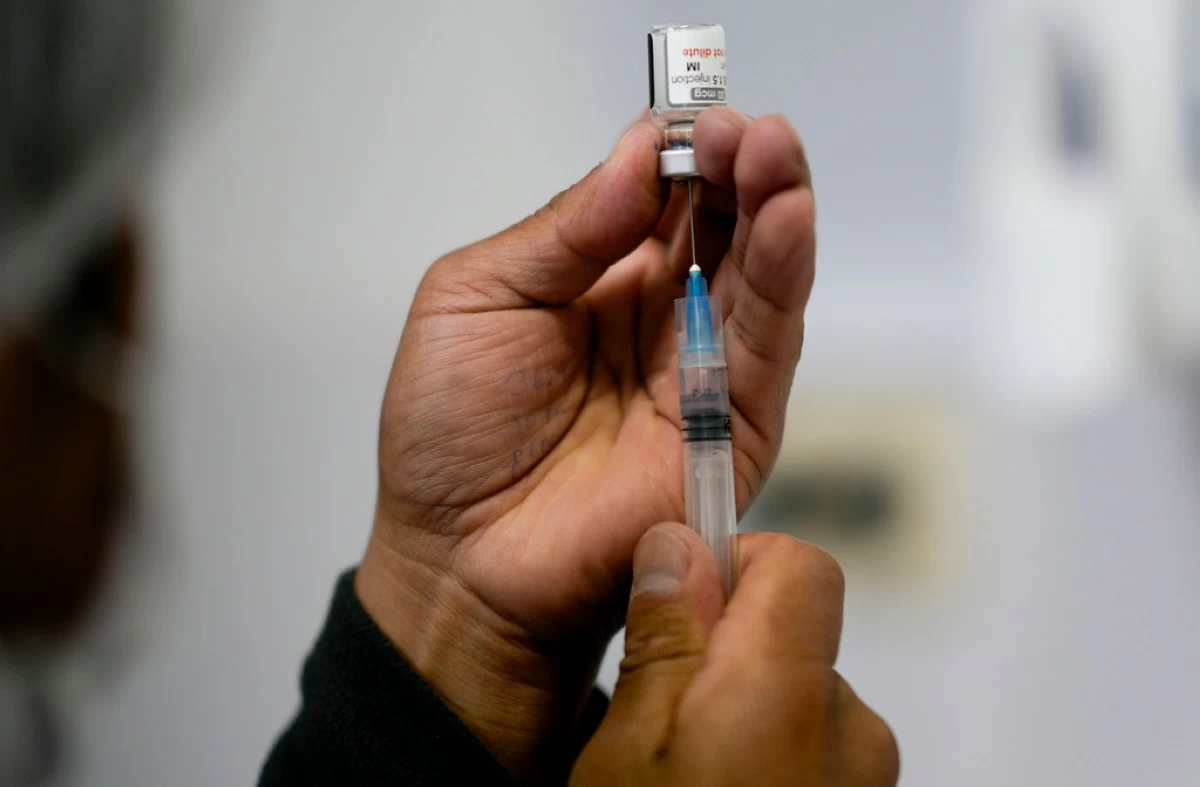
A healthcare worker prepares a shot of the Pfizer COVID-19 vaccine in La Paz, Bolivia, Jan. 7, 2025. (AP Photo/Juan Karita, File)
LONDON (AP) — More than 14 million children did not receive a single vaccine last year — about the same number as the year before — according to U.N. health officials. Nine countries accounted for more than half of those unprotected children.
In their annual estimate of global vaccine coverage, released Tuesday, the World Health Organization and UNICEF said about 89% of children under 1 year old got a first dose of the diphtheria, tetanus and whooping cough vaccine in 2024, the same as in 2023. About 85% completed the three-dose series, up from 84% in 2023.
Officials acknowledged, however, that the collapse of international aid this year will make it more difficult to reduce the number of unprotected children. In January, U.S. President Trump withdrew the country from the WHO, froze nearly all humanitarian aid and later moved to close the U.S. AID Agency. And last month, Health Secretary Robert F. Kennedy Jr. said it was pulling the billions of dollars the U.S. had previously pledged to the vaccines alliance Gavi, saying the group had "ignored the science."
Kennedy, a longtime vaccine skeptic, has previously raised questions the diphtheria, tetanus and whooping cough vaccine — which has proven to be safe and effective after years of study and real-world use. Vaccines prevent 3.5 million to 5 million deaths a year, according to U.N. estimates.
"Drastic cuts in aid, coupled with misinformation about the safety of vaccines, threaten to unwind decades of progress," said WHO Director-General Tedros Adhanom Ghebreyesus.
U.N. experts said that access to vaccines remained "deeply unequal" and that conflict and humanitarian crises quickly unraveled progress; Sudan had the lowest reported coverage against diphtheria, tetanus and whooping cough. The data showed that nine countries accounted for 52% of all children who missed out on immunizations entirely: Nigeria, India, Sudan, Congo, Ethiopia, Indonesia, Yemen, Afghanistan and Angola.
WHO and UNICEF said coverage against measles rose slightly, with 76% of children worldwide receiving both vaccine doses. But experts say measles vaccine rates need to reach 95% to prevent outbreaks of the extremely contagious disease. WHO noted that 60 countries reported big measles outbreaks last year.
The U.S. is now having its worst measles outbreak in more than three decades, while the disease has also surged across Europe, with 125,000 cases in 2024 — twice as many as the previous year, according to WHO.
Last week, British authorities reported a child died of measles in a Liverpool hospital. Health officials said that despite years of efforts to raise awareness, only about 84% of children in the U.K. are protected.
"It is hugely concerning, but not at all surprising, that we are continuing to see outbreaks of measles," said Helen Bradford, a professor of children's health at University College London. "The only way to stop measles spreading is with vaccination," she said in a statement. "It is never too late to be vaccinated — even as an adult."

Related Tags

WORLDNEWS United Nations
ADVERTISEMENT
.most-popular .layout-ratio{ padding-bottom: 79.13%; } @media (min-width: 768px) and (max-width: 1024px) { .widget-title { font-size: 15px !important; } }

{{ articles_filter_1561_widget.title }}

.most-popular .layout-ratio{ padding-bottom: 79.13%; } @media (min-width: 768px) and (max-width: 1024px) { .widget-title { font-size: 15px !important; } }

{{ articles_filter_1562_widget.title }}

.most-popular .layout-ratio{ padding-bottom: 79.13%; } @media (min-width: 768px) and (max-width: 1024px) { .widget-title { font-size: 15px !important; } }

{{ articles_filter_1563_widget.title }}

{{ articles_filter_1564_widget.title }}

.mb-article-details { position: relative; } .mb-article-details .article-body-preview, .mb-article-details .article-body-summary{ font-size: 17px; line-height: 30px; font-family: "Libre Caslon Text", serif; color: #000; } .mb-article-details .article-body-preview iframe , .mb-article-details .article-body-summary iframe{ width: 100%; margin: auto; } .read-more-background { background: linear-gradient(180deg, color(display-p3 1.000 1.000 1.000 / 0) 13.75%, color(display-p3 1.000 1.000 1.000 / 0.8) 30.79%, color(display-p3 1.000 1.000 1.000) 72.5%); position: absolute; height: 200px; width: 100%; bottom: 0; display: flex; justify-content: center; align-items: center; padding: 0; } .read-more-background a{ color: #000; } .read-more-btn { padding: 17px 45px; font-family: Inter; font-weight: 700; font-size: 18px; line-height: 16px; text-align: center; vertical-align: middle; border: 1px solid black; background-color: white; } .hidden { display: none; }
function initializeAllSwipers() { // Get all hidden inputs with cms_article_id document.querySelectorAll('[id^="cms_article_id_"]').forEach(function (input) { const cmsArticleId = input.value; const articleSelector = '#article-' + cmsArticleId + ' .body_images'; const swiperElement = document.querySelector(articleSelector); if (swiperElement && !swiperElement.classList.contains('swiper-initialized')) { new Swiper(articleSelector, { loop: true, pagination: false, navigation: { nextEl: '#article-' + cmsArticleId + ' .swiper-button-next', prevEl: '#article-' + cmsArticleId + ' .swiper-button-prev', }, }); } }); } setTimeout(initializeAllSwipers, 3000); const intersectionObserver = new IntersectionObserver( (entries) => { entries.forEach((entry) => { if (entry.isIntersecting) { const newUrl = entry.target.getAttribute("data-url"); if (newUrl) { history.pushState(null, null, newUrl); let article = entry.target; // Extract metadata const author = article.querySelector('.author-section').textContent.replace('By', '').trim(); const section = article.querySelector('.section-info ').textContent.replace(' ', ' '); const title = article.querySelector('.article-title h1').textContent; // Parse URL for Chartbeat path format const parsedUrl = new URL(newUrl, window.location.origin); const cleanUrl = parsedUrl.host + parsedUrl.pathname; // Update Chartbeat configuration if (typeof window._sf_async_config !== 'undefined') { window._sf_async_config.path = cleanUrl; window._sf_async_config.sections = section; window._sf_async_config.authors = author; } // Track virtual page view with Chartbeat if (typeof pSUPERFLY !== 'undefined' && typeof pSUPERFLY.virtualPage === 'function') { try { pSUPERFLY.virtualPage({ path: cleanUrl, title: title, sections: section, authors: author }); } catch (error) { console.error('ping error', error); } } // Optional: Update document title if (title && title !== document.title) { document.title = title; } } } }); }, { threshold: 0.1 } ); function showArticleBody(button) { const article = button.closest("article"); const summary = article.querySelector(".article-body-summary"); const body = article.querySelector(".article-body-preview"); const readMoreSection = article.querySelector(".read-more-background"); // Hide summary and read-more section summary.style.display = "none"; readMoreSection.style.display = "none"; // Show the full article body body.classList.remove("hidden"); } document.addEventListener("DOMContentLoaded", () => { let loadCount = 0; // Track how many times articles are loaded const offset = [1, 2, 3, 4, 5, 6, 7, 8, 9, 10]; // Offset values const currentUrl = window.location.pathname.substring(1); let isLoading = false; // Prevent multiple calls if (!currentUrl) { console.log("Current URL is invalid."); return; } const sentinel = document.getElementById("load-more-sentinel"); if (!sentinel) { console.log("Sentinel element not found."); return; } function isSentinelVisible() { const rect = sentinel.getBoundingClientRect(); return ( rect.top < window.innerHeight && rect.bottom >= 0 ); } function onScroll() { if (isLoading) return; if (isSentinelVisible()) { if (loadCount >= offset.length) { console.log("Maximum load attempts reached."); window.removeEventListener("scroll", onScroll); return; } isLoading = true; const currentOffset = offset[loadCount]; window.loadMoreItems().then(() => { let article = document.querySelector('#widget_1690 > div:nth-last-of-type(2) article'); intersectionObserver.observe(article) loadCount++; }).catch(error => { console.error("Error loading more items:", error); }).finally(() => { isLoading = false; }); } } window.addEventListener("scroll", onScroll); });

Sign up by email to receive news.