







The Philippine Embassy in China dismissed China’s allegation that the Philippines is being a “troublemaker” in the South China Sea dispute, stressing its willingness to cooperate with Beijing despite its rejection of the 2016 Arbitral Tribunal award.
PH rejects tag as 'troublemaker' in South China Sea
Published Jul 14, 2025 12:35 pm


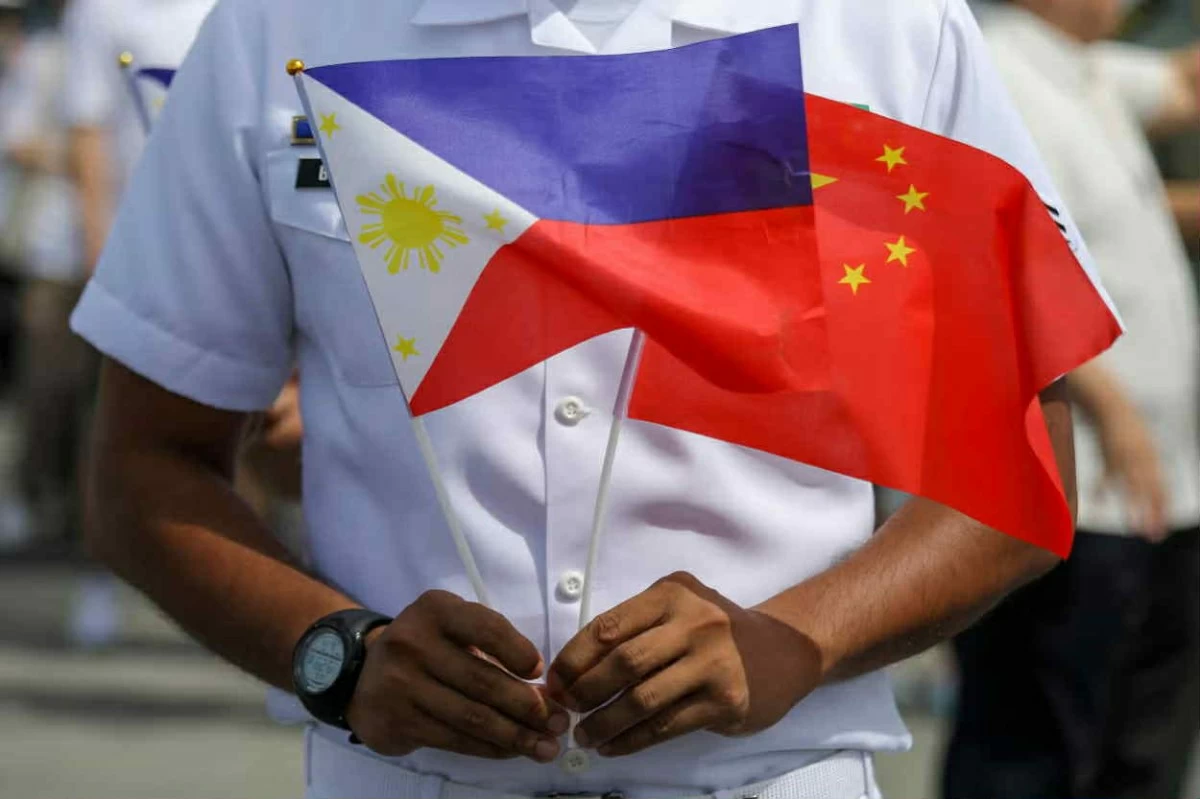
A man holds the flags of China and the Philippines. (AP Photo)
The embassy made the remarks during a workshop organized and hosted by a Chinese think-tank in Beijing last July 10.
“We disagree with the notion that the Philippines is not willing to engage with China,” the embassy said.
“In fact, even with the Arbitral Award, the Philippines has continued to make efforts to keep lines of communication open, maintain proper dialogue, and engage positively with China as well as other claimant States, both bilaterally and regionally, within the context of our legally settled claims in accordance with UNCLOS and international law,” it added.
The forum, which was held just two days before the 9th anniversary of the awarding of the tribunal victory that invalidated Beijing’s expansive claims in the South China Sea, held an in-depth discussion on the historical and legal features of the region.
But during an opportunity to intervene as the forum predominantly criticized the award and the Philippines’ policies, a representative from the Philippine Embassy asserted the significance of the 2016 South China Sea Arbitral Award.
“The Award along with its annexes proves the validity and legality of Philippine claims and they are available for everyone to study and read,” the representative said.
The embassy also expressed its hope that “China’s actions demonstrate genuine willingness to engage and to produce constructive and positive outcomes.”
Aside from the Philippines, representatives of the United States, European Union, and Japan, among others, also commemorated the 2016 arbitral tribunal win, as they urged China to heed the decision and adhere to international laws.
Beijing repeatedly rejected the decision, calling it “nothing but a piece of waste paper that is illegal, null and void, and non-binding.”