







OIC: A trusted partner in peacebuilding
Published Jul 14, 2025 12:05 am
|
Updated Jul 13, 2025 03:57 pm


PEACE BY PEACE
Over the years, the international community has played an instrumental role in helping the Government of the Philippines push forward, sustain and build on the gains of the Bangsamoro peace process.
From facilitating peace talks with revolutionary groups, to providing technical and financial assistance, to monitoring the compliance of parties to commitments made under peace agreements, our foreign partners have aided us in all aspects of peacebuilding.
Among our most reliable international supporters are the member countries of the Organization of Islamic Cooperation (OIC), which, for the past four decades, has helped shepherd the peace process in the Bangsamoro to where it is now.
With 57 member-states spanning four continents, the OIC has served as the collective voice of the Muslim world, safeguarding and protecting their economic, social, and political interests, while promoting international peace and harmony.
We were, therefore, pleased to learn that in June of this year, the OIC issued a resolution calling on its member-countries to increase the support they are currently providing to the Bangsamoro Autonomous Region in Muslim Mindanao (BARMM).
We lauded the Islamic body for coming out with Council of Foreign Ministers’ Resolution No. 2/51-MM titled, “The Question of Muslims in the Southern Philippines,” which we believe is timely and relevant in light of the peace, security, and development challenges the Bangsamoro is now facing.
The resolution could not have come at a crucial opportune time, as the BARMM gears up for its first regional parliamentary elections. The political exercise is considered another major milestone in the Bangsamoro peace process.
Through the resolution, the OIC demonstrated anew its unwavering commitment to the Bangsamoro peace process, particularly by providing the BARMM with the financial assistance it will need to forge ahead in its peace and development journey.
With a total nominal Gross Domestic Product (GDP) of approximately US $8.7 trillion, the OIC has the capacity to provide funding to build much-needed infrastructure as well as implement essential socioeconomic programs and projects in the region.
To recall, the OIC was instrumental in the signing of the 1976 Tripoli Agreement between the Philippine government and the Moro National Liberation Front (MNLF), as well as the 1996 GPH-MNLF Final Peace Agreement (FPA).
The 1996 FPA aimed to fully implement the Jakarta Agreement and laid the foundation for the signing of succeeding major Bangsamoro peace accords that put an end to the decades-long armed conflict in Mindanao.
Moreover, the OIC resolution commended the Malaysian government for facilitating the signing of the 2012 Framework Agreement on the Bangsamoro (FAB), and subsequently, the 2014 Comprehensive Agreement on the Bangsamoro (CAB).
The FAB and CAB, both signed by the GPH and Moro Islamic Liberation Front (MILF), silenced the guns of war and paved the way for the creation of the BARMM and its interim government, the Bangsamoro Transition Authority.
Further, the OIC has played a key role in the creation of peace mechanisms as well as the completion of the Tripartite Review Process, wherein the GPH, MNLF, and the OIC assessed the progress made in the implementation of the 1996 FPA.
In light of the significant contributions of the OIC to peacebuilding efforts in the Bangsamoro, we have requested the body to also support the implementation of the remaining commitments under the 1996 FPA.
These commitments include, among others, the operationalization of the Bangsamoro Development Assistance Fund (BDAF) and the Tripartite Implementation Monitoring Committee (TIMC).
The BDAF and TIMC are two mechanisms critical to the implementation of the 1996 FPA. Once they are fully operational, we can accelerate the rollout of our peacebuilding and development initiatives in the BARMM.
We also thanked the OIC for recognizing President Ferdinand R. Marcos, Jr., “for his strong commitments to push for unity, inclusivity, socioeconomic development and interventions to promote peace and development in the BARMM area.”
Moreover, we welcomed the OIC’s support for the appointment of Abdulraof Macacua as the new Interim Chief Minister (ICM) of the BARMM government, and its acknowledgement of the leadership of Murad Ebrahim as the former ICM.
We also extended our gratitude to the OIC for commending the Philippine government for the creation of the National Amnesty Commission, the body that is tasked to implement the government Amnesty Program for former combatants and rebels.
We also expressed our full support to the call made by the OIC to further strengthen the Bangsamoro Coordination Forum as a platform that will harmonize and strengthen the relations between the MNLF and MILF.
Words are not enough to show our gratitude to the OIC, which, under the leadership of Secretary-General Hissein Brahim Taha, has become a beacon of hope, mutual understanding, and cooperation in the Bangsamoro.
We look forward to continue working with the body in the years ahead, as we move closer to achieving our collective vision of bringing a just and lasting peace to our Bangsamoro brothers and sisters.
Rest assured that the Marcos administration is determined, more than ever, to advance the Bangsamoro peace process, as what President Marcos said during the 28th anniversary of the 1996 FPA last year:
“For us to move forward as a strong, undivided nation, the government will continue to pursue a principled and peaceful resolution to internal armed conflicts, with neither blame nor surrender, but with dignity for all.”
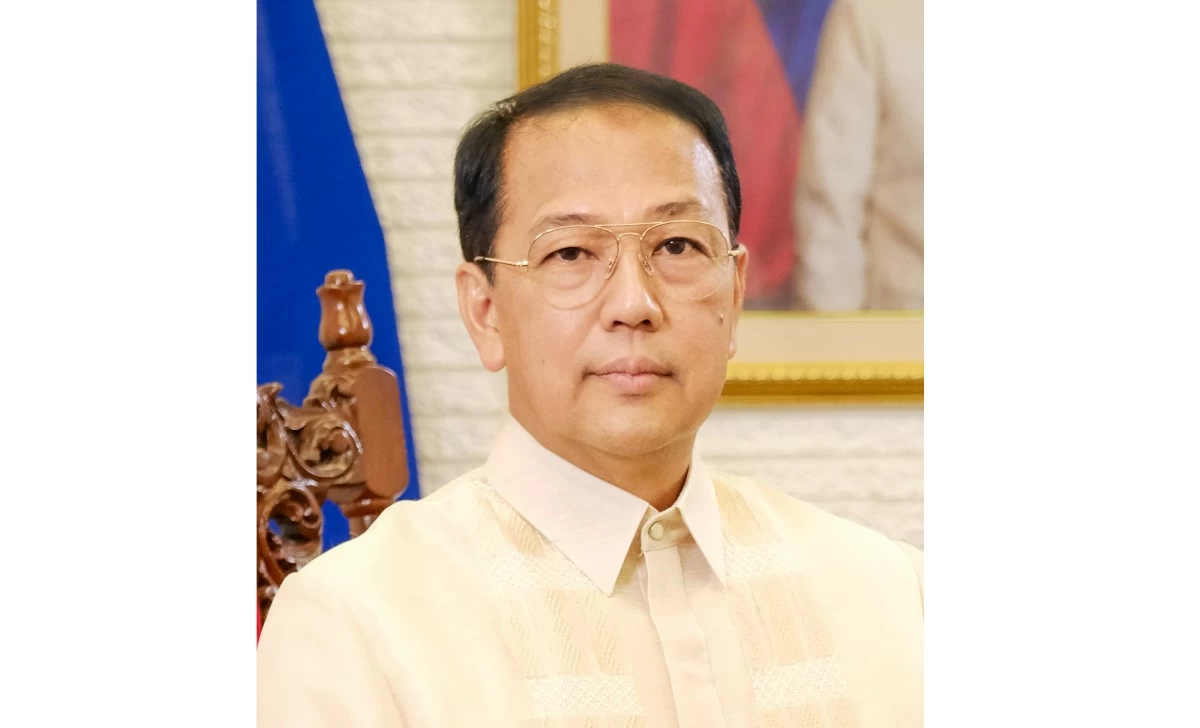
(Secretary Carlito G. Galvez, Jr., is the presidential adviser on peace, reconciliation and unity.)