







NGCP: Higher ancillary service costs drive up July power bills
Published Jul 14, 2025 02:03 pm


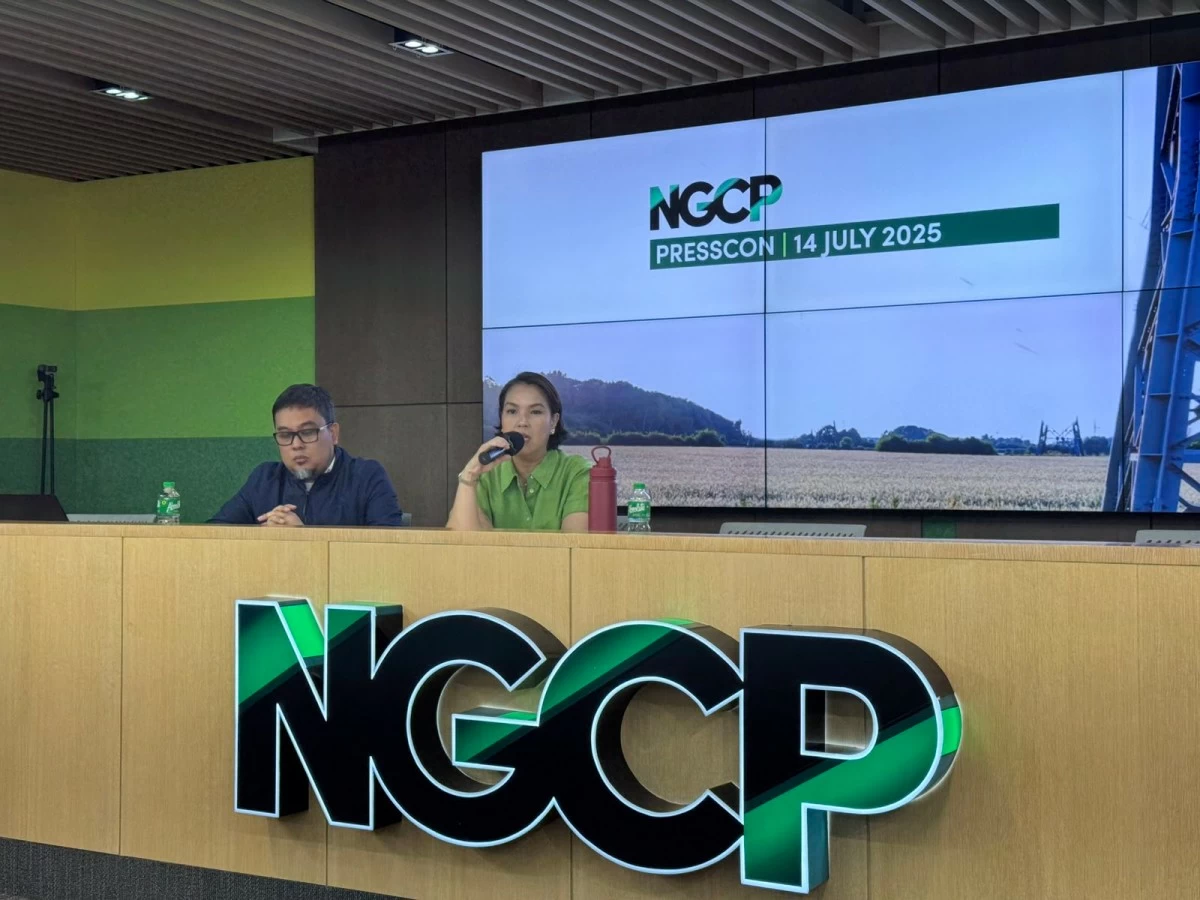
The National Grid Corp. of the Philippines (NGCP) announced on Monday, July 14, that the recent surge in ancillary service (AS) rates is the primary cause of the uptick in transmission charges for June passed on to consumers.
In a briefing, Julius Datingaling, NGCP revenue management department head, said that AS rates climbed by 9.32 percent to ₱0.6182 per kilowatt-hour (kWh) last month. This increase, in turn, led to a 5.49 percent rise in transmission wheeling rates.
NGCP data showed average transmission charges in May stood at ₱1.1482/kWh, jumping to ₱1.2113/kWh in June. Separately, transmission wheeling rates also edged up by 0.39 percent to ₱0.4593/kWh in June.
Ancillary service charges are pass-through costs paid for power supplied by providers to stabilize the grid during imbalances between power supply and demand. These funds are remitted to NGCP's bilateral contracts and the Independent Electricity Market Operator of the Philippines (IEMOP) for ancillary services from the reserve market.
Consumers are set to experience another increase in their electricity bills starting next month, due to recently approved recoveries by the Energy Regulatory Commission (ERC).
“We will implement the decision of the ERC for the recovery of the ₱28 billion this coming July 2025 billing period,” Datingaling stated, adding, “The impact on the customer is in August.”
This new charge will appear as a separate line item on power bills, labeled “2016 to 2020 under recovery.” It will be a fixed rate of three centavos per kilowatt-hour, implemented over approximately 84 months, from July 2025 to June 2032, or until the full amount is recovered.
NGCP Spokesperson Cynthia Alabanza clarified that not all items in their recovery application were approved by the ERC.
“We’re still in the process of assessing the disallowances,” she said.
Despite the disallowances, Alabanza welcomed the ERC's decision. “It is favorable in the sense that this is long overdue. As you know that this decision covers the period 2016 to 2022, so it’s backward and the process should have been started as early as 2014,” she explained.
“So in that sense, we welcome the decision because it will give NGCP the chance to collect the under-recoveries considering the massive investments that have been infused into the transmission system since 2016,” she added.