ADVERTISEMENT

BSP moves to regulate online gambling payments

Published Jul 14, 2025 12:01 am  |  Updated Jul 12, 2025 06:07 pm

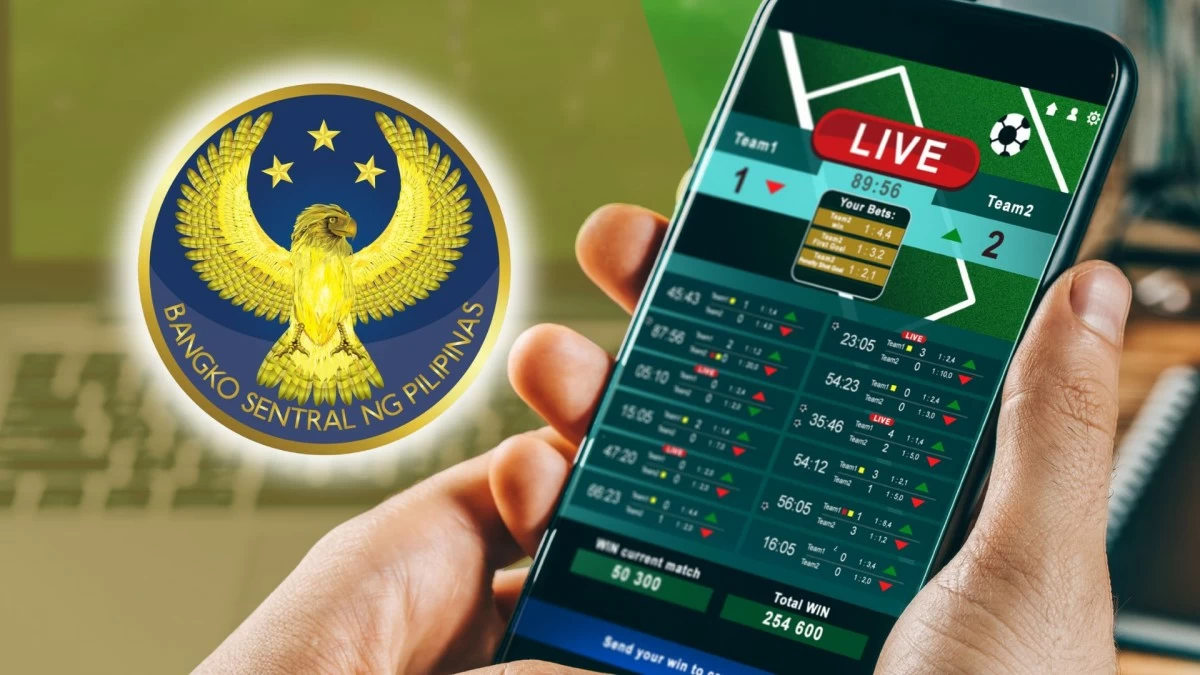
The Bangko Sentral ng Pilipinas (BSP) is seeking to implement stricter rules on online gambling payment services, including a ban on lending features and redirect links on payment platforms, to curb the social and financial risks linked to gambling.

“It is imperative to ensure that digital payment services of payment service providers (PSPs) are not misused for activities that are socially harmful and detrimental to financial health,” the BSP said in a draft circular.

As such, the BSP has proposed standards for payment firms and system operators handling online gambling, including stricter know-your-customer checks to enforce access restrictions.

Under the proposal, PSPs must secure prior approval from the BSP before processing online gambling transactions, subject to strict capital, governance, and anti-money laundering and counterterrorism financing (AML/CTF) requirements.

Those who fail to meet or maintain these standards may face suspension or revocation of their authority.

Payment firms are also prohibited from linking users to online gambling websites or redirecting them to gambling platforms.

Gambling limits

PSPs must adopt board-approved onboarding and monitoring procedures for online gambling operators (OGOs), ensuring they are licensed, compliant, and in good standing with regulators.

As OGOs are considered “high-risk merchants,” enhanced due diligence is required, including verification of beneficial ownership and submission of key documents like Securities and Exchange Commission (SEC) registration and AML compliance programs.

Payment firms must also conduct regular risk assessments and clearly define monitoring procedures and termination grounds in their engagement terms with OGOs.

PSPs must set up separate accounts for eligible online gamblers, with strict know-your-customer checks and a one-account-per-user policy.

“Further, a mandatory facial biometric verification for account opening and periodic facial biometric re-verifications shall be implemented to reduce the risk of fraud,” the circular said.

Transactions of gambling accounts must also be closely monitored, including tracking the frequency and volume of transactions and flagging suspicious activity under their AML/CTF policies.

Fund transfers will be capped at 20 percent of a gambler’s average daily balance. Given this, incoming fund transfers beyond the said limit will be rejected by PSPs. To better regulate excessive transfers, PSPs shall restrict transactions to a six-hour daily window.

A 24-hour cooling-off period must apply after heavy usage, as defined by the provider.

Notably, “all lending options in the same digital platform [where the account was created] shall be disabled,” the BSP said.

Payment firms’ employees banned

Additionally, PSPs involved in online gambling payments must ban their employees from participating in any form of online gambling under internal policies or codes of conduct.

Firms must adopt monitoring tools like audits and disclosures, with results made available to the BSP upon request. They must submit regular or on-request reports to the BSP detailing online gambling transactions, user activity, and partner operators.

Failure to comply with these reportorial requirements may result in penalties under existing BSP rules.

PSPs and their officers may face sanctions for violations, including fines of up to ₱100,000 per day or ₱1 million per transaction. Non-monetary penalties include suspension on the first offense and full revocation of authority on the second, along with settlement restrictions.

PSPs already offering online gambling services will be given six months from the circular’s effectivity to secure BSP approval and meet all requirements.

Failure to comply with the deadline will result in the immediate suspension of gambling-related services until full compliance is confirmed.

Related Tags

Bangko Sentral ng Pilipinas (BSP) online gambling
ADVERTISEMENT
.most-popular .layout-ratio{ padding-bottom: 79.13%; } @media (min-width: 768px) and (max-width: 1024px) { .widget-title { font-size: 15px !important; } }

{{ articles_filter_1561_widget.title }}

.most-popular .layout-ratio{ padding-bottom: 79.13%; } @media (min-width: 768px) and (max-width: 1024px) { .widget-title { font-size: 15px !important; } }

{{ articles_filter_1562_widget.title }}

.most-popular .layout-ratio{ padding-bottom: 79.13%; } @media (min-width: 768px) and (max-width: 1024px) { .widget-title { font-size: 15px !important; } }

{{ articles_filter_1563_widget.title }}

{{ articles_filter_1564_widget.title }}

.mb-article-details { position: relative; } .mb-article-details .article-body-preview, .mb-article-details .article-body-summary{ font-size: 17px; line-height: 30px; font-family: "Libre Caslon Text", serif; color: #000; } .mb-article-details .article-body-preview iframe , .mb-article-details .article-body-summary iframe{ width: 100%; margin: auto; } .read-more-background { background: linear-gradient(180deg, color(display-p3 1.000 1.000 1.000 / 0) 13.75%, color(display-p3 1.000 1.000 1.000 / 0.8) 30.79%, color(display-p3 1.000 1.000 1.000) 72.5%); position: absolute; height: 200px; width: 100%; bottom: 0; display: flex; justify-content: center; align-items: center; padding: 0; } .read-more-background a{ color: #000; } .read-more-btn { padding: 17px 45px; font-family: Inter; font-weight: 700; font-size: 18px; line-height: 16px; text-align: center; vertical-align: middle; border: 1px solid black; background-color: white; } .hidden { display: none; }
function initializeAllSwipers() { // Get all hidden inputs with cms_article_id document.querySelectorAll('[id^="cms_article_id_"]').forEach(function (input) { const cmsArticleId = input.value; const articleSelector = '#article-' + cmsArticleId + ' .body_images'; const swiperElement = document.querySelector(articleSelector); if (swiperElement && !swiperElement.classList.contains('swiper-initialized')) { new Swiper(articleSelector, { loop: true, pagination: false, navigation: { nextEl: '#article-' + cmsArticleId + ' .swiper-button-next', prevEl: '#article-' + cmsArticleId + ' .swiper-button-prev', }, }); } }); } setTimeout(initializeAllSwipers, 3000); const intersectionObserver = new IntersectionObserver( (entries) => { entries.forEach((entry) => { if (entry.isIntersecting) { const newUrl = entry.target.getAttribute("data-url"); if (newUrl) { history.pushState(null, null, newUrl); let article = entry.target; // Extract metadata const author = article.querySelector('.author-section').textContent.replace('By', '').trim(); const section = article.querySelector('.section-info ').textContent.replace(' ', ' '); const title = article.querySelector('.article-title h1').textContent; // Parse URL for Chartbeat path format const parsedUrl = new URL(newUrl, window.location.origin); const cleanUrl = parsedUrl.host + parsedUrl.pathname; // Update Chartbeat configuration if (typeof window._sf_async_config !== 'undefined') { window._sf_async_config.path = cleanUrl; window._sf_async_config.sections = section; window._sf_async_config.authors = author; } // Track virtual page view with Chartbeat if (typeof pSUPERFLY !== 'undefined' && typeof pSUPERFLY.virtualPage === 'function') { try { pSUPERFLY.virtualPage({ path: cleanUrl, title: title, sections: section, authors: author }); } catch (error) { console.error('ping error', error); } } // Optional: Update document title if (title && title !== document.title) { document.title = title; } } } }); }, { threshold: 0.1 } ); function showArticleBody(button) { const article = button.closest("article"); const summary = article.querySelector(".article-body-summary"); const body = article.querySelector(".article-body-preview"); const readMoreSection = article.querySelector(".read-more-background"); // Hide summary and read-more section summary.style.display = "none"; readMoreSection.style.display = "none"; // Show the full article body body.classList.remove("hidden"); } document.addEventListener("DOMContentLoaded", () => { let loadCount = 0; // Track how many times articles are loaded const offset = [1, 2, 3, 4, 5, 6, 7, 8, 9, 10]; // Offset values const currentUrl = window.location.pathname.substring(1); let isLoading = false; // Prevent multiple calls if (!currentUrl) { console.log("Current URL is invalid."); return; } const sentinel = document.getElementById("load-more-sentinel"); if (!sentinel) { console.log("Sentinel element not found."); return; } function isSentinelVisible() { const rect = sentinel.getBoundingClientRect(); return ( rect.top < window.innerHeight && rect.bottom >= 0 ); } function onScroll() { if (isLoading) return; if (isSentinelVisible()) { if (loadCount >= offset.length) { console.log("Maximum load attempts reached."); window.removeEventListener("scroll", onScroll); return; } isLoading = true; const currentOffset = offset[loadCount]; window.loadMoreItems().then(() => { let article = document.querySelector('#widget_1690 > div:nth-last-of-type(2) article'); intersectionObserver.observe(article) loadCount++; }).catch(error => { console.error("Error loading more items:", error); }).finally(() => { isLoading = false; }); } } window.addEventListener("scroll", onScroll); });

Sign up by email to receive news.