







United States Secretary of State Marco Rubio assured Southeast Asian nations that the US is “not walking away” from its economic and defense ties in the region and is, in fact, working to build further on their relationships.
US 'not walking away' from economic ties with ASEAN—Rubio
Published Jul 13, 2025 11:30 am
|
Updated Jul 13, 2025 01:05 pm


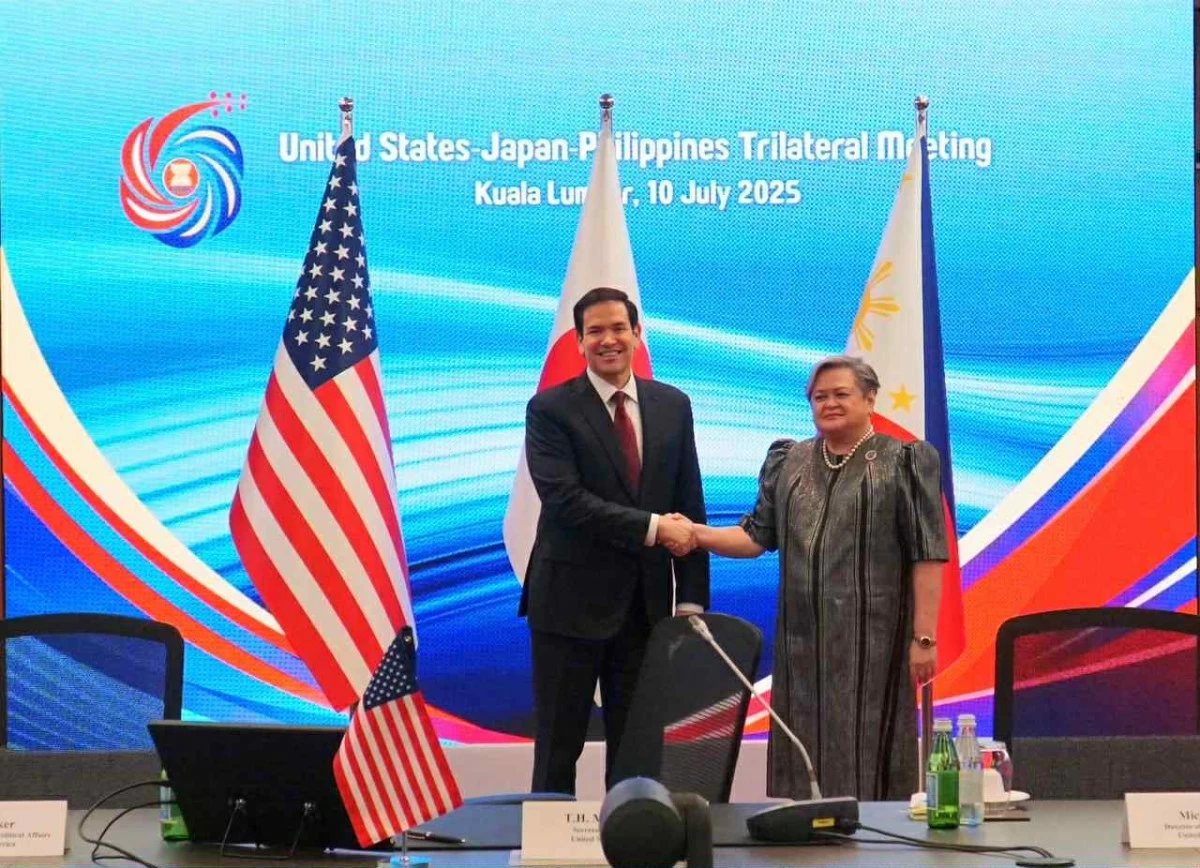
US Secretary of State Marco Rubio and DFA Secretary Ma. Theresa Lazaro shake hands during a meeting on the sidelines of the 58th ASEAN Foreign Ministers' Meeting held in Kuala Lumpur on July 10, 2025. (DFA Photo)
Rubio said this after the 58th Association of Southeast Asian Nations (ASEAN) Ministerial Meetings and Related Meetings held in Kuala Lumpur, Malaysia on Friday, July 11.
“We’re not abandoning any of that nor are we abandoning these strong bilateral ties that we have with many of these countries, some of which go back decades and decades,” he told foreign media, pointing out that the “relationships we have here have existed for a long time.”
His assurance came amid growing fears among US allies in the region that Washington will pursue an America-first foreign policy amid US President Donald Trump’s push to focus its resources domestically.
Rubio said he is well-aware of reports that the US is not focusing enough on the Indo-Pacific and the rest of the world, even in the Middle East.
But he insisted that the US will not be deserting its allies in the region.
“When you talk about 6,000 American companies that are directly invested in the economies of Southeast Asia, we’re not walking away from that,” the official stressed.
“We’re not walking away from that; we’re not walking away from our defense ties that we have in the region; we’re not walking away from the strong economic ties we have in the region. On the contrary, we want to build on it,” he furthered.
Rubio also attended a trilateral meeting on the sidelines of the ASEAN Ministerial Meeting with Department of Foreign Affairs (DFA) Secretary Ma. Theresa Lazaro and Japanese Foreign Minister Iwaya Takeshi.
During the meeting, the three senior officials “discussed strengthening security cooperation and reaffirmed commitment to safeguarding regional peace, stability and freedom of navigation in the South China Sea,” the DFA said in a statement.
The officials also agreed to help the Philippines become “economically strong” by investing heavily in the Luzon Economic Corridor.
US State Department spokesperson Tammy Bruce also added that the officials “agreed to coordinate cooperation on maritime security, including through Maritime Cooperative Activities, trilateral military exercises, and capacity building and assistance for the Philippine Coast Guard and other Philippine maritime authorities.”