

ADVERTISEMENT

Farmers' group warns gov't: Don't rush trade deal with US after tariff hike
Published Jul 13, 2025 02:42 pm

At A Glance

  • Farmers' group warns gov't: Don't rush trade deal with US after tariff hike
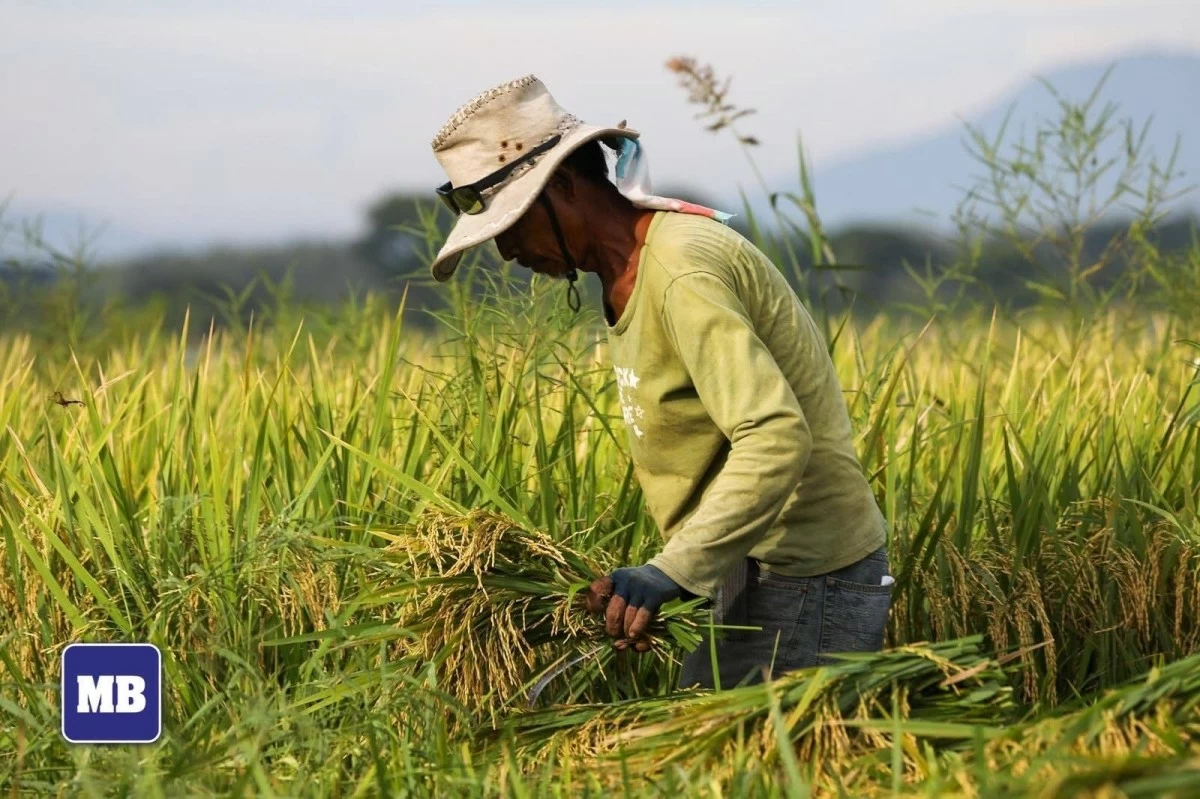
(MB FILE PHOTO)
(MB FILE PHOTO)
Farmers group Samahang Industriya ng Agrikultura (Sinag) on Sunday, July 13, cautioned government trade officials against rushing into a new trade agreement with the United States (US), following the recent imposition of a 20 percent tariff by Washington.
“The recent imposition of a 20 percent tariff by the United States has triggered calls, unfortunately, by our trade officials for a comprehensive trade agreement in response,” Jayson Cainglet, executive director of Sinag, said in a statement. 
He warned that pushing for a deal without addressing its long-term impact on local industries would only repeat past mistakes that harmed domestic producers.
“This false narrative—centered around a free trade agreement—appears to prioritize the interests of importers and international traders at the expense of our local producers, manufacturers, and workers,” he said.
The farmers’ group criticized the knee-jerk reaction from officials who are reportedly exploring ways to open market access with the US as a way to mitigate the tariff’s impact. 
Cainglet argued that this mindset ignores the broader economic consequences.
“History has shown that trade agreements driven by market access alone undermines domestic industries, destroys our capacity to produce our own food, displace jobs, and weaken rural economies,” he said.
According to Sinag, the US tariff should be interpreted not as an invitation to trade talks, but as a clear signal that Washington is defending its own economic interests.
“The US tariff imposition should be viewed as a signal of how the US is protecting its own farmers, manufacturers, and domestic markets,” said Cainglet.
“Tariffs, when used strategically, can serve as essential tools to support local agricultural production, promote industrial growth, protect jobs, and preserve rural livelihoods.”
Sinag rejected any future policy direction that would involve liberalizing trade at the expense of Philippine producers.
“We reject any response that leads to a race to the bottom—slashing tariffs on key agricultural commodities, weakening labor protections, or compromising environmental standards,” Cainglet said.
He called on the country’s trade officials to resist external pressures and instead focus on strengthening national capacity.
“Trade policy must be shaped by the national interest, not by external pressure or short-term market gains of a few privileged importers,” he said.
“We call on our trade officials to put local production, job creation, and rural development at the center of any trade response.”
For Sinag, any new trade agreement must go beyond market figures and instead secure real economic benefits for Filipino farmers and workers.
“Any future trade agreement must prioritize national interest, strengthen our capacity to produce, and support inclusive, sustainable economic growth,” Cainglet said.
ADVERTISEMENT
.most-popular .layout-ratio{ padding-bottom: 79.13%; } @media (min-width: 768px) and (max-width: 1024px) { .widget-title { font-size: 15px !important; } }

{{ articles_filter_1561_widget.title }}

.most-popular .layout-ratio{ padding-bottom: 79.13%; } @media (min-width: 768px) and (max-width: 1024px) { .widget-title { font-size: 15px !important; } }

{{ articles_filter_1562_widget.title }}

.most-popular .layout-ratio{ padding-bottom: 79.13%; } @media (min-width: 768px) and (max-width: 1024px) { .widget-title { font-size: 15px !important; } }

{{ articles_filter_1563_widget.title }}

{{ articles_filter_1564_widget.title }}

.mb-article-details { position: relative; } .mb-article-details .article-body-preview, .mb-article-details .article-body-summary{ font-size: 17px; line-height: 30px; font-family: "Libre Caslon Text", serif; color: #000; } .mb-article-details .article-body-preview iframe , .mb-article-details .article-body-summary iframe{ width: 100%; margin: auto; } .read-more-background { background: linear-gradient(180deg, color(display-p3 1.000 1.000 1.000 / 0) 13.75%, color(display-p3 1.000 1.000 1.000 / 0.8) 30.79%, color(display-p3 1.000 1.000 1.000) 72.5%); position: absolute; height: 200px; width: 100%; bottom: 0; display: flex; justify-content: center; align-items: center; padding: 0; } .read-more-background a{ color: #000; } .read-more-btn { padding: 17px 45px; font-family: Inter; font-weight: 700; font-size: 18px; line-height: 16px; text-align: center; vertical-align: middle; border: 1px solid black; background-color: white; } .hidden { display: none; }
function initializeAllSwipers() { // Get all hidden inputs with cms_article_id document.querySelectorAll('[id^="cms_article_id_"]').forEach(function (input) { const cmsArticleId = input.value; const articleSelector = '#article-' + cmsArticleId + ' .body_images'; const swiperElement = document.querySelector(articleSelector); if (swiperElement && !swiperElement.classList.contains('swiper-initialized')) { new Swiper(articleSelector, { loop: true, pagination: false, navigation: { nextEl: '#article-' + cmsArticleId + ' .swiper-button-next', prevEl: '#article-' + cmsArticleId + ' .swiper-button-prev', }, }); } }); } setTimeout(initializeAllSwipers, 3000); const intersectionObserver = new IntersectionObserver( (entries) => { entries.forEach((entry) => { if (entry.isIntersecting) { const newUrl = entry.target.getAttribute("data-url"); if (newUrl) { history.pushState(null, null, newUrl); let article = entry.target; // Extract metadata const author = article.querySelector('.author-section').textContent.replace('By', '').trim(); const section = article.querySelector('.section-info ').textContent.replace(' ', ' '); const title = article.querySelector('.article-title h1').textContent; // Parse URL for Chartbeat path format const parsedUrl = new URL(newUrl, window.location.origin); const cleanUrl = parsedUrl.host + parsedUrl.pathname; // Update Chartbeat configuration if (typeof window._sf_async_config !== 'undefined') { window._sf_async_config.path = cleanUrl; window._sf_async_config.sections = section; window._sf_async_config.authors = author; } // Track virtual page view with Chartbeat if (typeof pSUPERFLY !== 'undefined' && typeof pSUPERFLY.virtualPage === 'function') { try { pSUPERFLY.virtualPage({ path: cleanUrl, title: title, sections: section, authors: author }); } catch (error) { console.error('ping error', error); } } // Optional: Update document title if (title && title !== document.title) { document.title = title; } } } }); }, { threshold: 0.1 } ); function showArticleBody(button) { const article = button.closest("article"); const summary = article.querySelector(".article-body-summary"); const body = article.querySelector(".article-body-preview"); const readMoreSection = article.querySelector(".read-more-background"); // Hide summary and read-more section summary.style.display = "none"; readMoreSection.style.display = "none"; // Show the full article body body.classList.remove("hidden"); } document.addEventListener("DOMContentLoaded", () => { let loadCount = 0; // Track how many times articles are loaded const offset = [1, 2, 3, 4, 5, 6, 7, 8, 9, 10]; // Offset values const currentUrl = window.location.pathname.substring(1); let isLoading = false; // Prevent multiple calls if (!currentUrl) { console.log("Current URL is invalid."); return; } const sentinel = document.getElementById("load-more-sentinel"); if (!sentinel) { console.log("Sentinel element not found."); return; } function isSentinelVisible() { const rect = sentinel.getBoundingClientRect(); return ( rect.top < window.innerHeight && rect.bottom >= 0 ); } function onScroll() { if (isLoading) return; if (isSentinelVisible()) { if (loadCount >= offset.length) { console.log("Maximum load attempts reached."); window.removeEventListener("scroll", onScroll); return; } isLoading = true; const currentOffset = offset[loadCount]; window.loadMoreItems().then(() => { let article = document.querySelector('#widget_1690 > div:nth-last-of-type(2) article'); intersectionObserver.observe(article) loadCount++; }).catch(error => { console.error("Error loading more items:", error); }).finally(() => { isLoading = false; }); } } window.addEventListener("scroll", onScroll); });

Sign up by email to receive news.