






Manila Bulletin
 Environment and Sustainability
Maybank Foundation, Anthill expand social impact footprint in the Philippines
Environment and Sustainability
Maybank Foundation, Anthill expand social impact footprint in the Philippines
Environment and Sustainability
Maybank Foundation, Anthill expand social impact footprint in the Philippines
Maybank Foundation, Anthill expand social impact footprint in the Philippines
Groundbreaking of the first weaving training center in the country signifies continued commitment to empowering women, cultural preservation, and building inclusive economies across ASEAN
By MBrand
Published Jul 12, 2025 01:31 am


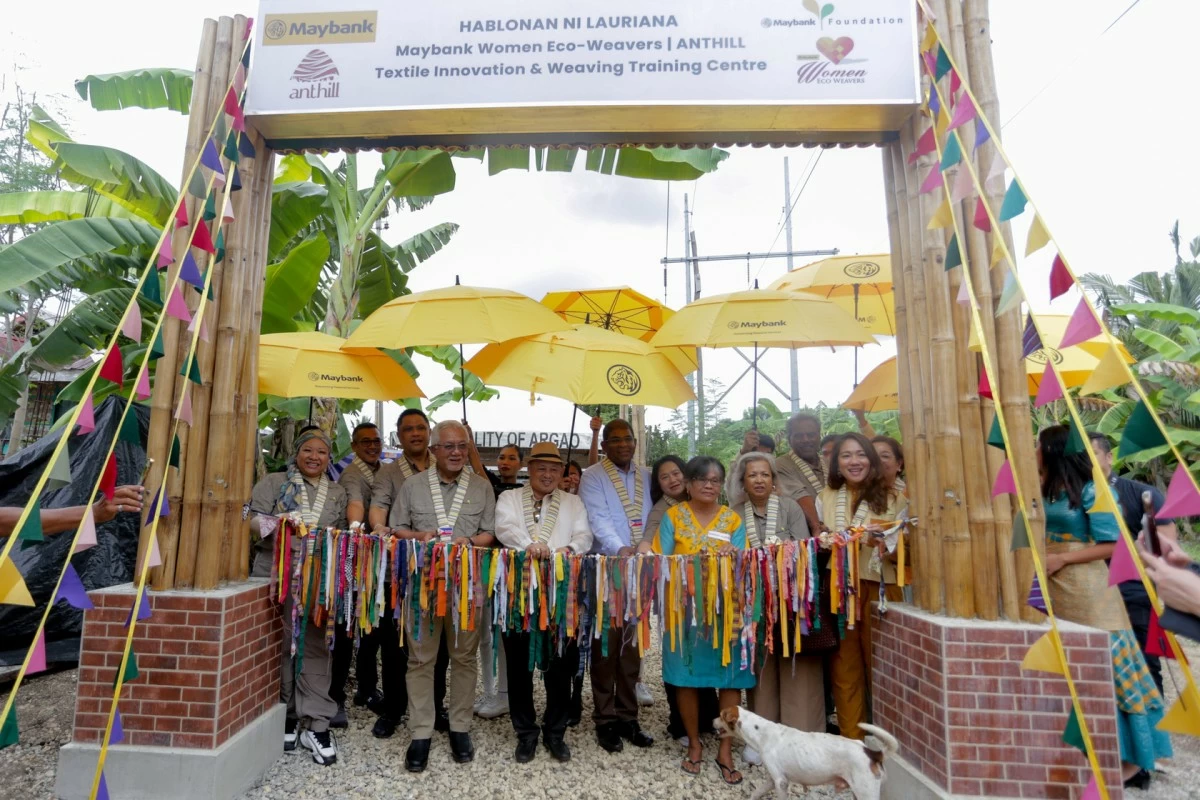
Maybank Foundation, the social impact arm of Maybank Group, and Anthill Fabric Gallery recently celebrated a historic milestone with the groundbreaking of the Maybank Women Eco-Weavers Anthill Weaving Training Center in Argao, Cebu. This marks the opening of the first Maybank Women Eco-Weavers (MWEW) training center in the Philippines, and the program’s expansion into its fifth ASEAN country, following successful initiatives in Malaysia, Indonesia, Cambodia, and Laos.
The event, held at Maayo Argao Hotel, was attended by Tan Sri Dato’ Sri Ir. Zamzamzairani Mohd Isa, chairman of Maybank Group and Maybank Foundation; Maybank Foundation Board of Trustees; Shahril Azuar Jimin, Maybank Group chief sustainability officer; Izlyn Ramli, CEO of Maybank Foundation and head of Group Corporate Affairs Maybank; and Patrick Dennis L. Solosa, officer-in-charge, Maybank Philippines. Also gracing the milestone event were His Excellency Dato’ Abdul Malik Melvin Castelino, Ambassador of Malaysia to the Philippines; Mary Ann Cube, director of the Financial Supervision Department VII of the Bangko Sentral ng Pilipinas (BSP); Judy Dela Cruz Gabato, director for Region 7 of the Department of Tourism; and the Honourable Allan M. Sesaldo, mayor of Argao.
The Argao training center, scheduled for completion by end July 2025, will serve as a flagship hub for weaving training, capacity building, and the promotion of zero-waste weaving practices to preserve cultural knowledge while introducing sustainable innovations. Guests also had the opportunity to visit the future training center site, where briefings on construction progress were presented.
A symbolic highlight of the ceremony was the handover of a vibrant tapestry woven from zero-waste fabric to Nanay Auring, landowner and head weaver of the Hablonan Ni Lauriana weaving community. Presented by Tan Sri Dato’ Sri Ir. Zamzamzairani Mohd Isa, the gesture underscored a shared vision for cultural preservation, inclusive growth, and local empowerment.
“This centre embodies our purpose and values at their core,” said Tan Sri Dato’ Sri Ir. Zamzamzairani. “It reflects our unwavering commitment to humanizing financial services by empowering women, preserving woven heritage, and creating economic opportunities where they are most needed. Together with Anthill, we are weaving hope into action and driving long-term resilience across the Philippines region.”
Izlyn Ramli said, “In this inaugural year in the Philippines, the program aims to train 50 women weavers and support 10 abaca farmers, laying the groundwork for a community-led circular economy rooted in tradition and innovation.”
“This center is more than infrastructure—it’s a launchpad for transformation. It will equip women in Argao with the tools, knowledge, and market access they need to thrive, while ensuring that their textile traditions continue to flourish. This expansion also reflects the program’s role in raising the floor of socio-economic inclusion across ASEAN—ensuring that underserved communities gain not only visibility, but also meaningful access to livelihoods, heritage preservation, and resilient ecosystems, where opportunities are made available to all, not just a few,” Izlyn added.
Looking ahead, the next training center is planned to be built at the Bukidnon province and is envisioned to be a comprehensive facility that integrates weaving, natural dye education, and fibre production—with a strong focus on abaca and other indigenous materials. These regional nodes will form a holistic ecosystem that uplifts women artisans and fiber farmers through a culturally rooted, sustainable value chain. The MWEW programme will also extend its reach to Metro Manila, where women weavers will receive dedicated weaving and product innovation training, strengthening urban artisan networks and market linkages.

Launched in 2016, the Maybank Women Eco-Weavers program—led by Maybank Foundation, has trained over 1,900 women weavers and supported more than 2,250 natural fiber farmers across ASEAN, specifically in sericulture (silk) and cotton farming. The Philippines expansion introduces abaca farming into the program for the first time, widening its fibre base and deepening its commitment to localized, sustainable materials. This milestone arrives at a meaningful juncture—Malaysia’s Chairmanship of ASEAN in 2025. The launch not only reflects Malaysia’s leadership in fostering people-centred regionalism, but also reinforces its commitment to cross-border cooperation and the ASEAN Socio-Cultural Community Blueprint 2025.
His Excellency Dato’ Abdul Malik Melvin Castelino, the Ambassador of Malaysia to the Republic of the Philippines said, “As Malaysia assumes the ASEAN chairmanship this year, we reaffirm our commitment to fostering a region that is inclusive, sustainable, and rooted in cultural heritage. The Maybank Women Eco-Weavers Program embodies this vision by generating significant opportunities for women and safeguarding traditional craftsmanship. I am pleased to witness this initiative strengthening the connection between Malaysia and the Philippines. I anticipate that the weaving centre in Argao will evolve into a vibrant hub for heritage, skills development, and regional collaboration."
“This synergy with Maybank Foundation comes at a critical juncture for Anthill,” said Anya Lim, co-founder and managing director of Anthill Fabric Gallery. “As a social enterprise rooted in community and heritage, we have long sought a partner with the regional reach and depth that Maybank brings. This collaboration enables us to scale our mission, expand our impact, and place Filipino weaving traditions at the heart of sustainable development.”
“The weaving traditions of the Philippines are a testament to our people’s creativity, resilience, and cultural identity,” said Judy Dela Cruz Gabato of the Department of Tourism. “Preserving and revitalizing these practices is essential—not just for cultural pride, but for creating sustainable livelihoods that honor our heritage. We commend Maybank Foundation and Anthill for recognizing the deep value of Filipino craftsmanship and for investing meaningfully in our communities. This initiative will help ensure that our cultural narratives continue to thrive and inspire future generations.”