

ADVERTISEMENT

Exploring the void with Nina Garibay's 'Phantom Limb'

How does one fare in this modern digital dystopia?

Published Jul 12, 2025 11:28 am

At A Glance

  • In our current global landscape, marked by heightened disconnection, war, economic upheaval, and climate collapse, the metaphor of "Phantom Limb" takes on new and urgent stakes.
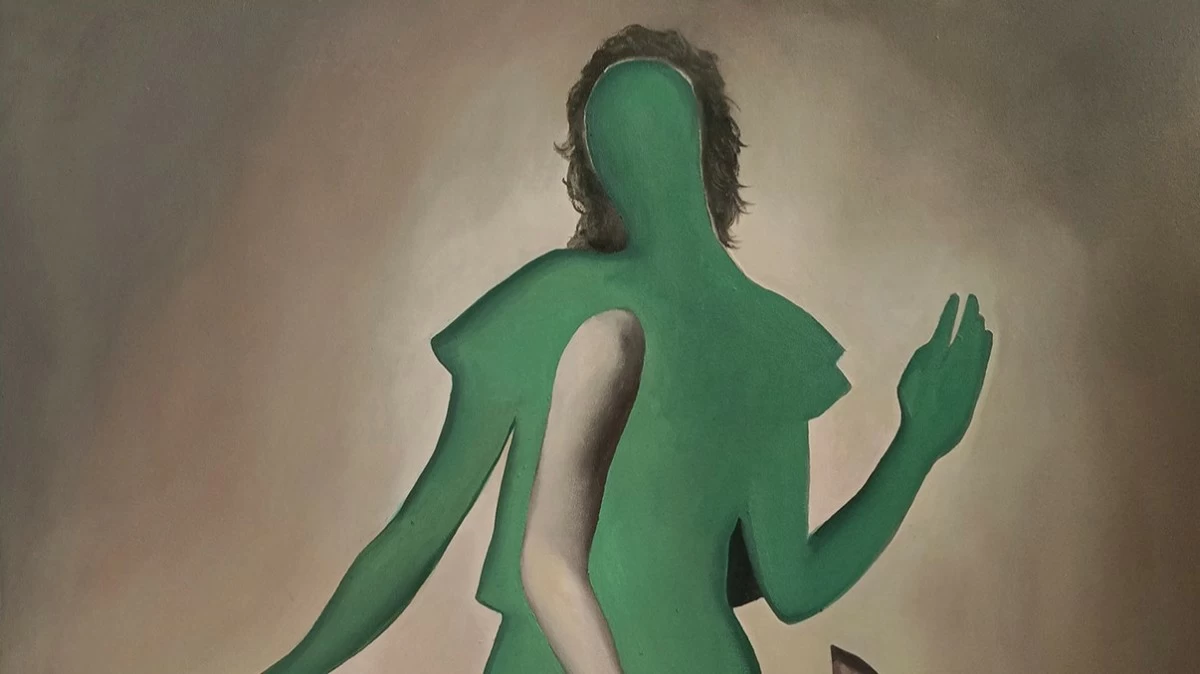
Stepping inside Nina Garibay’s exhibit “Phantom Limb” at Art Verite Gallery is like being struck by a disquieting familiarity. It’s as if the fragmented, digital world we inhabit daily has been meticulously deconstructed and reassembled on canvas. The artist’s latest collection isn’t just art but a commentary on our increasingly screen-filtered existence, a digital dysphoria.
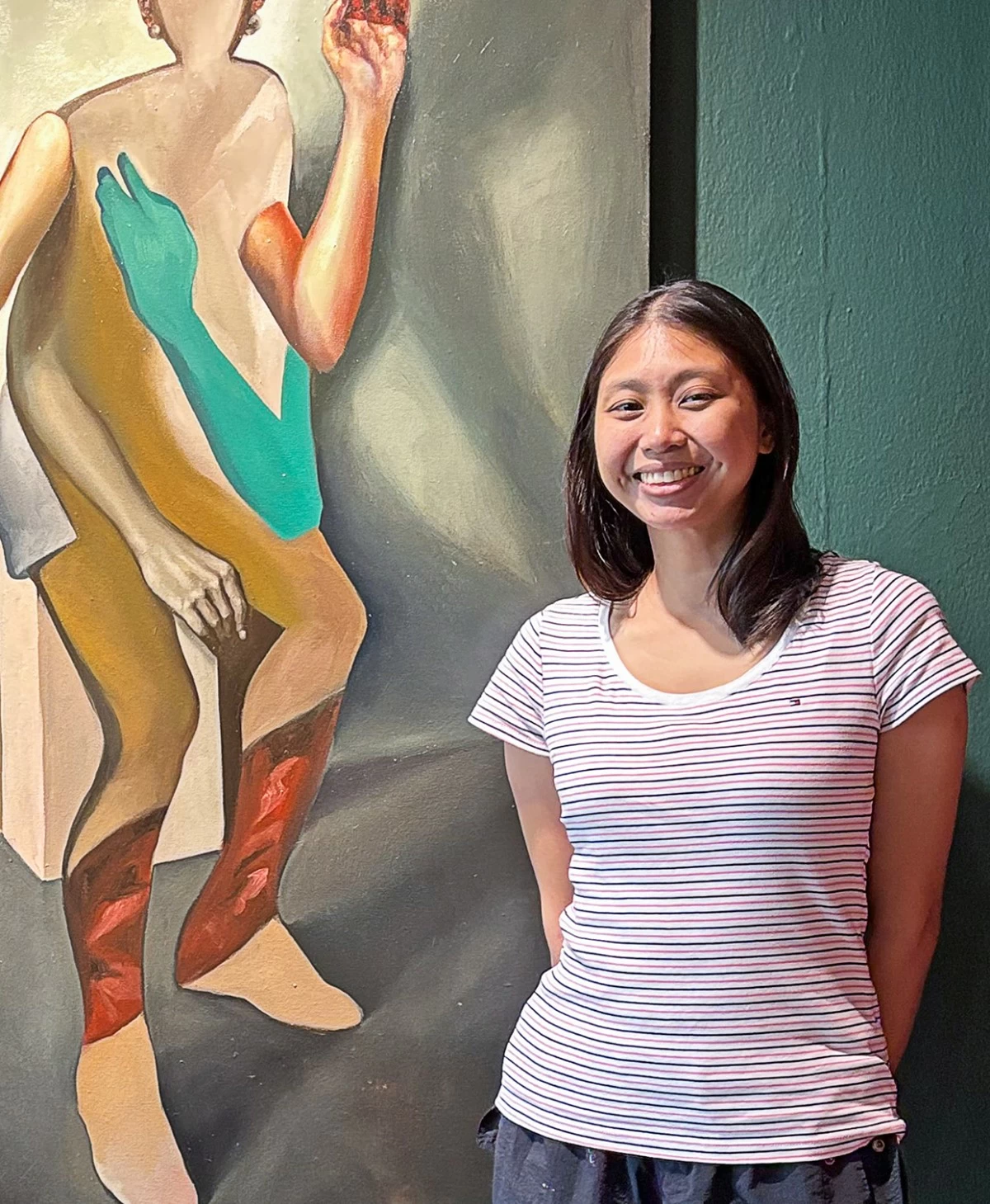
MEET THE ARTIST Nina Garibay
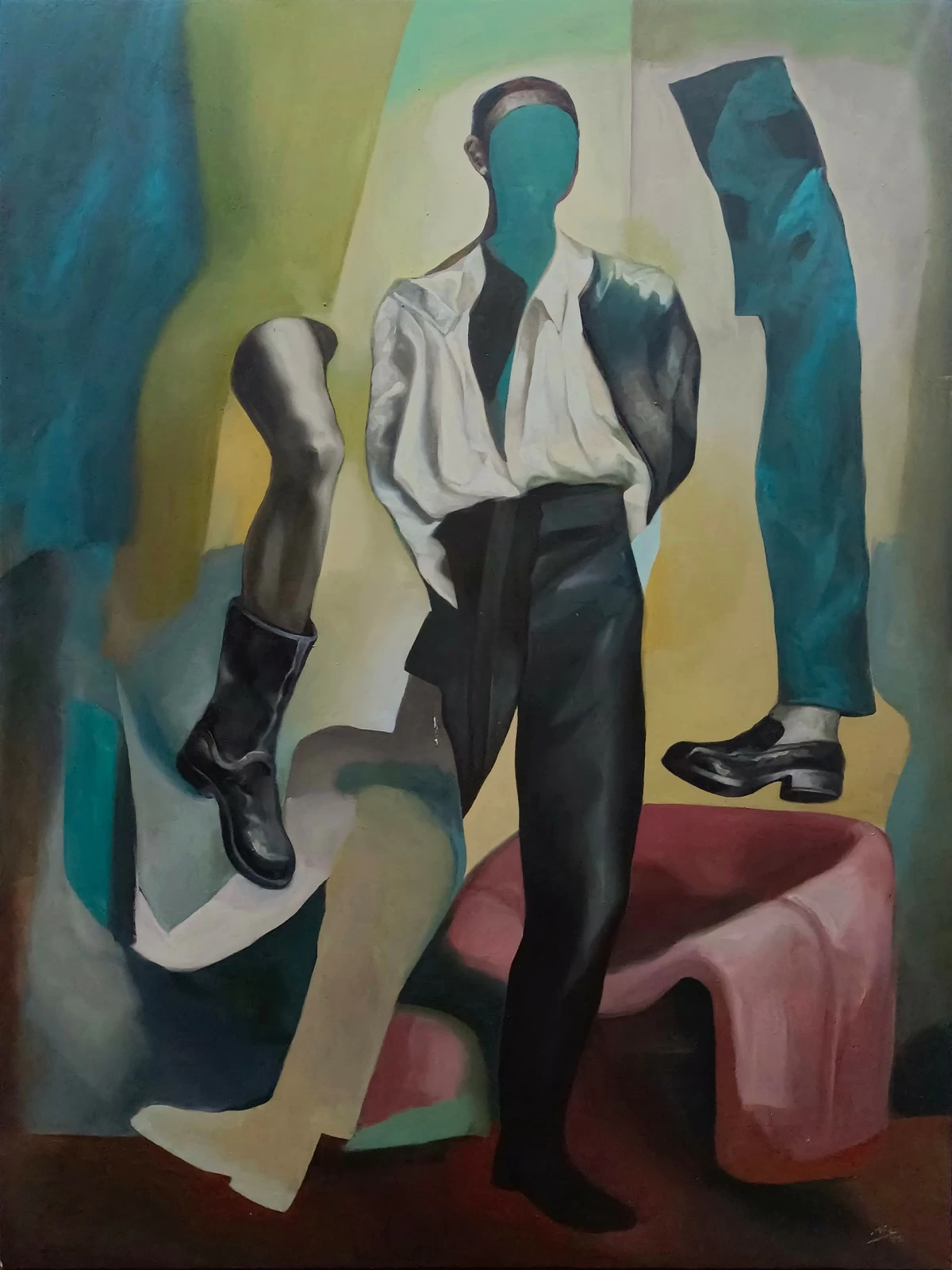
'PHANTOM LIMB,' oil on canvas, 64x56 inches, 2025
The titular work of the exhibit, “Phantom Limb,” is a figure that stands confidently, pieced together from mismatched parts… Legs of varying tones, mismatched shoes, and a smooth void where a face should be. It’s a striking image that encapsulates the exhibit’s core metaphor, the strange ache of something lost but lingering. The accompanying text explains how the “phantom limb” refers to a neurological condition where amputees still feel pain in their missing limbs. Nina masterfully extends this to our digital lives, suggesting that our constant tethering to screens creates a similar void when we disconnect… An anxious emptiness, the feeling of FOMO (fear of missing out), where we fidget, reach, and scroll through nothing. The device, Nina implies, becomes a phantom appendage, no longer separate from us.
'CHROMA KEYING,' oil on canvas, 44x60 inches, 2025
“Chroma Keying,” a piece that brings to mind the green screens of digital media, is an artwork meant for manipulation. Here, Nina makes a powerful statement about identity in the digital age: a figure constructed to disappear, to be overwritten, that serves a function in a fiction. It tells us that the body is a placeholder, and identity becomes whatever the overlay or what the trend demands.
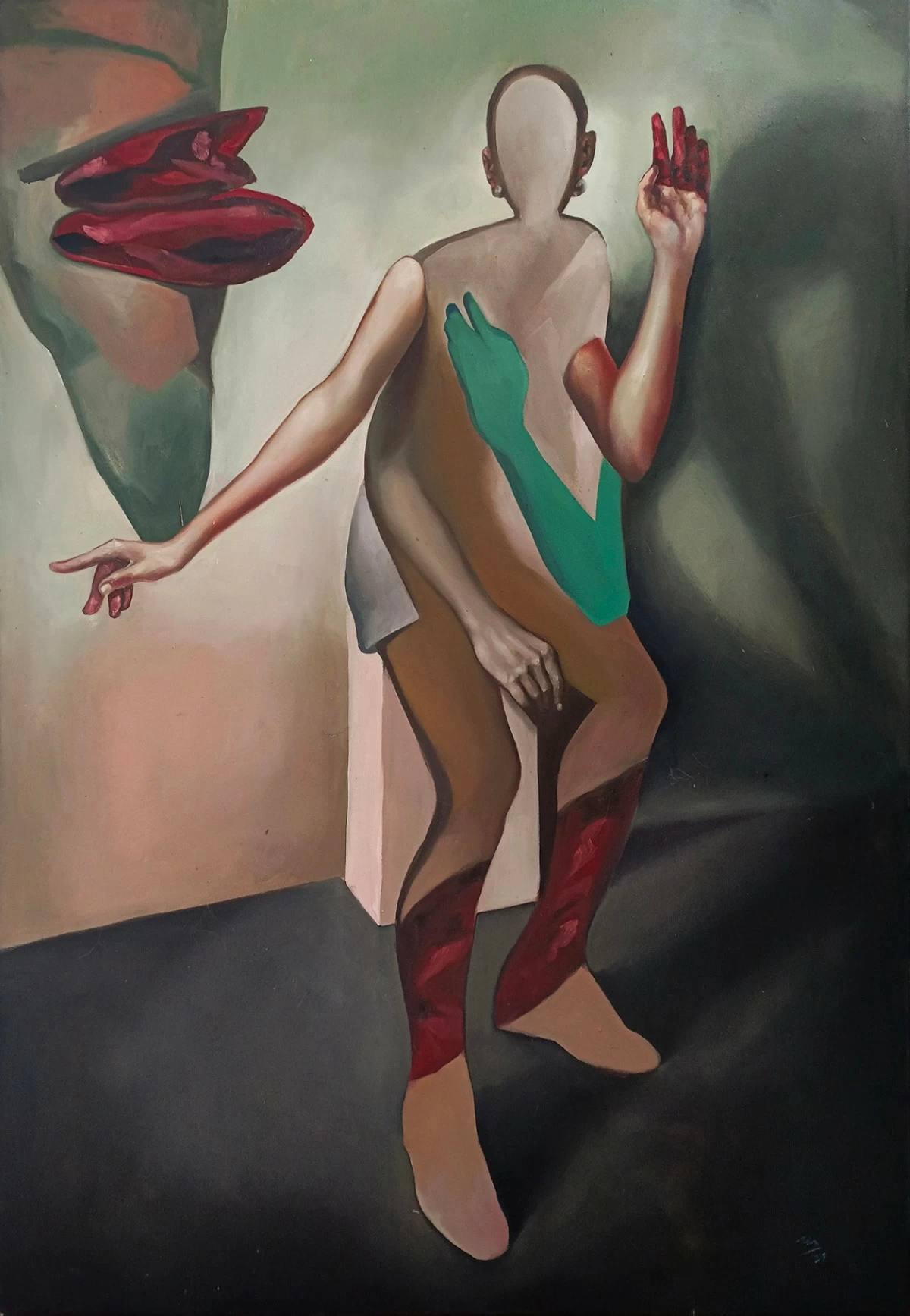
'DUNCE CHALLENGE,' oil on canvas, 44x60 inches, 2025
“Dunce Challenge,” on the other hand, is a satirical jab at what fills the void. This piece directly targets the algorithm - the viral dance challenges, the trends, and the creative labor, disguised as fun but extracted by brands. The faceless figure strikes a pose reminiscent of a TikTok choreography, surrounded by disjointed props, embodying a coerced performance meant for the screen-obsessed. The artwork is a sharp critique of how content creation has become a performance for external validation.
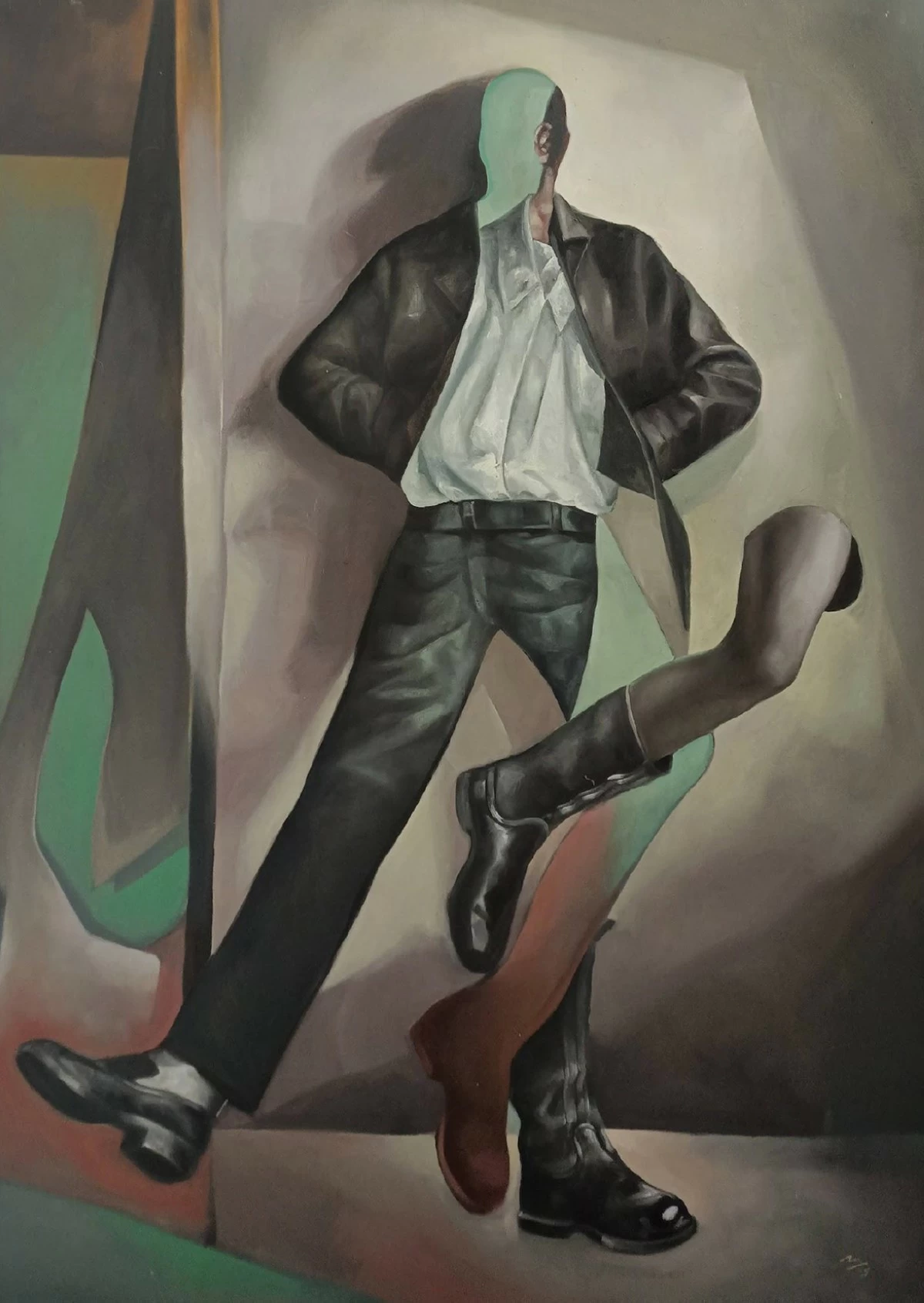
'REBEL WITHOUT A CAUSE,' oil on canvas, 44x60 inches, 2025
The satirical undertone persists in “Rebel Without a Cause,” wherein the iconic defiance of James Dean is fragmented and distorted. Legs disconnected, arms in motion, face absent. The myth of rebellion is repackaged into mere aesthetics, drained of political agency. Nina suggests that even resistance can become a brandable pose, highlighting the insidious way digital culture can co-opt and dilute genuine expression.
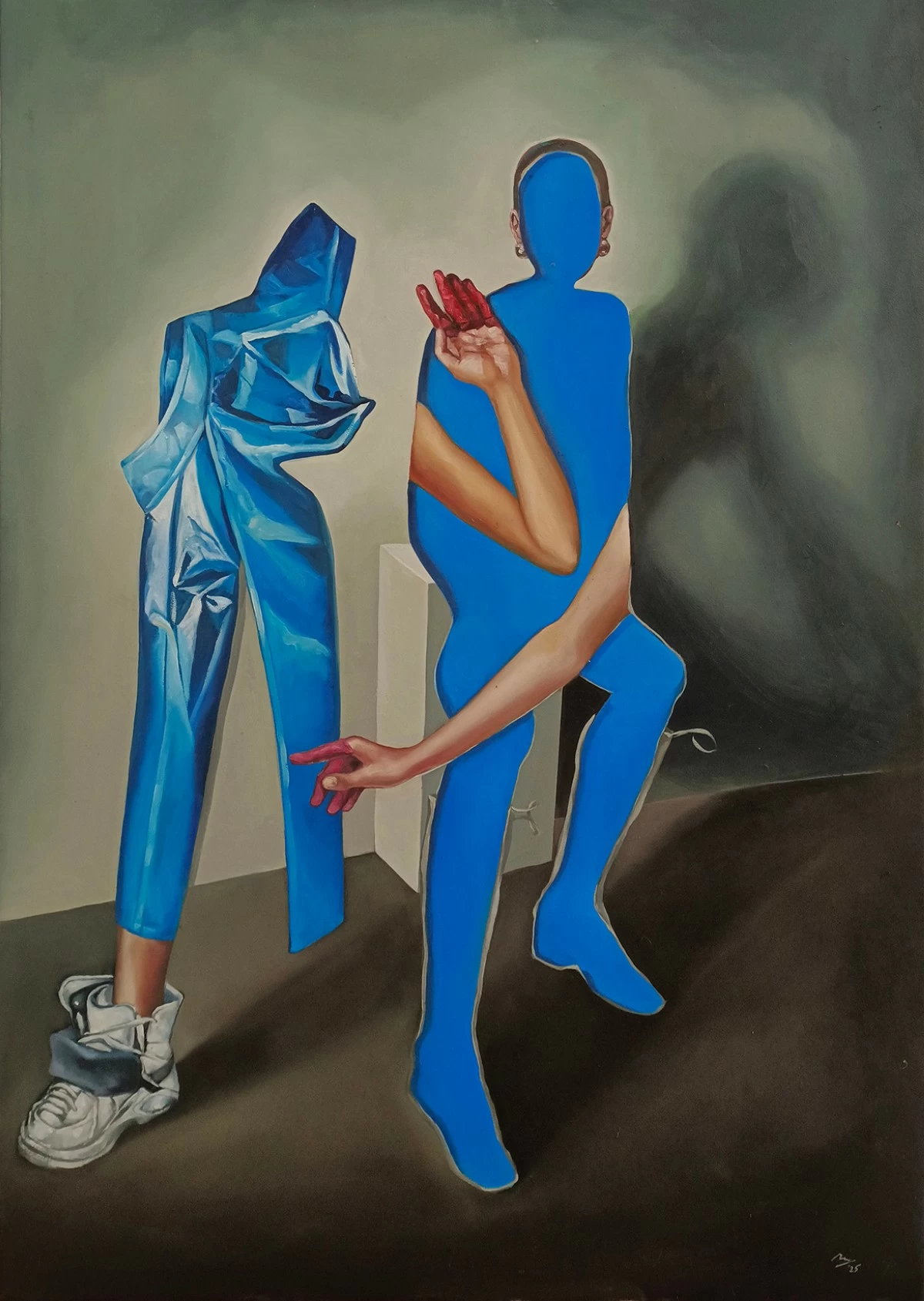
'BSOD(BLUE SCREEN OF DEATH),' oil on canvas 64x56 inches, 2025
Nina’s work throughout the exhibit is both clean and uncanny. Her use of oil on canvas grounds the work with painterly discipline, yet her references to screen culture, post-production tools, and Internet phenomenology speak to a world that feels less physical and more performative. Bodies emerge through cropping, layering, and recomposition, like avatars filtered through consumer aesthetics.
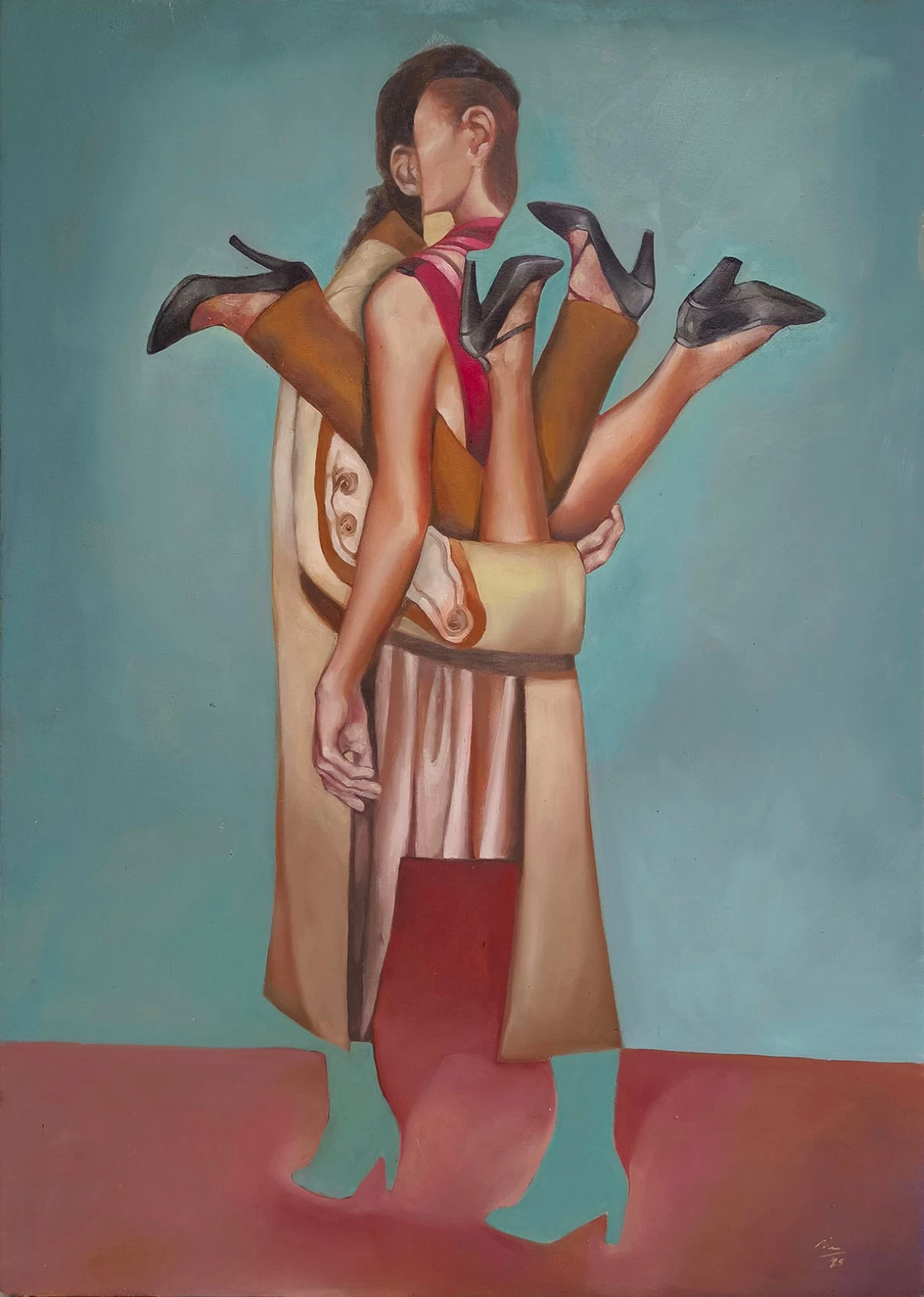
'HEAD OVER HEELS 2,' oil on canvas, 28.5x40 inches, 2025
Beneath all the sharp satire is a growing unease. In our current global landscape, marked by heightened disconnection, war, economic upheaval, and climate collapse, the metaphor of “Phantom Limb” takes on new and urgent stakes. We are not merely losing touch with, we might be severing ties with reality altogether. Her work serves as a warning that when identity is edited, the body becomes a vessel for curated self-expression.
“Phantom Limb” invites us to reflect on our digital selves and the tangible reality we risk leaving behind. The exhibit runs until July 15 at the Art Verite Gallery at BGC, Taguig.

Related Tags

Arts and Culture Artist At Work Nina Garibay Art Verite Gallery
ADVERTISEMENT
.most-popular .layout-ratio{ padding-bottom: 79.13%; } @media (min-width: 768px) and (max-width: 1024px) { .widget-title { font-size: 15px !important; } }

{{ articles_filter_1561_widget.title }}

.most-popular .layout-ratio{ padding-bottom: 79.13%; } @media (min-width: 768px) and (max-width: 1024px) { .widget-title { font-size: 15px !important; } }

{{ articles_filter_1562_widget.title }}

.most-popular .layout-ratio{ padding-bottom: 79.13%; } @media (min-width: 768px) and (max-width: 1024px) { .widget-title { font-size: 15px !important; } }

{{ articles_filter_1563_widget.title }}

{{ articles_filter_1564_widget.title }}

.mb-article-details { position: relative; } .mb-article-details .article-body-preview, .mb-article-details .article-body-summary{ font-size: 17px; line-height: 30px; font-family: "Libre Caslon Text", serif; color: #000; } .mb-article-details .article-body-preview iframe , .mb-article-details .article-body-summary iframe{ width: 100%; margin: auto; } .read-more-background { background: linear-gradient(180deg, color(display-p3 1.000 1.000 1.000 / 0) 13.75%, color(display-p3 1.000 1.000 1.000 / 0.8) 30.79%, color(display-p3 1.000 1.000 1.000) 72.5%); position: absolute; height: 200px; width: 100%; bottom: 0; display: flex; justify-content: center; align-items: center; padding: 0; } .read-more-background a{ color: #000; } .read-more-btn { padding: 17px 45px; font-family: Inter; font-weight: 700; font-size: 18px; line-height: 16px; text-align: center; vertical-align: middle; border: 1px solid black; background-color: white; } .hidden { display: none; }
function initializeAllSwipers() { // Get all hidden inputs with cms_article_id document.querySelectorAll('[id^="cms_article_id_"]').forEach(function (input) { const cmsArticleId = input.value; const articleSelector = '#article-' + cmsArticleId + ' .body_images'; const swiperElement = document.querySelector(articleSelector); if (swiperElement && !swiperElement.classList.contains('swiper-initialized')) { new Swiper(articleSelector, { loop: true, pagination: false, navigation: { nextEl: '#article-' + cmsArticleId + ' .swiper-button-next', prevEl: '#article-' + cmsArticleId + ' .swiper-button-prev', }, }); } }); } setTimeout(initializeAllSwipers, 3000); const intersectionObserver = new IntersectionObserver( (entries) => { entries.forEach((entry) => { if (entry.isIntersecting) { const newUrl = entry.target.getAttribute("data-url"); if (newUrl) { history.pushState(null, null, newUrl); let article = entry.target; // Extract metadata const author = article.querySelector('.author-section').textContent.replace('By', '').trim(); const section = article.querySelector('.section-info ').textContent.replace(' ', ' '); const title = article.querySelector('.article-title h1').textContent; // Parse URL for Chartbeat path format const parsedUrl = new URL(newUrl, window.location.origin); const cleanUrl = parsedUrl.host + parsedUrl.pathname; // Update Chartbeat configuration if (typeof window._sf_async_config !== 'undefined') { window._sf_async_config.path = cleanUrl; window._sf_async_config.sections = section; window._sf_async_config.authors = author; } // Track virtual page view with Chartbeat if (typeof pSUPERFLY !== 'undefined' && typeof pSUPERFLY.virtualPage === 'function') { try { pSUPERFLY.virtualPage({ path: cleanUrl, title: title, sections: section, authors: author }); } catch (error) { console.error('ping error', error); } } // Optional: Update document title if (title && title !== document.title) { document.title = title; } } } }); }, { threshold: 0.1 } ); function showArticleBody(button) { const article = button.closest("article"); const summary = article.querySelector(".article-body-summary"); const body = article.querySelector(".article-body-preview"); const readMoreSection = article.querySelector(".read-more-background"); // Hide summary and read-more section summary.style.display = "none"; readMoreSection.style.display = "none"; // Show the full article body body.classList.remove("hidden"); } document.addEventListener("DOMContentLoaded", () => { let loadCount = 0; // Track how many times articles are loaded const offset = [1, 2, 3, 4, 5, 6, 7, 8, 9, 10]; // Offset values const currentUrl = window.location.pathname.substring(1); let isLoading = false; // Prevent multiple calls if (!currentUrl) { console.log("Current URL is invalid."); return; } const sentinel = document.getElementById("load-more-sentinel"); if (!sentinel) { console.log("Sentinel element not found."); return; } function isSentinelVisible() { const rect = sentinel.getBoundingClientRect(); return ( rect.top < window.innerHeight && rect.bottom >= 0 ); } function onScroll() { if (isLoading) return; if (isSentinelVisible()) { if (loadCount >= offset.length) { console.log("Maximum load attempts reached."); window.removeEventListener("scroll", onScroll); return; } isLoading = true; const currentOffset = offset[loadCount]; window.loadMoreItems().then(() => { let article = document.querySelector('#widget_1690 > div:nth-last-of-type(2) article'); intersectionObserver.observe(article) loadCount++; }).catch(error => { console.error("Error loading more items:", error); }).finally(() => { isLoading = false; }); } } window.addEventListener("scroll", onScroll); });

Sign up by email to receive news.