






Manila Bulletin
 Business
Banking & Finance
Beyond 50 years in the Philippines: Deutsche Bank charts course for deeper regional integration
Business
Banking & Finance
Beyond 50 years in the Philippines: Deutsche Bank charts course for deeper regional integration
Business
Banking & Finance
Beyond 50 years in the Philippines: Deutsche Bank charts course for deeper regional integration
Beyond 50 years in the Philippines: Deutsche Bank charts course for deeper regional integration
Published Jul 12, 2025 09:00 am


Deutsche Bank celebrated its 50th anniversary in the Philippines this year, a milestone that not only underscores its deep-rooted presence in the country but also signals an ambitious forward-looking agenda. As one of the world’s leading financial institutions, the German bank is placing the Philippines firmly on the map as a key growth market in Southeast Asia—an engine of cross-border banking, capital market development, and innovation.
“We have a long-proven record here in both the Philippines and Southeast Asia more broadly,” said Alexander von zur Muehlen, Deutsche Bank’s chief executive officer (CEO) for Asia-Pacific, Europe, the Middle East and Africa, and Germany, in an interview with Manila Bulletin when he visited the country in June to headline the milestone’s celebration.
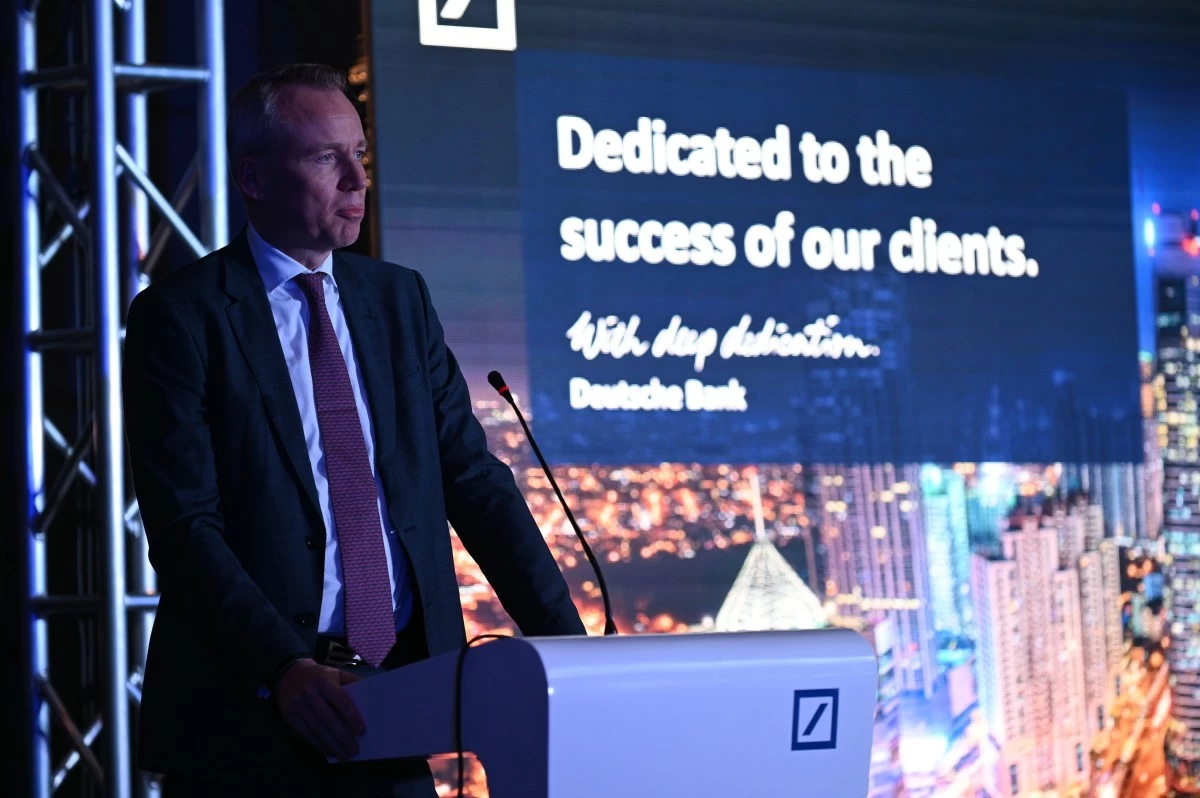
Deutsche Bank CEO for Asia-Pacific, Europe, the Middle East and Africa, and Germany
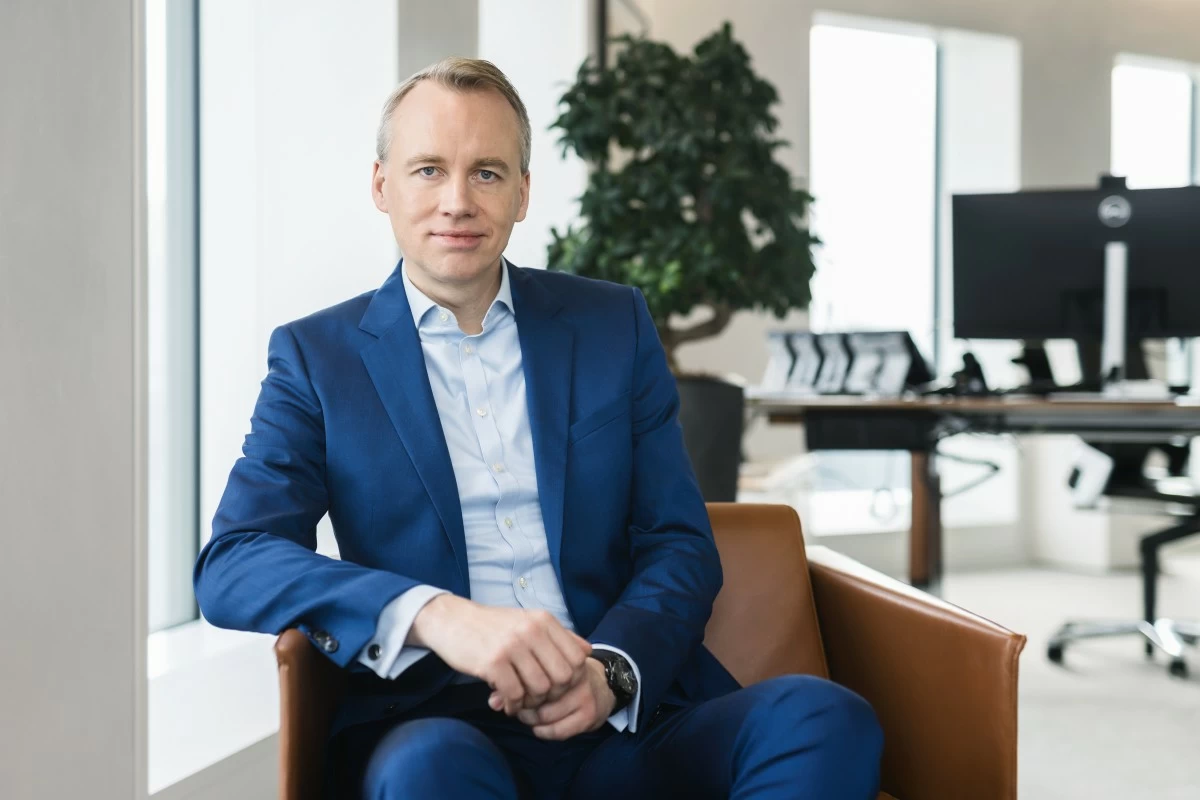
Alexander von zur Muehlen
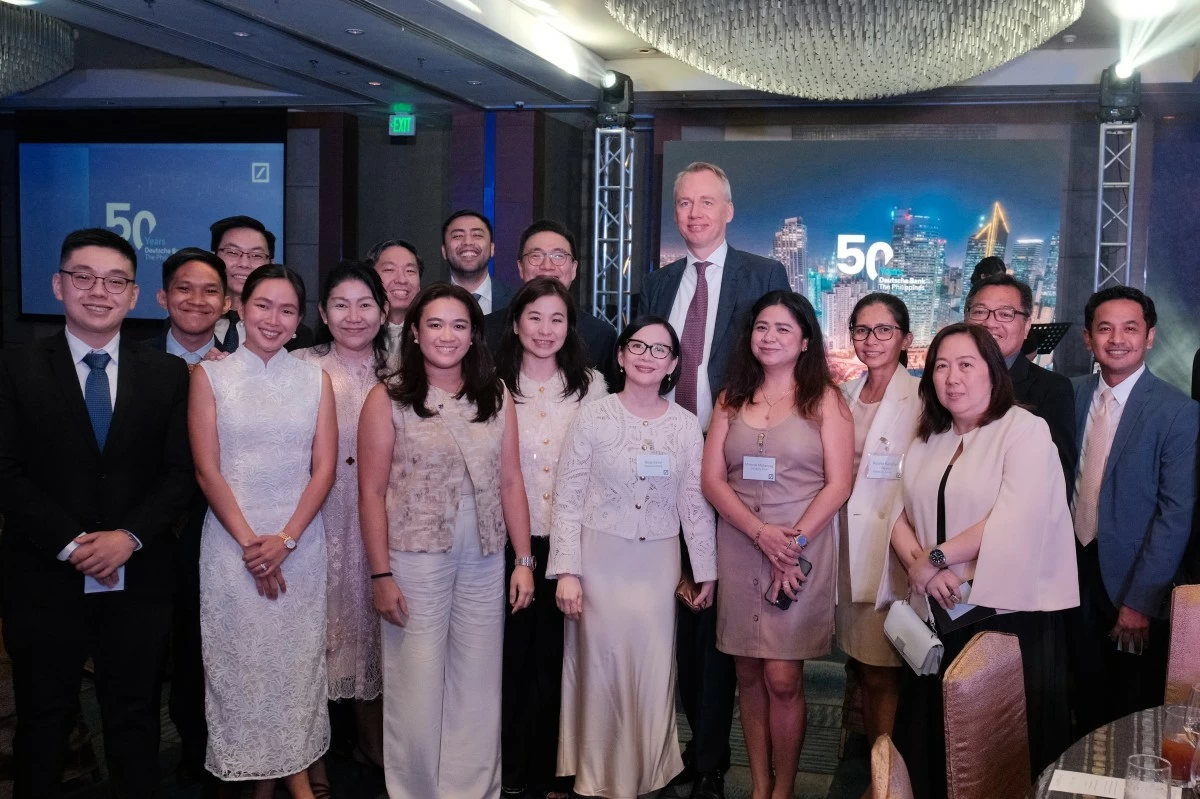
Deutsche Bank 50th anniversary in the Philippines
“We’ve been constantly growing our footprint in the country—both in terms of our operating businesses and our knowledge center,” he said, citing that “the quality of talent in the country is exceptional.”
With over 1,300 employees based in Manila, Deutsche Bank’s local workforce spans corporate banking, investment banking, and asset management, in addition to a global knowledge hub handling vital functions like finance and accounting. The bank sees the Philippines not just as a strategic location for back-end services but as a launchpad for deeper regional integration and innovation.
“Our capabilities here are more senior than what many other international institutions have in the region,” von zur Muehlen noted. “This is not just back-office work—many of our roles here have global responsibility.”
Strategic pillar in Asia-Pacific
The Philippines plays a pivotal role in Deutsche Bank’s regional and global strategy. Its location, population, and growing economy make it a natural hub for Southeast Asia—a region that the bank believes will see “over-proportional growth” in the coming years.
“The Philippines is one of the fastest-growing markets in not just Southeast Asia but Asia,” said von zur Muehlen. “We’re very positive about the country’s economic outlook. It’s an important market for us, particularly in serving multinational clients—both those coming into the country and Philippine companies expanding outward.”
“Multinational companies from Europe, the US [United States], and Asia see the Philippines as a vital market,” von zur Muehlen explained. “There’s growing demand for financing, foreign-direct-investment (FDI) support, and capital-market solutions—areas where we bring significant global expertise.”
With operations in over 60 countries, Deutsche Bank is leveraging its international network to connect Philippine businesses with the world.
Cross-border banking, capital market opportunities
As global trade and supply chains continue to diversify in the wake of geopolitical tensions and tariff wars, Deutsche Bank sees tremendous opportunity for the Philippines to become a gateway for capital and investment flows.
“There’s a rising number of clients in the Philippines requiring cross-border banking,” von zur Muehlen noted. “Whether it’s outbound investments, trade financing, or FDI inflows—we are very well positioned to support that.”
Deutsche Bank also sees growing opportunities in capital markets development. With ongoing reforms aimed at liberalizing the financial sector and attracting foreign capital, the Philippines is poised to become a more attractive destination for global investors, he said.
“Deepening the capital market is essential,” von zur Muehlen emphasized. “From government issuances to private-sector instruments, we want to help broaden the market’s depth. We’ve done this in many countries globally, and we can bring that expertise to the Philippines.”
Positive on growth amid global headwinds
While global economic and political uncertainties continue to create headwinds, Deutsche Bank remains bullish on the Philippines’ macroeconomic outlook.
“Geopolitical risk is now a core business consideration,” von zur Muehlen said. “But relative to other jurisdictions, the Philippines starts from a stronger position. Our economists forecast six-percent GDP [gross domestic product] growth in 2026, and I’ve seen nothing in the last few days in Manila that would challenge that view.”
The country’s strengths include a young and digitally-connected population, a resilient consumption base, and a service industry that continues to expand. However, the bank also sees room for improvement—particularly in infrastructure, manufacturing, and regulatory ease to attract more long-term capital.
“Countries that want to grow need to open the doors to investment,” he said. “Infrastructure—whether it’s energy, new airports, or manufacturing—will require significant capital. We can help mobilize that.”
Von zur Muehlen noted that global investors are currently in a “wait-and-see” mode due to uncertainty in trade policies and international conflicts. However, capital markets remain surprisingly resilient and, in many cases, optimistic.
“Despite all the noise, capital markets are looking through the current uncertainty,” he said. “Stock indices globally are at or near record levels. Once more clarity emerges—particularly around tariffs and trade flows—we expect a release of pent-up investment into markets like the Philippines.”
While FDI has softened amid global caution, von zur Muehlen sees this as cyclical. Capital markets, on the other hand, are already showing signs of strength, especially in terms of currency diversification and demand for emerging market (EM) exposure.
Rate cuts signal growth stimulus
The recent interest rate cuts by the Bangko Sentral ng Pilipinas (BSP) and expectations of further easing were welcomed by Deutsche Bank, both as a stimulant for capital markets and as a tailwind for lending and capital expenditure.
“Lower rates provide incentives for increased leverage and capital spending,” von zur Muehlen said. “It also helps make the Philippines more competitive. Even with rate cuts, the country will still have relatively higher nominal rates, which implies stronger growth potential.”
Deutsche Bank Research forecasts an additional 50 basis points (bps) of BSP rate cuts before year-end, helping to further lower the cost of capital and spur economic activity.
Local knowledge and innovation
Deutsche Bank’s success in the Philippines is rooted in its ability to balance global reach with local expertise—a strategy the bank calls “deep localization” in each market it operates in. According to von zur Muehlen, this means being more than a branch office: it means being embedded in the ecosystem.
“To be effective in EMs, you need to understand the culture, navigate the regulatory framework, and have real people on the ground,” he said. “That’s why we invest in talent, maintain strong relationships with regulators, and are fully integrated into the financial and social fabric of the countries we operate in.”
“Being a global network means being deeply local. You can’t just parachute in; you need to be embedded in the society, understand the regulatory framework, speak the language, and engage face-to-face.”
This philosophy allows Deutsche Bank to bring world-class solutions to local clients while adapting to specific market needs.
Innovation is another pillar of Deutsche Bank’s future in the Philippines. Manila has become a testbed for artificial intelligence (AI) applications and digital solutions, reflecting both the country’s strong tech talent and the bank’s confidence in local capabilities.
“We’re piloting global digital and AI initiatives out of Manila,” von zur Muehlen revealed. “There’s a high level of digital affinity and a young, educated workforce that makes the Philippines ideal for innovation.”
Deutsche Bank is also forming strategic partnerships in the region to scale up its capabilities—especially in security, financial technology (fintech) integration, and platform-based services.
“We’re running a few initiatives here that are then set for global rollout,” he said. “That speaks volumes about the Philippines’ value to our global operations.”
A confident future
After 50 years in the Philippines, Deutsche Bank is more than just a foreign investor—it is a committed, embedded, and evolving partner in the country’s economic development.
Whether through cross-border finance, capital market deepening, or digital innovation, the bank is gearing up to play an even more significant role in the next chapter of the Philippine growth story.
“We want to support companies entering the Philippines, and help Philippine companies going global,” von zur Muehlen concluded. “We see ourselves expanding across all relevant areas—corporate banking, investment banking, asset management, and our knowledge center. The Philippines is, and will continue to be, a strategic priority for Deutsche Bank.”
As global markets shift and Southeast Asia rises, the Philippines stands at a strategic crossroads. And Deutsche Bank, with its half-century of local experience and global muscle, intends to be right at the center of it.