






Manila Bulletin
 Philippines
National
'Wrong move pala?': Ridon explains how Rome Statute exit hurt Duterte's chances of interim release from ICC
Philippines
National
'Wrong move pala?': Ridon explains how Rome Statute exit hurt Duterte's chances of interim release from ICC
Philippines
National
'Wrong move pala?': Ridon explains how Rome Statute exit hurt Duterte's chances of interim release from ICC
'Wrong move pala?': Ridon explains how Rome Statute exit hurt Duterte's chances of interim release from ICC
Published Jul 11, 2025 07:25 pm


At A Glance
- Then-president Rodrigo Duterte's decision to yank the Philippines out of the Rome Statute, which created the International Criminal Court (ICC), has come back to bite him in a big way.
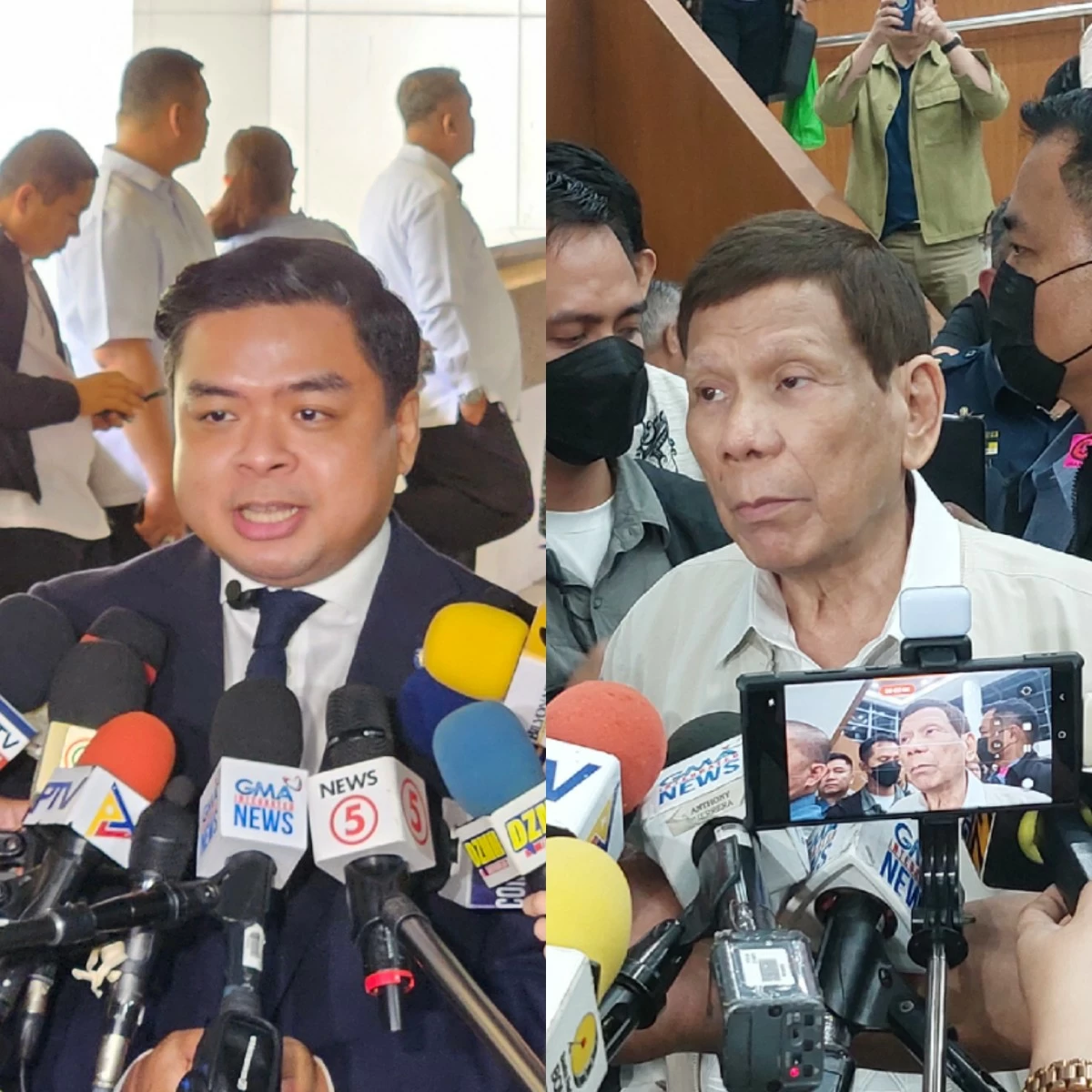
Bicol Saro Party-list Rep. Terry Ridon (left), former president Rodrigo Duterte (Ellson Quismorio/ MANILA BULLETIN)
Then-president Rodrigo Duterte's decision to yank the Philippines out of the Rome Statute, which created the International Criminal Court (ICC), has come back to bite him in a big way.
This can be gleaned from the statement of Bicol Saro Party-list Rep. Terry Ridon Friday, July 11, as he chimed in on calls for the Philippine government to cooperate with the ICC for the interim release of the incarcerated former president.
Such calls apparently originated from the Senate, which is teeming with Duterte family allies.
"To be clear, if the Duterte government did not exit the Rome Statute, an interim release to the Philippines, or a house arrest within a foreign [Philippine] facility, would have been a real possibility. This is not a possibility today as a result of the former president’s decision to withdraw from the ICC," Ridon said.
It was March 2018 when then-president Duterte ordered the withdrawal of the Philippines from the Rome Statute.
The United Nations (UN)-backed ICC, based at The Hague, had been looking into Duterte's bloody war on illegal drugs for alleged crimes against humanity. Last March 11, the ex-leader was arrested in Manila, loaded into a plane, and flown to the Netherlands where he remains in jail while undergoing trial.
If only "Tatay Digong" had more foresight, this could have been avoided, Ridon said.
"Non-party states, such as the Philippines, are under no obligation to cooperate with the International Criminal Court, including matters relating to the interim release of detained persons," said the lawyer-legislator.
"The obligation to cooperate with the ICC ceased on 17 March 2019, one year after the pronouncement of former President Rodrigo Duterte that the Philippines is withdrawing from the Rome Statute," he said.
"Former Foreign Affairs Secretary Alan Peter Cayetano stated then, 'Our decision to pull out of the Court is a principled stand against those who politicize and weaponize human rights,'" Ridon added.