







Flood management must include impact of reclamation
Published Jul 11, 2025 12:05 am
|
Updated Jul 10, 2025 06:13 pm


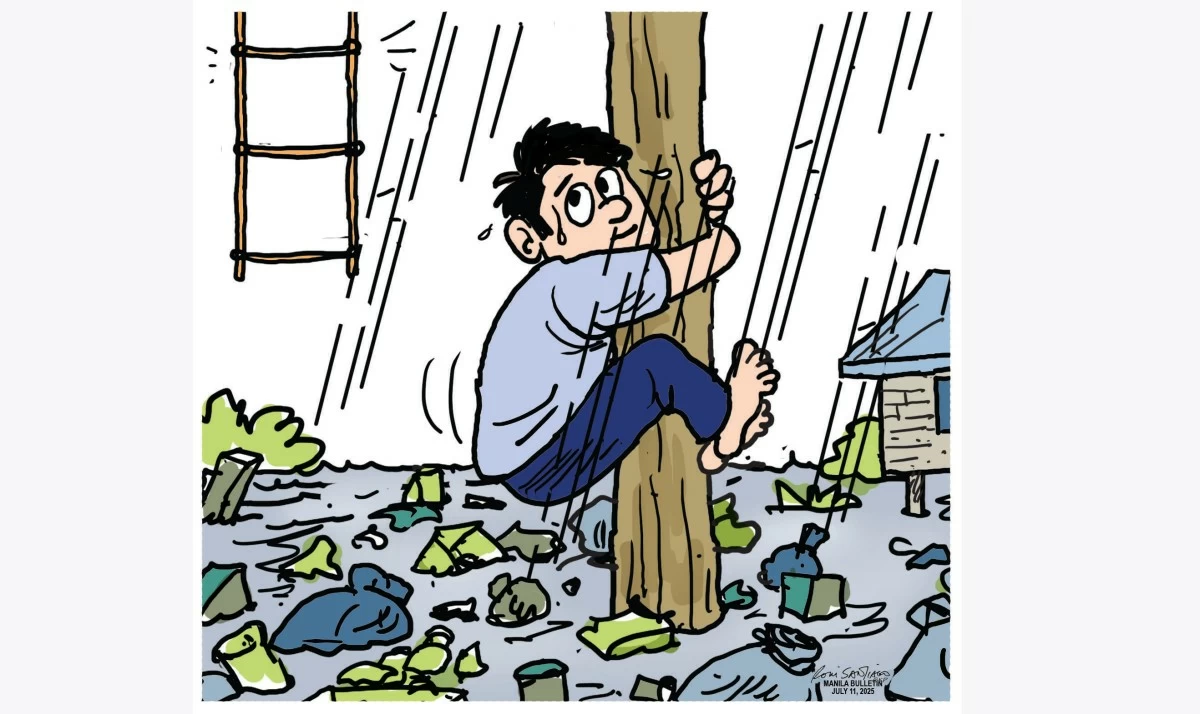
The rainy season is here and we have been experiencing floods here and there, especially in low-lying areas.
For instance in Metro Manila and neighboring provinces, among the low-lying areas are Manila, Pasay City, Navotas, Malabon, and parts of Cavite, Bulacan, and Pampanga.
While stopping floods may be impossible, human intervention could either mitigate or aggravate it.
This is why House Bill No. 170, or the proposed Flood Management Act of 2025, and House Bill No. 171 or the Waste Treatment Technology Act, both authored by Valenzuela City 1st District Representative Kenneth Gatchalian, come as a welcome development.
HB 170 is particularly striking. Unlike past efforts that responded to disaster only after devastation had already been carved into our homes, this bill charts a new course—one rooted in prevention, resilience, and foresight. It recognizes a truth we’ve known too long but acted on too rarely: that we cannot keep rebuilding what we refuse to protect in the first place. With Metro Manila and many other parts of the country living under the shadow of annual deluges, this shift from reactive band-aid solutions to a robust, proactive flood mitigation strategy is both wise and vital.
But if we expect HB 170 as a beacon of environmental responsibility, then it must go all the way. The bill cannot ignore the man-made accelerators of flooding. Chief among them are the controversial and relentless reclamation projects along Manila Bay.
An assessment conducted by the Department of Environment and Natural Resources (DENR) warned of what many scientists and urban planners have been sounding the alarm about for years. Reclamation blocks natural drainage paths, intensifying both inland and coastal flooding. Water that once had a route to escape is now trapped, redirected, and amplified in its destructiveness, especially in low-lying areas of Metro Manila and suburbs.
To omit this hard truth from the proposed National Flood Management Master Plan would be to miss the forest for the trees. If the legislation truly seeks to “protect lives and property,” it must confront the economic interests masquerading as progress. It must be bold enough to say that no infrastructure is worth more than the lives it endangers, and that no shoreline should be privatized at the cost of drowning entire communities.
Reclamation projects in Manila Bay, through dump-and-fill, are certain to contribute to the rising sea level. That is the Archimedes principle in which any body completely or partially submerged in a fluid is acted upon by an upward force, or what is called a buoyant force. Under this principle, there is no other way for water in Manila Bay to go, but up with these reclamation projects. This may eventually submerge low-lying areas in Metro Manila and neighboring localities.
Therefore, inclusion of measures to address the adverse impact of reclamation projects in Manila Bay in HB 170 would show that this legislation is not just another paper shield. It would be an act of courage of putting public interest before profit, of leading with reason and not just reaction.
Meanwhile, HB 171, the Waste Treatment Technology Act, offers another piece of the puzzle. For a country grappling with ever-mounting garbage, outdated landfill practices, and plastic-choked rivers, this bill could modernize how we deal with waste. But again, it must be vigilant. Waste treatment must not become a euphemism for incineration or other “quick fixes” that simply relocate the problem from our sidewalks to our skies.
In the twin bills, we find hope. But hope needs direction. Policy must not only reflect good intentions; it must confront inconvenient realities.
The water is rising dangerously more than ever. But with these proposals on the table, we have the chance to rise above adversity faster.
Congress must stand, act, and legislate now with boldness for the sake of public interest and the safety of everyone.