






Manila Bulletin
 Philippines
National
9 years after win, China continues to reject PH's Arbitral Award over WPS—Lazaro
Philippines
National
9 years after win, China continues to reject PH's Arbitral Award over WPS—Lazaro
Philippines
National
9 years after win, China continues to reject PH's Arbitral Award over WPS—Lazaro
9 years after win, China continues to reject PH's Arbitral Award over WPS—Lazaro
Published Jul 11, 2025 06:30 pm


Nine years after the arbitral ruling in the West Philippine Sea was granted to the Philippines, challenges and uncertainties in the disputed waters remain.
But the Philippines will not waver in fighting for the award and international law.
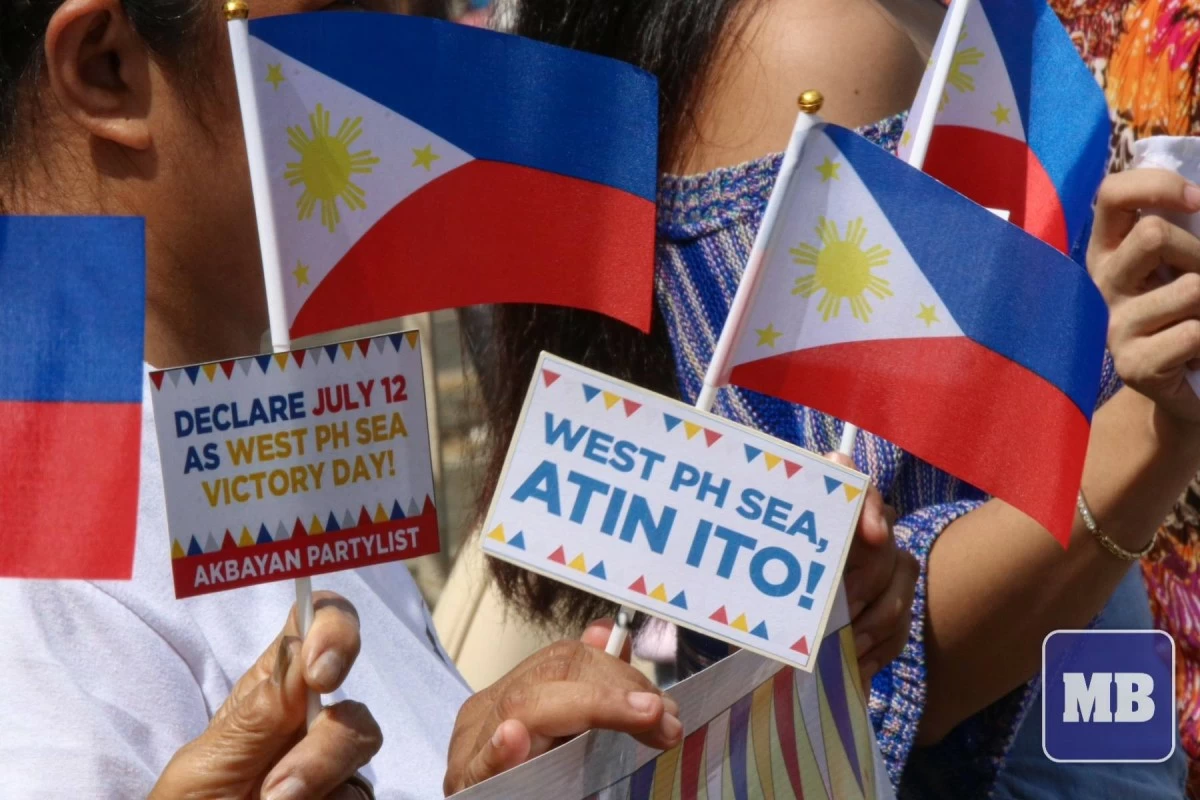
Members of Akbayan Partylist celebrate “West Philippine Sea Victory Day” and commemorate the anniversary of the Philippines’ 2016 Arbitral Tribunal victory by waving flags during a program in Quezon City on July 11, 2025. The Permanent Court of Arbitration (PCA) in The Hague, Netherlands issued on July 12, 2016 an arbitral ruling which declared that China’s nine-dash line claims, including those within the Philippines’ exclusive economic zone (EEZ), have no legal basis under international law. (Photo: Santi San Juan / MANILA BULLETIN)
Department of Foreign Affairs (DFA) Secretary Ma. Theresa Lazaro made the statement in her remarks during the annual conference of the arbitral victory held on Friday, July 11.
Lazaro said the Philippines will continue to firmly reject attempts to undermine the country's 2016 victory.
“The challenges are clear and the uncertainties remain in the maritime domain, but the Philippines will not waver in firmly rejecting attempts to undermine the Award and international law,” Lazaro affirmed.
“Nine years hence, its legitimacy continues to be tested, challenged and subverted, putting not only the Philippines’ maritime interests in peril, but also the regional stability and prosperity we are all working so hard to achieve,” Lazaro added.
“It is worrisome that China has continued to reject the binding Arbitral Award and persists with illegal, coercive, and aggressive actions under cover of a revisionist, self-serving interpretation and application of international law, particularly UNCLOS,” she further said.
She stressed that “being on the right side of the rules-based order and international law makes it easier for others to join us in taking a stand and forming a tight bond that can withstand illegal and unfounded claims and aggressive actions at sea.”
“The waters may continue to be rough and turbulent, but together we can steady the sails and navigate through obstacles, as we defend the rules-based order in the maritime domain,” she further said.
Lazaro said the Philippines will continue to be a firm advocate for the rules-based order governed by international law, especially in the maritime domain.
She also stressed the importance to continue making the international community more aware and appreciative of the validity, legal clarity and the inspiration provided by the South China Sea Arbitration.
“The Award not only sets reason and right in the South China Sea, but is like a lighthouse that guides how maritime matters and concerns in the region ought to be addressed. It is a telling reminder to the world that all countries regardless of size, might or capacity must meet their duties and obligations, especially under UNCLOS, including compliance with rulings by its legitimate tribunals and bodies,” Lazaro said.
Reinforcing the country's defense and security capabilities is important, as well as building national capacities to enable authorities to assert, protect, and defend national interests, the DFA chief said.
China continues to ignore ruling
On the same occasion, the United States reaffirmed its support to the Philippines, citing its 75-year-old treaty alliance.
“The Philippines, as a proud maritime nation, has courageously upheld its lawful rights. The United States stands firmly with you, resolute in support of freedom of navigation, overflight, and the principles enshrined in the law of the sea. Our 75-year-old treaty Alliance does not just reflect the historical record of our mutual commitment; it is a living, dynamic partnership," US Ambassador MaryKay Carlson said in her speech.
The American envoy stated this as she recognized that the South China Sea, known locally as the West Philippine Sea, continues to face challenges from “actions that undermine international law and threaten the rights of sovereign nations.”
“As clearly provided in the Convention, the decision was and remains final and legally binding on the Philippines and China, and is a beacon guiding us toward a future where powerful countries cannot trample on the legal rights of other States,” Carlson said.
“Yet nine years on, Beijing has ignored the ruling and continues to operate with impunity,” she added.
China, the envoy said, “has unlawfully asserted 'territorial sovereignty' and other exclusive rights over huge areas of ocean space where international law provides that all countries enjoy high seas freedoms of navigation and overflight and other lawful uses of the sea.”
“China continues to engage in illegal, coercive, aggressive, and deceptive actions in support of its spurious claims. Dangerous maneuvers, environmental degradation, and interference with lawful activities in the South China Sea threaten the rights of the Philippines and other claimant states as well as the stability of the region,” Carslon further said.
“The United States stands with the Philippines in condemning these aggressive actions and in upholding the 2016 ruling,” she added.
China commits to resolve disputes peacefully, but will never accept Arbitral award-backed claims
While China continues to assert that its territorial sovereignty and maritime rights and interests in the South China Sea “shall under no circumstances be affected by the Arbitral Tribunal awards,” it stated that it stands ready to resolve disputes peacefully.
“China stands ready to continue to resolve the relevant disputes peacefully through negotiation and consultation with the states directly concerned on the basis of respecting historical facts and in accordance with international law,” the Government of the People's Republic of China said.
“China respects and upholds the freedom of navigation and overflight enjoyed by all states under international law in the South China Sea, and stays ready to work with other coastal states and the international community to ensure the safety of and the unimpeded access to the international shipping lanes in the South China Sea,” China added.
It, however, stressed that it “opposes and will never accept any claim or action based on the Arbitral Tribunal awards.”
“The Chinese government reiterates that, regarding territorial issues and maritime delimitation disputes, China does not accept any means of third party dispute settlement or any solution imposed on China,” the Chinese government said.