ADVERTISEMENT

US confirms live-fire test of NMESIS missiles in PH locations near Taiwan

Published Jul 10, 2025 04:38 pm
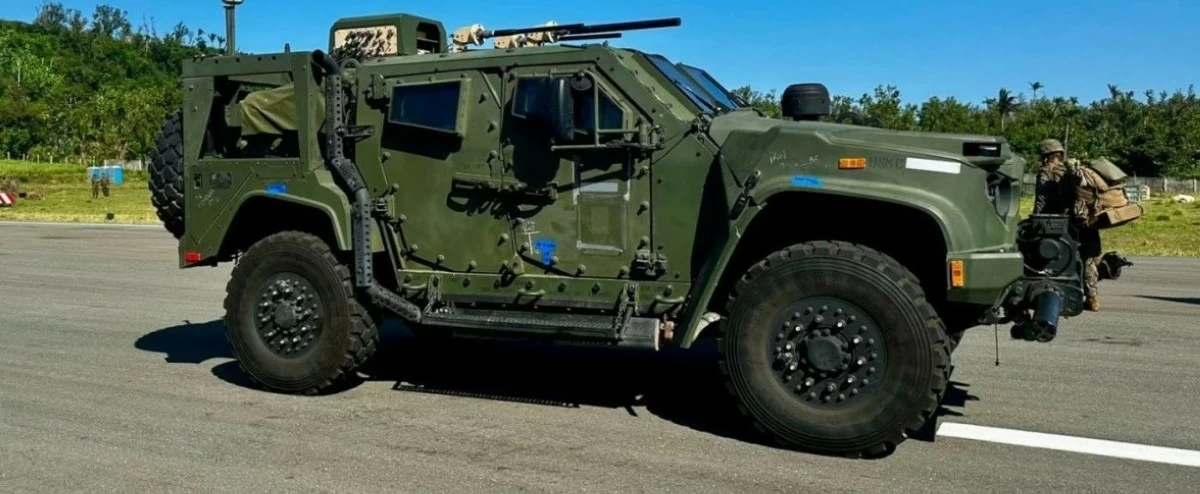
The Navy-Marine Expeditionary Ship Interdiction System (NMESIS), a US-made anti-ship missile system, is deployed to the Philippines during the Balikatan Exercise on April 26, 2025. (Photo: Armed Forces of the Philippines)
The United States confirmed on Thursday, July 10, that its Navy–Marine Expeditionary Ship Interdiction System (NMESIS) missile system was used for the first time in a live-fire test in the Philippines during the recent Balikatan Exercise.
US Pacific Fleet Commander Admiral Stephen Koehler said that NMESIS anti-ship missiles were fired alongside amphibious vehicle drills, the High Mobility Artillery Rocket System (HIMARS), and unmanned systems during the joint exercises.
“We test-fired NMESIS missiles, operated amphibious vehicles and HIMARS, and trained with unmanned systems, and conducted full battle tests and real-world scenarios,” Koehler said in his speech during the closing ceremony of the Pacific Amphibious Leaders Symposium (PALS) in Taguig City, which was co-hosted by the US Marine Corps (USMC) and Philippine Marine Corps (PMC).
The missile system was deployed by the US Marines in strategic maritime terrain across northern Luzon and Batanes Islands, both vital chokepoints near Taiwan, during the Balikatan Exercise from April 21 to May 9.
It was also used during the Kamandag Exercise from May 26 to June 6, but the test-firing did not push through due to undisclosed reasons.
The deployment marked the first time that the US Marines positioned the “ship killer” missiles on Philippine soil to increase their deterrence capabilities against China in the West Philippine Sea (WPS).
A ground-based, vehicle-mounted launcher, the NMESIS is capable of firing the Naval Strike Missile (NSM), its primary weapon, with a range of up to 185 kilometers, enhancing a force’s coastal defense and maritime security capability.
Philippine Navy (PN) spokesperson Captain John Percie Alcos said that the NMESIS will remain in the country “for as long as training opportunities are still there for us.”
Aside from the NMESIS, the US Army Pacific (USARPAC) also deployed its Typhon Mid-Range Capability (MRC) missile system to the Philippines in April 2024 for the Salaknib Exercise with the Philippine Army.

Related Tags

NMESIS US Marines Philippine Marine Corps PALS PH-China Taiwan missile Balikatan
ADVERTISEMENT
.most-popular .layout-ratio{ padding-bottom: 79.13%; } @media (min-width: 768px) and (max-width: 1024px) { .widget-title { font-size: 15px !important; } }

{{ articles_filter_1561_widget.title }}

.most-popular .layout-ratio{ padding-bottom: 79.13%; } @media (min-width: 768px) and (max-width: 1024px) { .widget-title { font-size: 15px !important; } }

{{ articles_filter_1562_widget.title }}

.most-popular .layout-ratio{ padding-bottom: 79.13%; } @media (min-width: 768px) and (max-width: 1024px) { .widget-title { font-size: 15px !important; } }

{{ articles_filter_1563_widget.title }}

{{ articles_filter_1564_widget.title }}

.mb-article-details { position: relative; } .mb-article-details .article-body-preview, .mb-article-details .article-body-summary{ font-size: 17px; line-height: 30px; font-family: "Libre Caslon Text", serif; color: #000; } .mb-article-details .article-body-preview iframe , .mb-article-details .article-body-summary iframe{ width: 100%; margin: auto; } .read-more-background { background: linear-gradient(180deg, color(display-p3 1.000 1.000 1.000 / 0) 13.75%, color(display-p3 1.000 1.000 1.000 / 0.8) 30.79%, color(display-p3 1.000 1.000 1.000) 72.5%); position: absolute; height: 200px; width: 100%; bottom: 0; display: flex; justify-content: center; align-items: center; padding: 0; } .read-more-background a{ color: #000; } .read-more-btn { padding: 17px 45px; font-family: Inter; font-weight: 700; font-size: 18px; line-height: 16px; text-align: center; vertical-align: middle; border: 1px solid black; background-color: white; } .hidden { display: none; }
function initializeAllSwipers() { // Get all hidden inputs with cms_article_id document.querySelectorAll('[id^="cms_article_id_"]').forEach(function (input) { const cmsArticleId = input.value; const articleSelector = '#article-' + cmsArticleId + ' .body_images'; const swiperElement = document.querySelector(articleSelector); if (swiperElement && !swiperElement.classList.contains('swiper-initialized')) { new Swiper(articleSelector, { loop: true, pagination: false, navigation: { nextEl: '#article-' + cmsArticleId + ' .swiper-button-next', prevEl: '#article-' + cmsArticleId + ' .swiper-button-prev', }, }); } }); } setTimeout(initializeAllSwipers, 3000); const intersectionObserver = new IntersectionObserver( (entries) => { entries.forEach((entry) => { if (entry.isIntersecting) { const newUrl = entry.target.getAttribute("data-url"); if (newUrl) { history.pushState(null, null, newUrl); let article = entry.target; // Extract metadata const author = article.querySelector('.author-section').textContent.replace('By', '').trim(); const section = article.querySelector('.section-info ').textContent.replace(' ', ' '); const title = article.querySelector('.article-title h1').textContent; // Parse URL for Chartbeat path format const parsedUrl = new URL(newUrl, window.location.origin); const cleanUrl = parsedUrl.host + parsedUrl.pathname; // Update Chartbeat configuration if (typeof window._sf_async_config !== 'undefined') { window._sf_async_config.path = cleanUrl; window._sf_async_config.sections = section; window._sf_async_config.authors = author; } // Track virtual page view with Chartbeat if (typeof pSUPERFLY !== 'undefined' && typeof pSUPERFLY.virtualPage === 'function') { try { pSUPERFLY.virtualPage({ path: cleanUrl, title: title, sections: section, authors: author }); } catch (error) { console.error('ping error', error); } } // Optional: Update document title if (title && title !== document.title) { document.title = title; } } } }); }, { threshold: 0.1 } ); function showArticleBody(button) { const article = button.closest("article"); const summary = article.querySelector(".article-body-summary"); const body = article.querySelector(".article-body-preview"); const readMoreSection = article.querySelector(".read-more-background"); // Hide summary and read-more section summary.style.display = "none"; readMoreSection.style.display = "none"; // Show the full article body body.classList.remove("hidden"); } document.addEventListener("DOMContentLoaded", () => { let loadCount = 0; // Track how many times articles are loaded const offset = [1, 2, 3, 4, 5, 6, 7, 8, 9, 10]; // Offset values const currentUrl = window.location.pathname.substring(1); let isLoading = false; // Prevent multiple calls if (!currentUrl) { console.log("Current URL is invalid."); return; } const sentinel = document.getElementById("load-more-sentinel"); if (!sentinel) { console.log("Sentinel element not found."); return; } function isSentinelVisible() { const rect = sentinel.getBoundingClientRect(); return ( rect.top < window.innerHeight && rect.bottom >= 0 ); } function onScroll() { if (isLoading) return; if (isSentinelVisible()) { if (loadCount >= offset.length) { console.log("Maximum load attempts reached."); window.removeEventListener("scroll", onScroll); return; } isLoading = true; const currentOffset = offset[loadCount]; window.loadMoreItems().then(() => { let article = document.querySelector('#widget_1690 > div:nth-last-of-type(2) article'); intersectionObserver.observe(article) loadCount++; }).catch(error => { console.error("Error loading more items:", error); }).finally(() => { isLoading = false; }); } } window.addEventListener("scroll", onScroll); });

Sign up by email to receive news.