







Stakeholders seek anti-discrimination law for ex-PDLs
By Trixee Rosel
Published Jul 10, 2025 04:57 pm


At A Glance
- A national policy forum organized by Climate Conflict Action Asia (CCAA) called for an anti-discrimination law to support the reintegration of former persons deprived of liberty (PDLs).
- BJMP officials proposed tax incentives for companies hiring former PDLs and raised concerns over persistent employment discrimination.
- Restorative justice was highlighted as part of broader reforms to reduce recidivism and improve community-based rehabilitation.
- CCAA will lead a multisectoral roundtable to finalize legislative proposals aimed at eliminating stigma against former detainees.
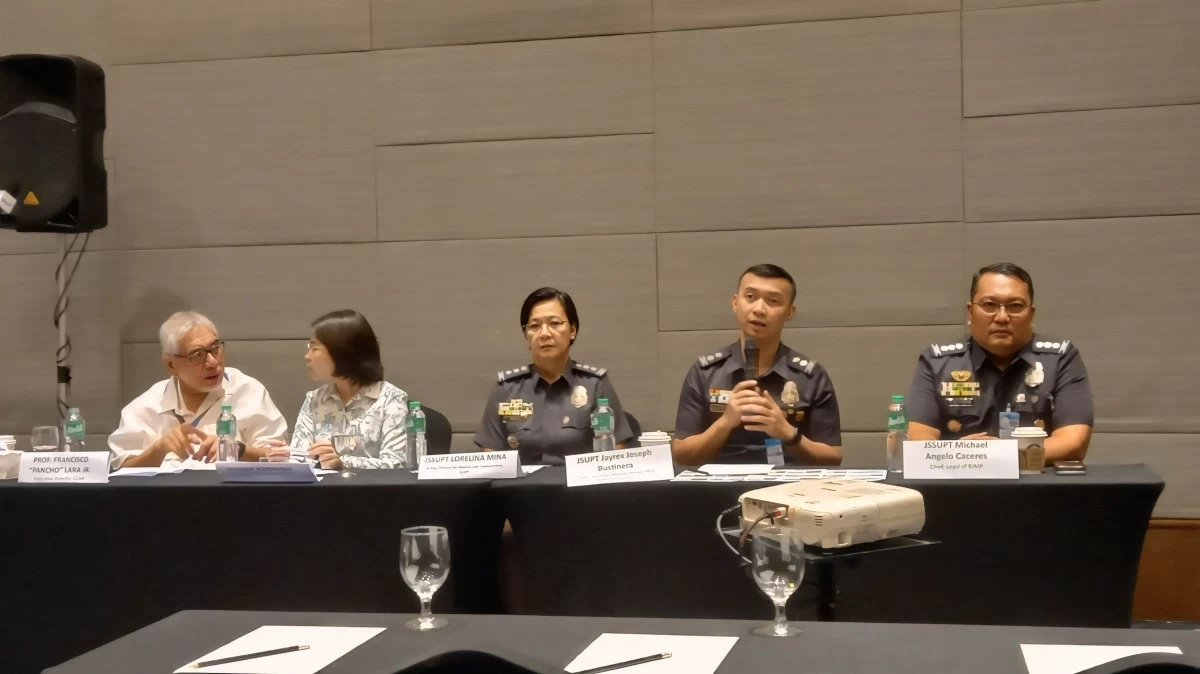
Professor Francisco “Pancho” Lara Jr. and Phoebe Adorable of Climate Conflict Action Asia (CCAA) join BJMP officials Jail Senior Superintendent Lorelina Mina, Jail Superintendent Jayrex Joseph Bustinera, and Jail Senior Superintendent Michael Angelo Caceres in presenting key policy recommendations during a national forum on July 10, 2025, in Quezon City, aimed at promoting legal safeguards for the reintegration of former persons deprived of liberty (PDLs) into society. (Trixee Rosel/MB)
Jail officials from the Bureau of Jail Management and Penology (BJMP), together with civil society groups and justice reform advocates, called for the passage of an anti-discrimination law to support the reintegration of former persons deprived of liberty (PDLs) into society.
The call was made during a national policy forum organized by Climate Conflict Action Asia (CCAA) on Thursday, July 10, which focused on strengthening legal safeguards, offering economic incentives, and advancing systemic reforms for former detainees.
Among those who shared key insights during the forum were Jail Senior Superintendent Lorelina Mina, Acting Director for Welfare and Development of the BJMP; Jail Superintendent Jayrex Joseph Bustinera, spokesperson of the BJMP; Jail Senior Superintendent Michael Angelo Caceres, Chief Legal Officer of the BJMP; Phoebe Adorable, Programme Manager of CCAA; and Professor Francisco “Pancho” Lara Jr., Executive Director of CCAA.
Mina said former PDLs continue to face prejudice despite completing rehabilitation programs and earning government-recognized skills certifications.
She emphasized the need for legislation that prohibits employment discrimination and recommended tax incentives for companies that hire former detainees.
Data from the BJMP show that over 100,000 inmates have completed education under the Alternative Learning System, while more than 66,000 received TESDA-accredited technical and livelihood training.
“These are not just numbers—they are people rebuilding their lives,” Mina said.
Bustinera noted that while efforts to decongest jail facilities are ongoing—including the construction of 142 new jails and more in development—the underlying issue remains unresolved.
“More are coming in while others leave and return due to the same hostile environment,” he said.
Adorable warned that the absence of legal safeguards and sustained community support increases the risk of recidivism, adding that reintegration should be supported not only socially but also through national policy.
“If you release people into the same hostile environment, they’re bound to fall back,” she said. “Reintegration must be legally protected, not just socially encouraged.”
Lara echoed the call, stressing that former PDLs should no longer be treated as an afterthought in national justice policy.
Restorative justice was also acknowledged as a critical component of broader reform.
Caceres said the BJMP is building peer support networks composed of legal professionals trained in restorative practices.
“This supports accountability while reducing harm and building a community-based justice system,” he said.
He reported that BJMP has reduced jail congestion from 600 percent in 2018 to 296 percent in 2024 but cautioned that long-term decongestion will remain elusive without expanded use of non-custodial sentencing and deeper systemic change.
Adorable also highlighted the importance of reshaping public perception, particularly in addressing the misconception that restorative justice is soft on crime.
“It’s not about being soft—it’s about preventing repeat offenses by addressing root causes,” she said, calling on the media and education sectors to help shift the narrative.
CCAA is set to convene a multisectoral roundtable in the coming weeks to finalize policy proposals for Congress aimed at eliminating stigma and discrimination against former PDLs.