







Philippines braces for fallout from higher Trump tariffs
By Dexter Barro II and Derco Rosal
Published Jul 10, 2025 04:22 pm


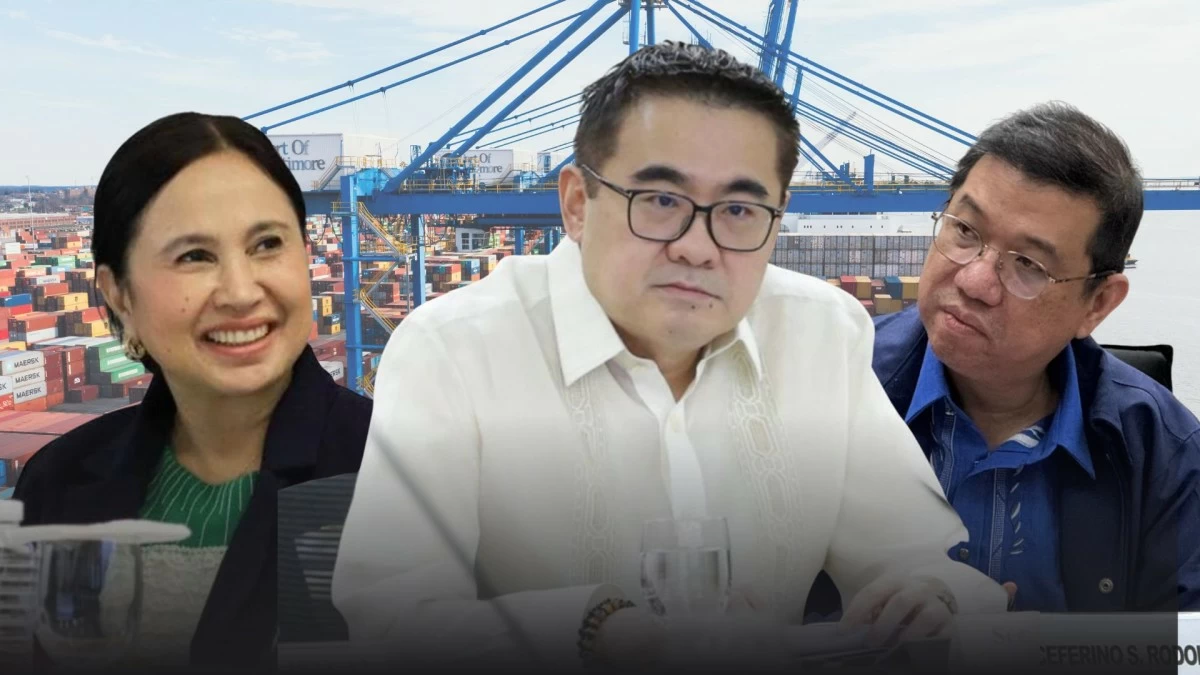
A Philippine economic delegation, including Trade Secretary Cristina Roque, SAPIEA Secretary Frederick Go, and BOI Managing Head Ceferino Rodolfo, will travel to the United States (US) next week for negotiations with American counterparts.
Department of Trade and Industry (DTI) Secretary Cristina Roque said the government remains “optimistic” about securing a beneficial trade deal with the United States (US), even as President Donald Trump hiked tariffs on Philippine goods to 20 percent.
“Of course we’re always optimistic, and we always look at the brighter side every time we go,” Roque told a press briefing on Thursday, July 10.
While she did not elaborate on the details, the DTI chief said the Marcos administration’s economic team is planning to meet soon to craft the country’s next step in the negotiation process.
Next week, a Philippine delegation featuring the country’s economic team will visit the US to hold negotiations with their American counterparts. This will feature Roque, Special Assistant to the President for Investment and Economic Affairs (SAPIEA) Secretary Frederick Go, and Board of Investments (BOI) Managing Head Ceferino Rodolfo.
The aim of the meeting is to pursue a “more comprehensive bilateral trade agreement” aimed at fostering a mutually beneficial relationship. Roque said the government is banking on the enduring trade relationship with the US to get the best possible deal.
The upcoming dialogue will be the second face-to-face meeting of Philippine and US officials on tariffs.
Roque said the country signed a non-disclosure agreement (NDA) barring them from talking about details, but she previously assured that the meeting “went very well” and that the country’s assertions “were well received.”
In a letter addressed to President Ferdinand “Bongbong” Marcos Jr. dated July 9, Trump announced a 20-percent tariff rate on goods imported from the Philippines beginning Aug. 1.
“We will charge the Philippines a Tariff of only 20% on any and all Philippine products sent into the United States, separate from all Sectoral Tariffs,” Trump said in the letter, describing the trade relationship between the two countries as “far from reciprocal.”
“Please understand that the 20% number is far less than what is needed to eliminate the Trade Deficit disparity we have with your Country,” he added.
The new rate is higher than the initial 17‑percent tariff that Trump announced in April as part of the so‑called reciprocal tariffs against the majority of the US’ trading partners.
He later suspended the implementation of these higher tariffs—barring the 10‑percent baseline—until July 9 to allow for negotiations. This has since been postponed to Aug. 1.
Trump said these tariffs are necessary to “correct” the trade deficits against the US, which he claims are a “major threat” to the American economy and national security.
Based on data from the Office of the US Trade Representative (USTR), the US’ goods trade deficit with the Philippines reached $4.9 billion in 2024, meaning it imported more goods from the Philippines than it exported to the country.
Last year, America’s total goods trade with the Philippines amounted to an estimated $23.5 billion. The US remained the Philippines’ top export destination in May, with export value amounting to $1.12 billion, or 15.3 percent of the country’s total exports, according to the Philippine Statistics Authority (PSA).
More than half of the country’s exports to the US are semiconductors and other electronic products. Sought for comment, Semiconductor and Electronics Industries in the Philippines Inc. (SEIPI) President Danilo Lachica expressed disappointment over the new tariff rate.
“The 17 percent was advantageous. We’ll have to see [the impact of the 20-percent tariffs on exports],” he said.
Based on Trump’s letter to Marcos, goods that are transshipped—sent to a third country before reaching the US—will still be subject to the higher tariff.
Trump also warned that if the Philippines decides to raise tariffs against the US, this tariff rate will be added on top of the 20‑percent tariff.
“We look forward to working with you as your Trading Partner for many years to come. If you wish to open your heretofore closed Trading Markets to the United States, and eliminate your Tariff, and Non‑Tariff, Policies and Trade Barriers, we will, perhaps, consider an adjustment to this letter,” he said.
The US President emphasized that there will be no tariff against the Philippines if its companies decide to build or manufacture products within America.
The DTI said in a statement that it is concerned with the 20‑percent tariff imposed by the US despite the government’s “efforts and constant engagements.”
“We recognize the concerns of the United States regarding trade imbalances and its desire to strengthen domestic manufacturing. However, global supply chains are deeply interconnected, and unilateral trade impositions will have adverse effects on the global economy,” the DTI said.
“Thus, we believe in the need for constructive engagement to address trade issues,” it added.
The DTI said the government remains committed to negotiating with the Trump administration, recognizing the US as a longtime strategic economic partner in the region. Nonetheless, the agency still sees a positive outcome for the country as it faces the second-lowest tariff rate among member states of the Association of Southeast Asian Nations (ASEAN). As of writing, Singapore stands as the lowest with 10 percent.
On July 9 (US time), Trump also sent tariff letters to Algeria, Brunei, Iraq, Libya, Moldova, and Sri Lanka. Brunei, a fellow ASEAN member, will now face a 25‑percent tariff starting Aug. 1, down from the 44 percent announced in April.
Early this week, several ASEAN members were also slapped with a fresh batch of tariffs, namely Myanmar (40 percent), Laos (40 percent), Thailand (36 percent), Cambodia (36 percent), Indonesia (32 percent), and Malaysia (25 percent). Among the 10‑member bloc, only Vietnam has secured a deal with the US, lowering its tariff rate to just 20 percent from a steep 46 percent. Under the agreement, American goods can enter Vietnam tariff-free, while transshipped goods will be subject to a 40‑percent tariff.
The DTI said the government is committed to advancing economic reforms to sustain the country’s competitive and investor-friendly business environment, alongside broadening trade partnerships with other countries to create more market opportunities.
Export advantage hurt
Private-sector economists argue that this latest US tariff development has dampened the relative advantage of the Philippines among regional peers, as higher tariffs could erode the competitiveness of the country’s exports.
HSBC ASEAN economist Aris Dacanay said in a July 10 commentary that there was confidence stemming from the relatively lower tariff rate the Philippines had over its peers when US President Donald Trump had yet to decide on raising it on July 9, which was when the three‑month reciprocal tariff pause was initially scheduled to end.
“There were hopes that the Philippines would garner a larger market share in the US vis‑à‑vis its ASEAN peers. This would then incentivize labor‑intensive manufacturers to relocate to the Philippines, kickstarting an influx of greenfield FDI [foreign direct investments],” Dacanay said.
However, with Trump deciding to hike the tariff rate by three percentage points, Dacanay said “the Philippines is now in line with Vietnam, wiping out the relative advantage the economy was hoping for.”
Moody’s Analytics assistant director and economist Sarah Tan said that “a higher tariff rate will erode the price competitiveness of key export products, especially electronics, garments, and agricultural goods which the US is a large buyer.”
Trump’s moves, Tan said, “alter the trade dynamic between the two countries,” noting the Philippines had “anticipated greater trade cooperation,” with a free‑trade agreement (FTA) considered a possibility.
“Instead, the tariff hike injects uncertainty into what has historically been a rather stable economic relationship,” Tan said.
Tan’s assertion that higher tariffs “will certainly hurt exporters” took off from the fact that the trade giant US is the Philippines’ largest export destination, making up nearly 17 percent of the country’s total exports.
Weaker price competitiveness could lead to lower export volumes, which Tan expects to “likely slow manufacturing output and weigh on overall GDP [gross domestic product] growth.”
Tan noted that “the broader concern is that prolonged tariffs could dent investor confidence and increase the perceived vulnerability of the Philippine economy to external policy shifts.”
John Paolo Rivera, senior research fellow at state‑run policy think tank Philippine Institute for Development Studies (PIDS), agreed with Tan’s stance, saying that the implication of this development for Philippines‑US trade would be “reduced competitiveness of Philippine goods in the US market, especially in electronics, garments, and agri‑based products.”
This could also prompt trade diversion as American buyers “look for cheaper alternatives from countries with lower or no tariff exposure.”
For Rivera, Trump’s move “signals a shift toward protectionism even against traditional partners like us [the Philippines].”
Rizal Commercial Banking Corp. (RCBC) chief economist Michael Ricafort said that while the 20‑percent tariff for Philippine exports remains among the lowest so far in Asia, Philippine exports would become 20-percent “more expensive, so this could still lead to slower demand for Philippine exports to the US that, in turn, could lead to slower overall Philippine economic growth.”
Meanwhile, Pantheon Macroeconomics chief emerging Asia economist Miguel Chanco expressed a different take.
“Assuming the worst‑case scenario and 20 percent does go through as a tariff on Philippine exports, I don’t necessarily think that this will put Philippine exports at a huge disadvantage vis‑à‑vis its neighbors and closest competitors, who face either the same or slightly higher rates,” Chanco said.
“As always, the ‘good’ news for the Philippines is that its economy isn’t as reliant on exports as its peers, so it’ll be much easier for it to stomach a correction in exports to the US,” Chanco asserted.
Dampened growth outlook
Like Tan and Ricafort, Rivera said higher rates would drag down the pace of the country’s economic expansion.
In particular, setbacks could become evident in manufacturing and services tied to global supply chains. He also warned of risks such as job losses in export-reliant industries like electronics and apparel, weaker trade inflows that could strain the Philippine economy, and a wider current account deficit if exports drop while imports remain the same.
Rivera also asserted that “Trump’s framing of the trade deficit as a threat to US interests overlooks the mutual benefits of open trade, particularly for smaller economies like ours that have long supported US demand with affordable, reliable goods.”
Echoing the views of Tan and Rivera, SM Investments Corp. (SMIC) economist Robert Dan J. Roces said the three-percent higher tariff “will certainly weigh on key sectors, with the risk of eroding price competitiveness.” For Roces, this stresses “the urgency of export diversification.”
Union Bank of the Philippines (UnionBank) chief economist Ruben Carlo O. Asuncion said the Philippine government “should urgently seek dialogue with US trade officials to negotiate exemptions or reductions, possibly by offering reciprocal concessions or highlighting mutual benefits.”
Tan also said the government “should prioritize negotiations to bring tariffs back down; speed and clarity in diplomacy are essential.”
For Jonathan Ravelas, senior adviser at Reyes Tacandong & Co., businesses should consider “diversifying export markets, exploring US-based manufacturing partnerships, and leveraging ASEAN trade networks.”
“If tariffs persist, the government may also consider temporary support measures, such as targeted subsidies or tax relief, for affected sectors to cushion short-term shocks. Any such intervention, however, must be carefully weighed against available fiscal space,” said Tan.
“This is a wake-up call for the Philippines to future-proof its trade strategy and reduce vulnerability to unilateral trade actions,” Rivera said.