






Manila Bulletin
 Opinion
Leveling-up PH-Japan defense partnership: Model of purposeful diplomacy, engagement
Opinion
Leveling-up PH-Japan defense partnership: Model of purposeful diplomacy, engagement
Opinion
Leveling-up PH-Japan defense partnership: Model of purposeful diplomacy, engagement
Leveling-up PH-Japan defense partnership: Model of purposeful diplomacy, engagement
Published Jul 10, 2025 12:01 am


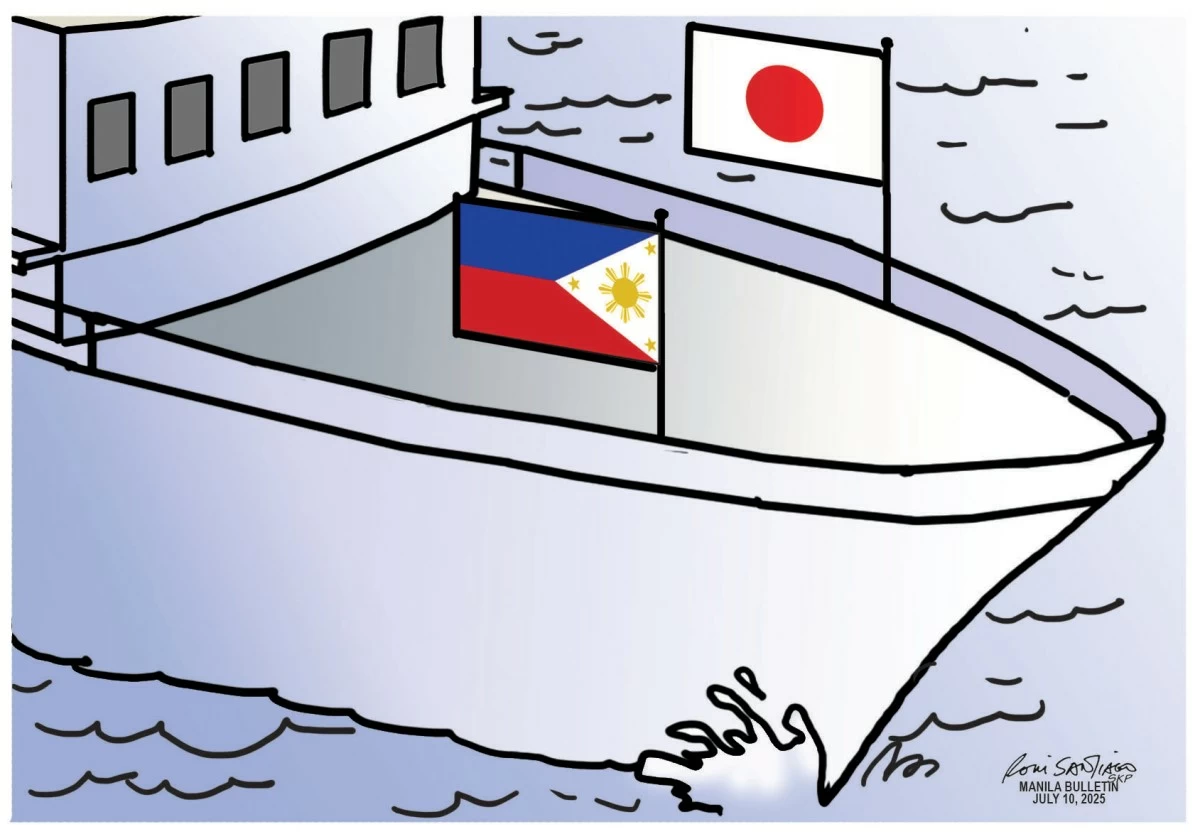
The recent meeting in Manila between Philippine Defense Secretary Gilberto Teodoro Jr. and Japanese Defense Minister Minoru Kihara marked a significant turning point in the deepening of strategic ties between the Philippines and Japan. The announcement of Japan’s intent to transfer six destroyer vessels to the Philippine Navy is more than a material boost to the country’s maritime capabilities—it is a powerful symbol of trust, cooperation, and shared commitment to regional stability.
Japan’s decision to provide these assets is historic. It underscores its willingness to play a more proactive role in ensuring peace and security in the Indo-Pacific, particularly at a time of growing uncertainty due to maritime tensions and broader geopolitical rivalries. For the Philippines, this projected transfer enhances naval deterrence and improves maritime domain awareness, especially in defending sovereign rights in the West Philippine Sea.
This development builds upon the solid foundation of the Reciprocal Access Agreement (RAA) signed by both countries earlier this year, which facilitates the conduct of joint military training and humanitarian response operations. The new agreement reflects a growing consensus between Manila and Tokyo that their security interests are closely linked and that regional challenges—ranging from natural disasters to military coercion—require shared responses.
Attainment of heightened naval and air defense capabilities has become imperative. As pointed out by Armed Forces of the Philippines (AFP) experts, this includes radar-tracking patrol vessels, surveillance drones, Airborne Warning and Control aircraft (AWAC), and additional radar systems. Also vitally important are enhanced training programs, including geospatial analysis, to ensure readiness for evolving situations.
Beyond military hardware and defense agreements, the PH-Japan strategic partnership is buttressed by longstanding economic and development cooperation. Japan remains the country’s largest source of official development assistance (ODA), with flagship projects including the Metro Manila Subway, the North-South Commuter Railway, and major flood control and disaster resilience programs. These projects are not only physical manifestations of Japanese generosity and engineering excellence, but also keystones of Philippine modernization and sustainable development.
The transfer of naval assets must also be seen in light of Japan’s recently adopted National Security Strategy and its expanded defense posture, which recognizes the need to work closely with like-minded countries such as the Philippines. Japan’s pacifist constitution has not deterred its leaders from acknowledging regional threats and the imperative to enhance collective defense mechanisms.
For the Philippines, this expanded defense partnership with Japan is a prudent and necessary component of its broader security strategy. It supports the AFP’s modernization goals and enhances interoperability with key partners in the region. Moreover, it adds strategic depth to the country’s alliance network, which includes the United States and Australia, and amplifies calls for adherence to international law, particularly the 1982 UNCLOS and the 2016 arbitral tribunal ruling on the South China Sea.
As the Philippines and Japan commemorate more than six decades of formal diplomatic ties, this strengthening of defense cooperation affirms the enduring value of mutual support in a volatile global environment. It is a partnership rooted not in rivalry or aggression, but in the pursuit of peace, prosperity, and the rule of law.
In this evolving era of strategic realignments, the leveling up of the PH-Japan defense partnership stands as a model of principled diplomacy and purposeful engagement—one that continues to advance not only national interest but also regional harmony.