







'Eh ano kung taga-UP ka?': Reflections on self and others
By Sonny Coloma
Published Jul 10, 2025 12:00 am


ENDEAVOR
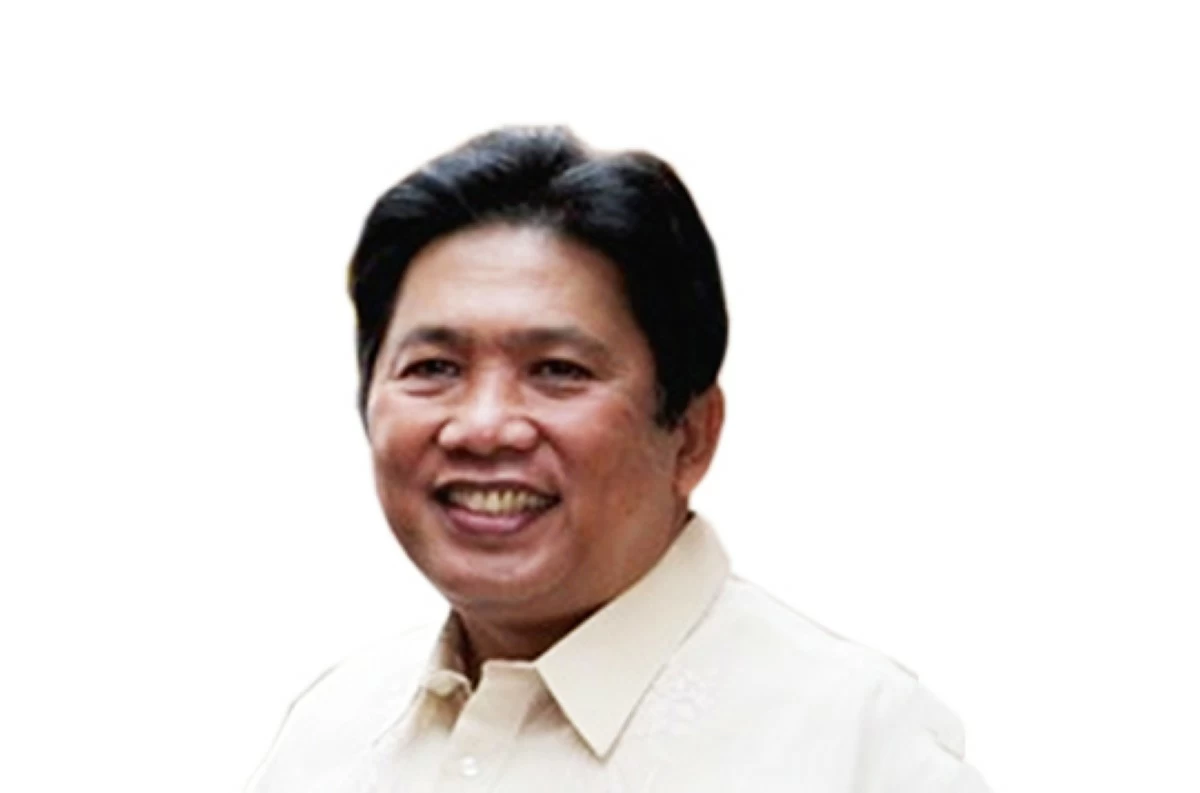
Recent social media posts by two popular broadcasters influenced me to write today about how my college education at the University of the Philippines in Diliman has greatly influenced the course of my adulthood.
First, there was Atom Araullo’s photo on Instagram with his parents, Mike and Carol, who were my fellow members of the UP Student Catholic Action (UPSCA). Carol was my colleague for two years in the UP Student Council in the aftermath of the First Quarter Storm of 1970. Atom’s post was prompted by his being commencement speaker in UP Cebu. He said he invited his parents to join him to make up for the fact that he did not attend his graduation in UP Diliman.
Second, our Manila Bulletin Facebook featured a photo of Jessica Soho, as UP Diliman commencement speaker last Saturday, July 5. Jessica began her speech with the question, “Eh ano kung taga-UP ka? (So what does it mean that you’re from UP?)”
Aside from reflecting on what a UP education meant to her, she cited the relevance of the work of Dr. Virgilio Enriquez of the UP Department of Psychology in propagating the concept of “kapwa” in terms of defining the Filipinos’ sense of selfhood. Since I wrote my doctoral dissertation in 2008, I have espoused “diwa-kapwa” as a philosophy of managing people and organizations that is authentically Filipino and deeply humane.
Jessica pointed out:
“Ang loob ay kasama ng kapwa, hindi hiwalay. Katulad ng kagandahan ng loob. Kapag sinabi na maganda o mabuti ang iyong loob, ibig sabihin, ganun ka rin sa iyong kapwa. Di mo pwedeng sabihing maganda o mabuti ang iyong loob kung hindi mo naman pinagmamalasakitan ang iyong kapwa. Konektado o magkaugnay ang loob at kapwa; parang UP, kadugtong ng komunidad o lipunan, ramdam ang bawat kibitz o sigalot nito.”
I have taken the liberty to translate the foregoing, as follows:
“‘Loob’ is linked to ‘kapwa’. From inner self, one projects oneself to others. Goodness of inner self extends to goodness toward others. You cannot rightly claim that you are good if you have no concern, or compassion, or if you do not care for others — your family, your neighbors, your community, your nation and society. You need to be concerned or involved in the life of the nation.”
My deep involvement in student activism was not brought about directly by participation in rallies and demonstrations. I was influenced by the theology of liberation, a movement that is aptly described in Amazon’s capsule review of Gustavo Gutierrez’s book, “A Theology of Liberation: History, Politics, and Salvation”:
“This is the credo and seminal text of the movement which was later characterized as liberation theology. The book burst upon the scene in the early seventies, and was swiftly acknowledged as a pioneering and prophetic approach to theology which famously made an option for the poor, placing the exploited, the alienated, and the economically wretched at the centre of a programme where ‘the oppressed and maimed and blind and lame’ were prioritized at the expense of those who either maintained the status quo or who abused the structures of power for their own ends.”
On our second year in the UP Student Council, Carol and I were thrust into forefront of efforts to mobilize UP students in mass demonstrations in Plaza Miranda, Liwasang Bonifacio, the US embassy, and other venues. One march-rally was held in Caloocan City, as it was directed against the Asistios who had ruled local politics during the Sixties and up to the early Seventies.
I recall that we were impelled by our faith to denounce systemic ills such as imperialism, feudalism, and bureaucrat-capitalism. It dawned on me then that these evils were aberrations in a society where Filipinos across social classes manifested their religiosity in faith practices, such as devotions in Baclaran and Quiapo to Our Mother of Perpetual Help and Jesus Nazareno
Hence, I did not see the need to join the leading activist organizations of our time, to be able to manifest my solidarity with the least, the least and the lost in Philippine society. One memorable highlight that I still recall distinctly is that in the UP Student Council elections held on Sept. 1, 1972 — or barely three weeks before the declaration of Martial Law — our progressive coalition swept all 46 seats in the Council, an unprecedented feat.
To this day, I value my experience as a student activist of Dekada 70. It has inculcated in me a sense of civic responsibility. I need to pitch in and contribute my share in shaping a just and humane society.
Toward the conclusion of her speech, Jessica reaffirmed her UP roots:
“Yes, UP tayo! What a blessing, but it is also a responsibility! Maging karapat-dapat na Iskolar ng Bayan…Reach out to more people; get out of your own circles or silos and echo chambers.”
More than four decades after graduating from UP, she reflected that the problems of the past seem to fester and defy resolution. They recur and resurface, through a succession of eight administrations she has covered as a journalist — Marcos Sr., Cory Aquino, Ramos, Estrada, Arroyo, Noynoy Aquino, Duterte, and Marcos Jr.
She says: “I’m lucky to have been given access to power and a chance to ask our leaders the hard questions na tinatanong din ng bayan. Kayo rin, huwag kayong titigil na magtanong! (‘…that our people are asking…you, too, have the right to continually ask questions’).”
Wishing them well as she was ending her speech, she expressed the hope the 2025 graduates will live comfortable lives yet continually be mindful and prepared to contribute to the upliftment of Filipinos still struggling in the bottom rungs of society.
“Magtanong pa rin, para sa iba, lalo na, ang mga nangangailangan. Hindi ba’t ‘Kung hindi ngayon, kailan? Kung hindi tayo, sino?’ (Still ask questions, for others, especially for those in need. Isn’t it, ‘If not now, when? If not us, who?’) Be disruptors for good!”
Comments may be sent to [email protected]