ADVERTISEMENT

Waive bank secrecy for gov't officials, but ensure banking system's integrity

Published Jul 9, 2025 12:05 am  |  Updated Jul 8, 2025 04:21 pm
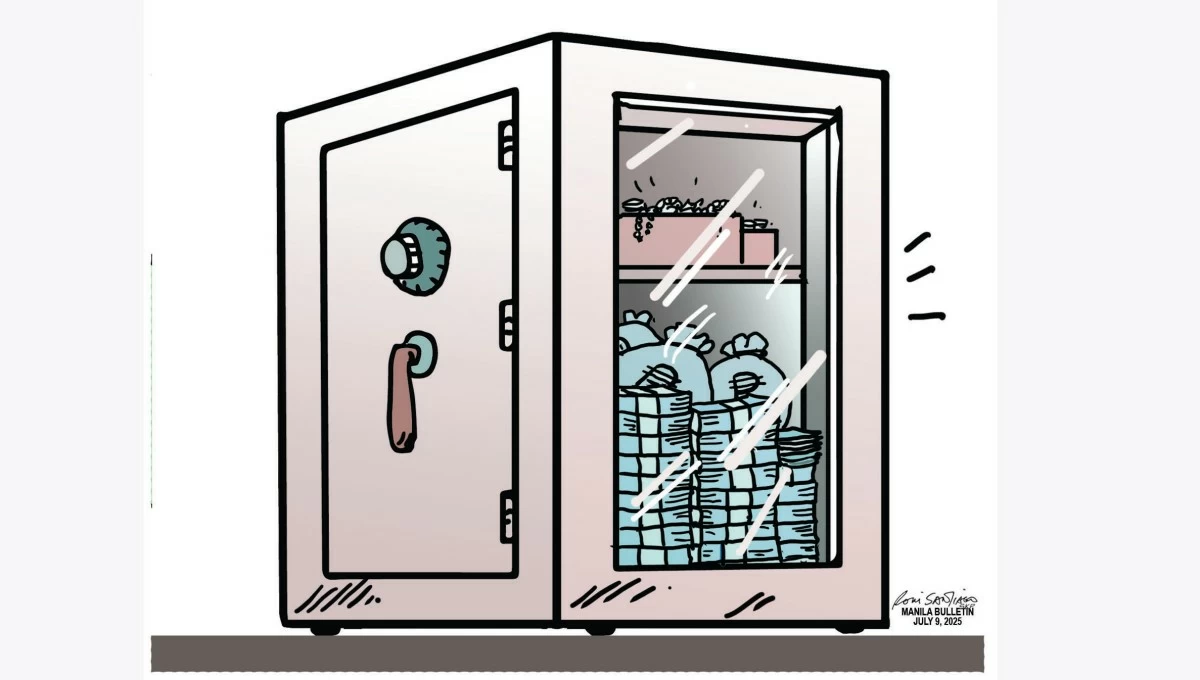
Malacañang’s recent pronouncement that President Marcos supports a measure requiring government officials to waive their bank secrecy rights is both a welcome and consequential development. In a country long plagued by corruption and eroded public trust in its institutions, Marcos’ bold step sends a strong signal: Transparency and accountability are a must.
The Philippines is one of the few remaining countries where bank secrecy remains nearly absolute, shielding even the powerful from legitimate scrutiny. For decades, this cloak has allowed ill-gotten wealth to flourish in the shadows. Mandating a waiver of bank secrecy for public officials—especially those in positions of fiscal and regulatory authority—offers a real opportunity to break that cycle. But to succeed, this reform must be surgical, principled, and precisely limited in scope. Otherwise, it risks doing more harm than good.
There is a fine balance between transparency and systemic disruption. The integrity of the banking system rests on the foundation of trust — trust that personal financial information remains protected, that the rule of law governs access, and that the financial sector won’t be weaponized for political or personal vendettas. A blanket waiver of bank secrecy for all individuals or institutions would shatter this trust and sow fear across legitimate private and business sectors. And the result would be irreparable—capital flight, reduced investor confidence, and long-term damage to economic stability.
Thus, any waiver must be narrowly tailored. It should apply strictly to high-ranking public officials—those with discretionary powers over public funds, policymaking, taxation, procurement, and regulation. This includes elected officials, Cabinet members, justices, and heads of government agencies. These are the people entrusted with stewarding national wealth, and it is only fair that the public be assured they do so with integrity.
However, transparency must not become indiscriminate exposure. Access to the bank records of covered officials should be allowed only through legal channels—ideally by an independent body such as the Ombudsman or a court, upon demonstration of reasonable grounds. A simple political whim should never be enough to pry open a bank account.
Moreover, the waiver should be judicious and clear in scope. It must not allow fishing expeditions or retroactive accusations. Officials must know what is expected of them, and the rules of scrutiny must be consistent and fair.
To preserve confidence in the banking system, strong safeguards must also be enshrined for individuals and private enterprises. Their bank accounts must remain protected under the existing secrecy laws, immune from unjustified scrutiny. Banks must not be forced into broad disclosures that could discourage savings, investment, and economic activity.
Any misuse or unauthorized disclosure of information from these waivers must carry severe penalties to prevent abuses and indiscriminate acts. Only then can the public be assured that transparency measures will not devolve into tools of harassment.
If done right, this measure could become a cornerstone of a more accountable and transparent government—where public office is truly a public trust. But its success hinges on well-thought legislation, tight safeguards, and the discipline to resist overreach.
President Marcos’ support for this initiative is promising. Now, it is up to Congress to pass a law that both pierces the veil of corruption and preserves the sanctity of our financial institutions. In this crucial moment, we must prove that transparency and trust are not mutually exclusive—but mutually reinforcing values on which a healthy democracy and a vibrant economy can stand.
ADVERTISEMENT
.most-popular .layout-ratio{ padding-bottom: 79.13%; } @media (min-width: 768px) and (max-width: 1024px) { .widget-title { font-size: 15px !important; } }

{{ articles_filter_1561_widget.title }}

.most-popular .layout-ratio{ padding-bottom: 79.13%; } @media (min-width: 768px) and (max-width: 1024px) { .widget-title { font-size: 15px !important; } }

{{ articles_filter_1562_widget.title }}

.most-popular .layout-ratio{ padding-bottom: 79.13%; } @media (min-width: 768px) and (max-width: 1024px) { .widget-title { font-size: 15px !important; } }

{{ articles_filter_1563_widget.title }}

{{ articles_filter_1564_widget.title }}

.mb-article-details { position: relative; } .mb-article-details .article-body-preview, .mb-article-details .article-body-summary{ font-size: 17px; line-height: 30px; font-family: "Libre Caslon Text", serif; color: #000; } .mb-article-details .article-body-preview iframe , .mb-article-details .article-body-summary iframe{ width: 100%; margin: auto; } .read-more-background { background: linear-gradient(180deg, color(display-p3 1.000 1.000 1.000 / 0) 13.75%, color(display-p3 1.000 1.000 1.000 / 0.8) 30.79%, color(display-p3 1.000 1.000 1.000) 72.5%); position: absolute; height: 200px; width: 100%; bottom: 0; display: flex; justify-content: center; align-items: center; padding: 0; } .read-more-background a{ color: #000; } .read-more-btn { padding: 17px 45px; font-family: Inter; font-weight: 700; font-size: 18px; line-height: 16px; text-align: center; vertical-align: middle; border: 1px solid black; background-color: white; } .hidden { display: none; }
function initializeAllSwipers() { // Get all hidden inputs with cms_article_id document.querySelectorAll('[id^="cms_article_id_"]').forEach(function (input) { const cmsArticleId = input.value; const articleSelector = '#article-' + cmsArticleId + ' .body_images'; const swiperElement = document.querySelector(articleSelector); if (swiperElement && !swiperElement.classList.contains('swiper-initialized')) { new Swiper(articleSelector, { loop: true, pagination: false, navigation: { nextEl: '#article-' + cmsArticleId + ' .swiper-button-next', prevEl: '#article-' + cmsArticleId + ' .swiper-button-prev', }, }); } }); } setTimeout(initializeAllSwipers, 3000); const intersectionObserver = new IntersectionObserver( (entries) => { entries.forEach((entry) => { if (entry.isIntersecting) { const newUrl = entry.target.getAttribute("data-url"); if (newUrl) { history.pushState(null, null, newUrl); let article = entry.target; // Extract metadata const author = article.querySelector('.author-section').textContent.replace('By', '').trim(); const section = article.querySelector('.section-info ').textContent.replace(' ', ' '); const title = article.querySelector('.article-title h1').textContent; // Parse URL for Chartbeat path format const parsedUrl = new URL(newUrl, window.location.origin); const cleanUrl = parsedUrl.host + parsedUrl.pathname; // Update Chartbeat configuration if (typeof window._sf_async_config !== 'undefined') { window._sf_async_config.path = cleanUrl; window._sf_async_config.sections = section; window._sf_async_config.authors = author; } // Track virtual page view with Chartbeat if (typeof pSUPERFLY !== 'undefined' && typeof pSUPERFLY.virtualPage === 'function') { try { pSUPERFLY.virtualPage({ path: cleanUrl, title: title, sections: section, authors: author }); } catch (error) { console.error('ping error', error); } } // Optional: Update document title if (title && title !== document.title) { document.title = title; } } } }); }, { threshold: 0.1 } ); function showArticleBody(button) { const article = button.closest("article"); const summary = article.querySelector(".article-body-summary"); const body = article.querySelector(".article-body-preview"); const readMoreSection = article.querySelector(".read-more-background"); // Hide summary and read-more section summary.style.display = "none"; readMoreSection.style.display = "none"; // Show the full article body body.classList.remove("hidden"); } document.addEventListener("DOMContentLoaded", () => { let loadCount = 0; // Track how many times articles are loaded const offset = [1, 2, 3, 4, 5, 6, 7, 8, 9, 10]; // Offset values const currentUrl = window.location.pathname.substring(1); let isLoading = false; // Prevent multiple calls if (!currentUrl) { console.log("Current URL is invalid."); return; } const sentinel = document.getElementById("load-more-sentinel"); if (!sentinel) { console.log("Sentinel element not found."); return; } function isSentinelVisible() { const rect = sentinel.getBoundingClientRect(); return ( rect.top < window.innerHeight && rect.bottom >= 0 ); } function onScroll() { if (isLoading) return; if (isSentinelVisible()) { if (loadCount >= offset.length) { console.log("Maximum load attempts reached."); window.removeEventListener("scroll", onScroll); return; } isLoading = true; const currentOffset = offset[loadCount]; window.loadMoreItems().then(() => { let article = document.querySelector('#widget_1690 > div:nth-last-of-type(2) article'); intersectionObserver.observe(article) loadCount++; }).catch(error => { console.error("Error loading more items:", error); }).finally(() => { isLoading = false; }); } } window.addEventListener("scroll", onScroll); });

Sign up by email to receive news.