








At A Glance
- The Department of Public Works and Highways (DPWH) will pilot a new engineering technology aimed at strengthening the foundation of EDSA and integrating an improved drainage system while minimizing disruption to traffic flow.
- The pilot test will cover two key processes: reinforcing the base and sub-base layers, and applying a new running surface.
- Tests will be conducted along selected truck-heavy routes in Metro Manila to simulate EDSA conditions.
- The project includes a time-and-motion study to assess how long the full EDSA upgrade may take.
- DPWH is evaluating off-peak construction schedules to minimize inconvenience to motorists.
- The enhanced drainage system aims to address flooding in low-lying areas of EDSA.
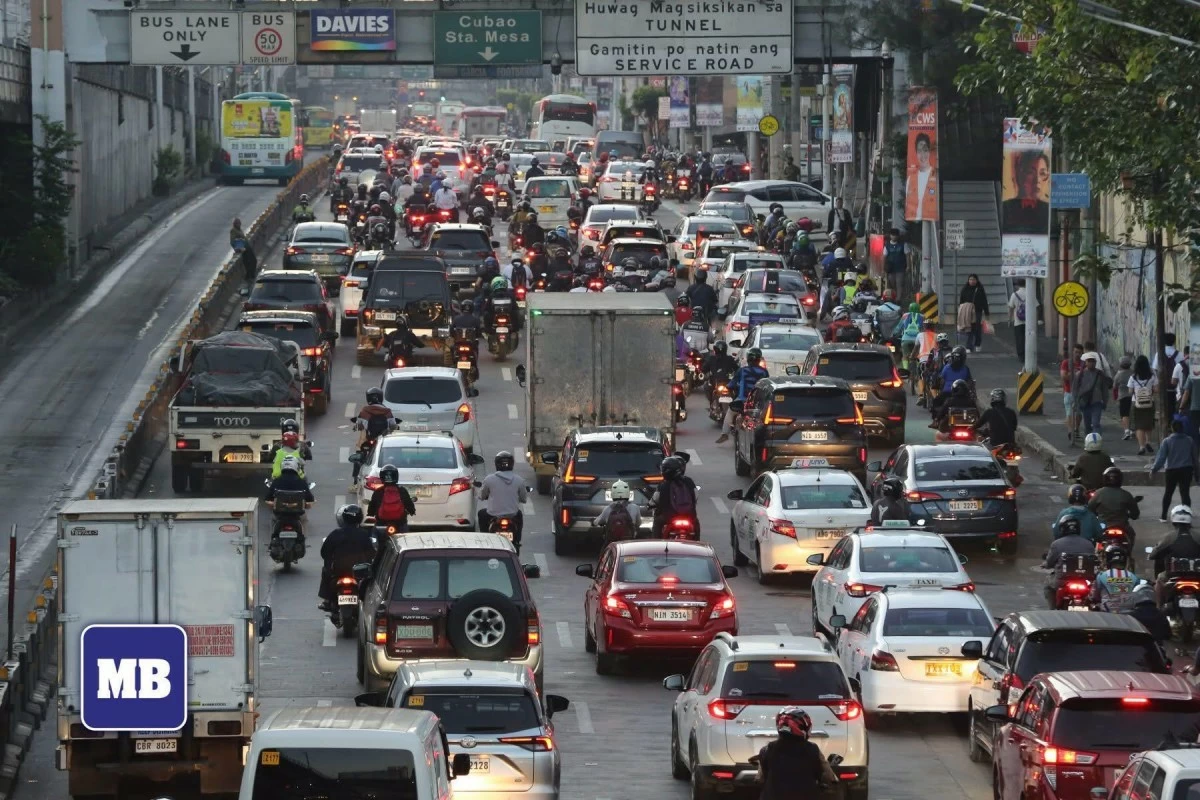
Epifanio de los Santos Avenue (MB File Photo)
The Department of Public Works and Highways (DPWH) will pilot a new engineering technology aimed at strengthening the foundation of EDSA and integrating an improved drainage system while minimizing disruption to traffic flow.
The DPWH said the pilot test will cover two primary processes — reinforcing the base and sub-base layers of the road and applying a new running surface — under actual conditions along selected truck-heavy routes in Metro Manila.
“We are actually trying to put it into a time-and-motion process to determine if we can estimate how long it will take us to do the entire EDSA Rebuild Program,” DPWH Secretary Manuel Bonoan said.
He explained that the proposed approach would allow construction to proceed without dismantling the entire stretch of EDSA, preserving its current layout and minimizing inconvenience to thousands of motorists and commuters.
The pilot will also assess the integration of an enhanced drainage system to address perennial flooding in low-lying sections of EDSA during heavy rains.
To ensure smooth implementation, the DPWH will coordinate with concerned government agencies in line with President Ferdinand R. Marcos Jr.’s directive to maintain traffic flow throughout the construction period.
As part of its mitigation measures, the agency is studying the possibility of conducting work during off-peak hours.
“The roadway is still a roadway,” Bonoan said, noting that while the running surface will be replaced, EDSA will remain passable throughout the construction phase.
Recognized as one of Metro Manila’s most critical transport corridors, EDSA will undergo strategic planning and adopt modern technologies to ensure that public mobility remains largely unhampered during the project’s implementation.