






Manila Bulletin
 Philippines
National
Marcos aims to remove out-of-pocket expenses for PhilHealth members
Philippines
National
Marcos aims to remove out-of-pocket expenses for PhilHealth members
Philippines
National
Marcos aims to remove out-of-pocket expenses for PhilHealth members
Marcos aims to remove out-of-pocket expenses for PhilHealth members
Published Jul 9, 2025 11:24 am
|
Updated Jul 9, 2025 02:07 pm


President Marcos bared his plan to eventually remove the out-of-pocket expenses of patients, who are Philippine Health Insurance Corporation, if the country's economy improves further.
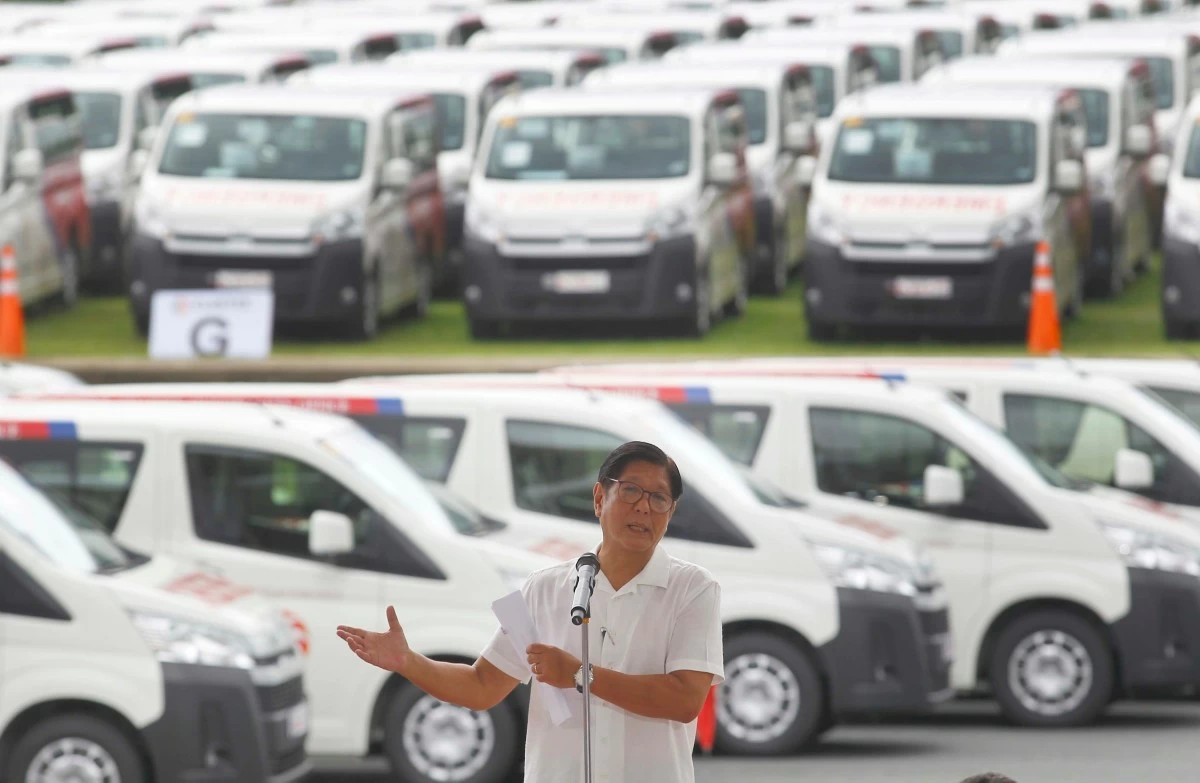
President Ferdinand R. Marcos Jr. leads the distribution of 387 Patient Transport Vehicles (PTVs) to various local government units in Luzon during a turnover ceremony held at the Quirino Grandstand in Manila on July 9, 2025. (Mark Balmores/MANILA BULLETIN)
Citing other country's healthcare systems, the President said it is his aspiration to expand PhilHealth coverage and remove out of pocket expenses of PhilHealth members when they are hospitalized or when they seek consultation, while lowering the contributions being paid by its members.
Removing the out-of-pocket expenses of patients would mean full hospitalization and consultation coverage for PhilHealth members.
Marcos, however, admitted that the country's health system is not yet sufficient to handle such initiative.
“At kung tayo’y magawa natin, ‘pag naayos natin ang ating ekonomiya nang mabuti at kaya na natin ay kaya naman siguro natin, wala ng kontribusyon ang pasyente (And if we are able to do it, if we are able to improve our economy and we are already able to do it, I think we can, patients will no longer have to contribute),” Marcos said in his speech during the distribution of patient transport vehicles to local government units (LGUs) in Luzon on Wednesday, July 9.
“Siguro yung kagaya sa ibang lugar na nakikita ko na nasubukan ko, administrative cost lang. Wala yun mga isang daang piso yun. Tama na yun (Maybe like in other places that I've seen and tried, they just pay an administrative cost. It's nothing, just about a hundred pesos. That should be enough),” Marcos added. “That is the aspiration.”
The President also said the budget also needs to be “maneuvered” in order for his aspiration to be made possible, stressing that the budget is “always insufficient.”
“At the moment, iyong sistema natin is not sufficient para ating magawa yun. Siyempre yung pondo laging kulang. But minamaniobra natin, minamasahe natin ang budget nang mabuti para naman mapabilis ang pagpaganda ng health service para sa ating mga kababayan (At the moment, our system is not sufficient for us to do that. Of course, the funding is always insufficient. But we’re maneuvering, we’re carefully managing the budget so that we can speed up the improvement of health services for our fellow citizens),” Marcos said.
The Chief Executive led the distribution of 387 emergency vehicles to various cities and municipalities in Ilocos Region, Cagayan Valley, Central Luzon, Calabarzon, Mimaropa, Bicol, and the Cordillera Administrative Region.
A total of 680 emergency vehicles have been distributed from July 2022 to June 2025.
The next plan, Marcos said, is to distribute patient transport vehicles according to a city's or municipality's population.
"Ang plano natin sa susunod dahil siyempre ‘yung ibang bayan mas malaki sa ibang bayan, yung city mas malaki sa ibang city, titingnan ngayon natin kung ano yung pangangailangan. We have to base it already on the population ng bawat lugar (Our plan moving forward, because of course, some towns are bigger than others, and some cities are larger than other cities, is to assess what the needs are. We have to base it already on the population of each area),” Marcos said.
“So, yung malalaki talaga, kahit nabigyan ng isa, kailangan balikan natin dahil sa laki ng kanilang populasyon eh kailangan natin maserbisyuhan lahat. Kaya yun ang babalik at babalikan natin (So, for the larger ones, even if they’ve already received one, we need to go back to them because of their large population—we need to be able to serve everyone. That’s why we will keep returning to those areas,” he added.
Marcos stressed that providing emergency vehicles to every town in the country is only a part of the bigger goal to improve the country's healthcare system.