







DOLE: Local job services drive May employment rate to 96.1%
By Trixee Rosel
Published Jul 9, 2025 04:06 pm


At A Glance
- The country's employment rate rose to 96.1 percent in May, according to the Philippine Statistics Authority (PSA).
- The labor force reached 52.3 million, the highest level since 2005.
- Employment gains were noted in retail (489,000 jobs), agriculture and forestry (469,000 jobs), and among women and youth aged 15 to 24 (800,000 entrants).
- A total of 794 Public Employment Service Offices (PESOs) are now institutionalized nationwide.
- PESOs provide job matching, career guidance, interview coaching, and referrals to training and entrepreneurship programs.
- DOLE is coordinating with DepEd, CHED, TESDA, and PRC to expand employment access and strengthen workforce skills.
- Youth-focused programs such as GIP, SPES, and JobStart continue to support first-time jobseekers.
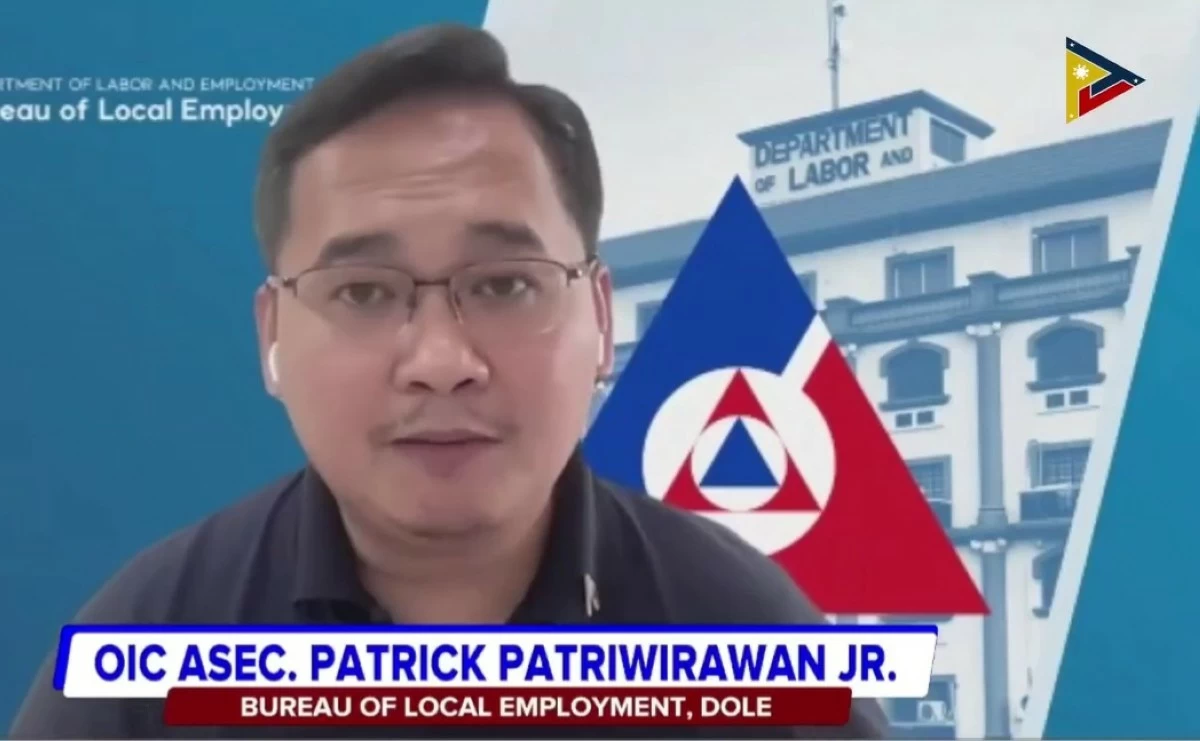
DOLE Officer-in-Charge Assistant Secretary Patrick P. Patriwirawan Jr. (Screengrab from PTV Bagong Pilipinas livestream)
Stronger employment facilitation at the local level, coupled with increased job-seeking activity and expanded government training programs, helped raise the country’s employment rate to 96.1 percent in May, the Department of Labor and Employment (DOLE) reported on Wednesday, July 9.
DOLE Officer-in-Charge Assistant Secretary Patrick P. Patriwirawan Jr. said the latest Labor Force Survey of the Philippine Statistics Authority (PSA) recorded the labor force at 52.3 million — the highest level since 2005.
He noted that the rise was fueled by significant job gains in wholesale and retail trade, which added 489,000 positions; agriculture and forestry, with 469,000; and a surge in participation among women and youth, particularly those aged 15 to 24, accounting for around 800,000 new entrants.
Patriwirawan attributed the continued labor market improvements to the institutionalization of Public Employment Service Offices (PESOs), which serve as non-fee-charging, community-based hubs for job matching and employment support under Republic Act No. 8759 or the PESO Act of 1999.
Of the 1,592 PESOs established nationwide, 794 have already been institutionalized with plantilla positions, regular budgets, and dedicated offices — enabling them to implement DOLE programs more efficiently at the grassroots level.
With these resources in place, PESOs now offer a full suite of employment facilitation services, including job matching, career guidance, interview preparation, and referrals to skills training and entrepreneurship programs.
“These figures reflect that more Filipinos are economically active — whether employed, managing a business, or actively seeking work,” Patriwirawan said.
He said DOLE is also working with the Department of Education (DepEd) and the Commission on Higher Education (CHED) to establish Job Placement Offices (JPOs) in academic institutions, aimed at linking students and graduates to immediate job opportunities.
Patriwirawan also underscored the role of national partners such as the Technical Education and Skills Development Authority (TESDA), which offers free technical-vocational training and certification, and the Professional Regulation Commission (PRC), which oversees professional licensing and standards.
To support young and first-time jobseekers, DOLE continues to implement core programs such as the Government Internship Program (GIP), Special Program for Employment of Students (SPES), and JobStart, all designed to improve employment readiness and career prospects.
“These developments are the result of strategic collaboration and localized action. By empowering local governments through institutionalized PESOs and investing in workforce development, we are enabling more Filipinos to find quality jobs and take part in national recovery and growth,” Patriwirawan said.