






Manila Bulletin
 Business
Banking & Finance
DOF seeks more favorable loans, grants from multilateral banks
Business
Banking & Finance
DOF seeks more favorable loans, grants from multilateral banks
Business
Banking & Finance
DOF seeks more favorable loans, grants from multilateral banks
DOF seeks more favorable loans, grants from multilateral banks
By Derco Rosal
Published Jul 9, 2025 03:19 pm


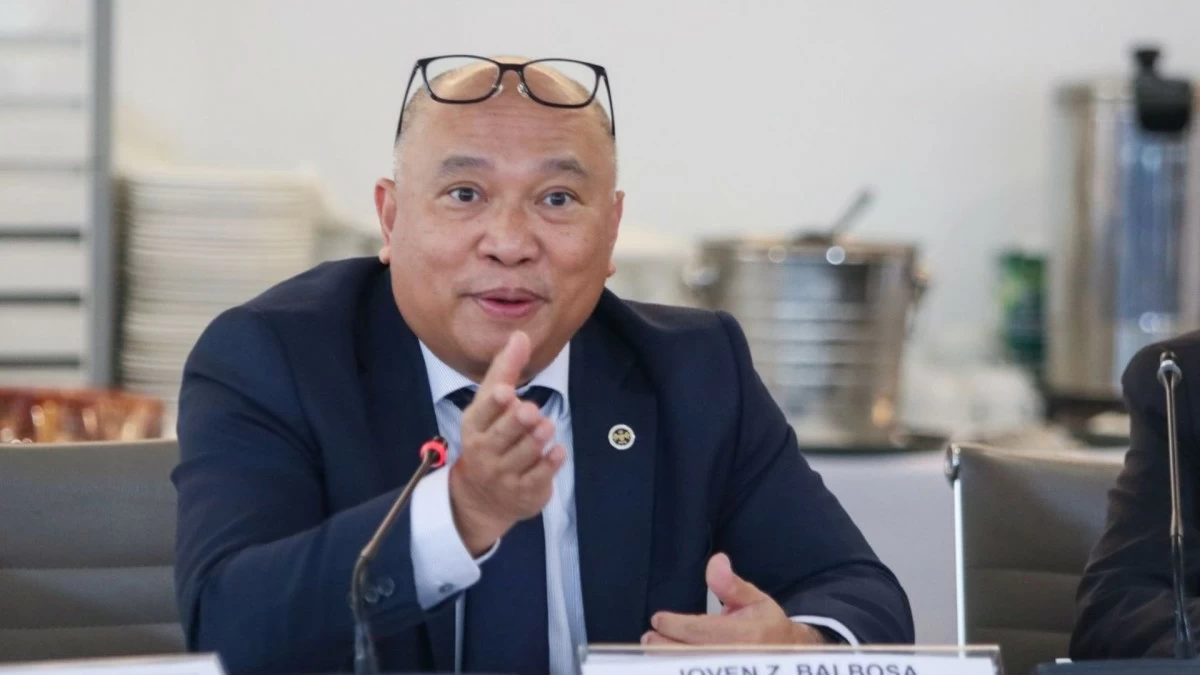
Finance Undersecretary Joven Balbosa
The Philippines, through the Department of Finance (DOF), is urging multilateral development banks (MDBs) to increase their capacity to offer loans, enhance the impact of supported projects, and offer more concessional lending terms, grants, and technical assistance.
During the fourth international conference on financing for development (FFD4) last week, DOF International Finance Group Undersecretary Joven Balbosa called on MDBs “to increase their financing capacity and maximize the impact of the country projects they are supporting while providing better and concessional lending terms, as well as grants and technical assistance.”
This came after stressing the importance of official development assistance (ODA) or cheap loans, which for the Philippines is extended by MDBs such as the Washington-based World Bank, the Manila-based Asian Development Bank (ADB), and the China-led Asian Infrastructure Investment Bank (AIIB).
As reported by Manila Bulletin in May, the World Bank Group is set to provide the Philippines with $22 billion to $23 billion in loans and other financing from mid-2025 to 2031 to support public and private projects tied to the country’s push for upper-middle-income (UMIC) status.
According to the DOF, Balbosa “has called on the international community for urgent reform of the international financial architecture to provide tailored support to middle-income countries amid rising global challenges.”
The conference approved the Compromiso de Sevilla, also known as the Sevilla Commitment, a new global financing framework designed to support developing countries.
Balbosa said the Philippines welcomes the commitment to address the particular challenges of middle-income countries and looks forward to a United Nations (UN) system-wide response plan for such countries.
“We join calls to urgently reform the international financial architecture through enhanced representation of developing countries, review of policies on surcharges and SDRs [special drawing rights], and increases of quota shares, among others,” Balbosa said.
Speaking for the group of like-minded MICs, Balbosa emphasized their challenges and the need for development support beyond gross domestic product (GDP) to ensure fairer access to development finance.
“To address the middle-income trap, we need tailored support for MICs that addresses their specific challenges beyond the simplistic income categorization,” Balbosa said, adding that the MICs will work with the UN secretary-general’s expert group to develop new development indicators and support Spain’s initiative on a Beyond GDP Global Alliance.
Apart from this, Balbosa also stressed the need for climate finance “to be readily available as an added support, and it should not come at the cost of ODA.”
Held in Seville, Spain, from June 30 to July 3, the FFD4 brought together global leaders, ministers, and key representatives from international bodies, civil society, businesses, and local governments to tackle financing reforms and challenges slowing progress on the Sustainable Development Goals (SDGs).