







The Department of Foreign Affairs (DFA) summoned Chinese Ambassador Huang Xilian over concerns about China’s sanctions against former senator Francis Tolentino.
DFA summons China envoy over Tolentino ban
Published Jul 8, 2025 12:27 pm
|
Updated Jul 8, 2025 04:51 pm


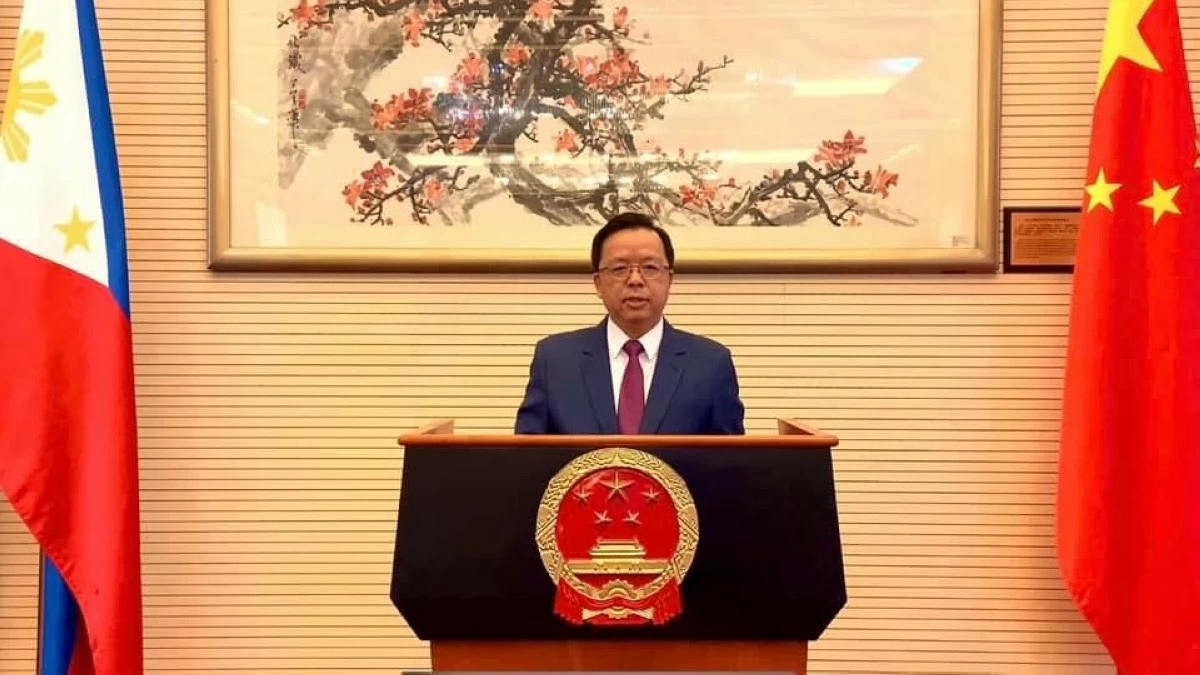
Chinese Ambassador to the Philippines Huang Xilian (Photo from Chinese Embassy in Manila)
“The DFA conveyed to the Chinese side that, while the imposition of such sanctions falls within China's legal prerogative, the imposition of punitive measures against democratically elected officials for their official acts is inconsistent with the norms of mutual respect and dialogue that underpin relations between two equal sovereign states,” the statement, signed by DFA Secretary Ma. Theresa Lazaro said.
“The Department reminded the Ambassador that as a democracy, the Philippines values freedom of expression,” it added.
Noting the Philippines’ “constitutional separation of powers among the three branches of government,” Lazaro stressed that senators and other elected officials are mandated “to inquire on matters of national and public interests.”
Huang was summoned last Friday, July 4, according to the DFA.
On Tuesday, the Chinese Embassy in Manila said that Huang notified the DFA about Beijing’s decision to impose sanctions on Tolentino, citing the “handful of anti-China politicians in the Philippines” who “have made malicious remarks and moves on issues related to China that are detrimental to China’s interests and China-Philippines relations.”
“It should be noted that such sanctions fall purely within China’s legal prerogative, and there are consequences for hurting China’s interests,” the embassy added.
It furthered that “Tolentino’s malicious smear against China and instigation of confrontation” will “ultimately harm” the interests of the Philippines and the Filipino people.
Last week, the Chinese Foreign Ministry announced that they will be imposing sanctions on the former official for his “egregious conduct on China-related issues.”
Tolentino was the chairperson of the Senate’s Special Committee on Philippine Maritime and Admiralty Zones. He also ran under the coalition of President Marcos, who had taken a tough stance against China’s aggressive actions in the Philippine-claimed parts of the contested South China Sea.
As chair of the special committee, he supported the passage of the Philippine Maritime Zones and Archipelagic Sealanes Acts, which codify the 2016 arbitral win that upheld Manila’s sovereign rights in the West Philippine Sea.
During the 2025 midterm campaign, Tolentino alleged that China was meddling in the elections and the Chinese Embassy in Manila had contracted a local marketing firm to propagate pro-Beijing messages on social media.
He also accused Beijing and its Manila embassy of trying to undermine the Marcos administration, and cited alleged espionage activities that law enforcement earlier flagged to have Chinese links.