ADVERTISEMENT

Resolving the Cambodia-Thailand dispute through dialogue

Published Jul 6, 2025 12:05 am  |  Updated Jul 5, 2025 03:35 pm
PEACE-MAKER
We hope that our friends and partners — Cambodia and Thailand —will continue to engage in constructive dialogue and exhaust all diplomatic avenues in peacefully resolving their current border dispute.
The heightened tensions between two of Southeast Asia’s most historic and culturally rich nations must not overshadow the enduring bonds of friendship and cooperation they have built over the decades. Cambodia and Thailand are close to our heart, not only as sovereign neighbors of great significance in our region, but as steadfast allies in the continuing mission for peace, reconciliation, and mutual understanding in Asia.
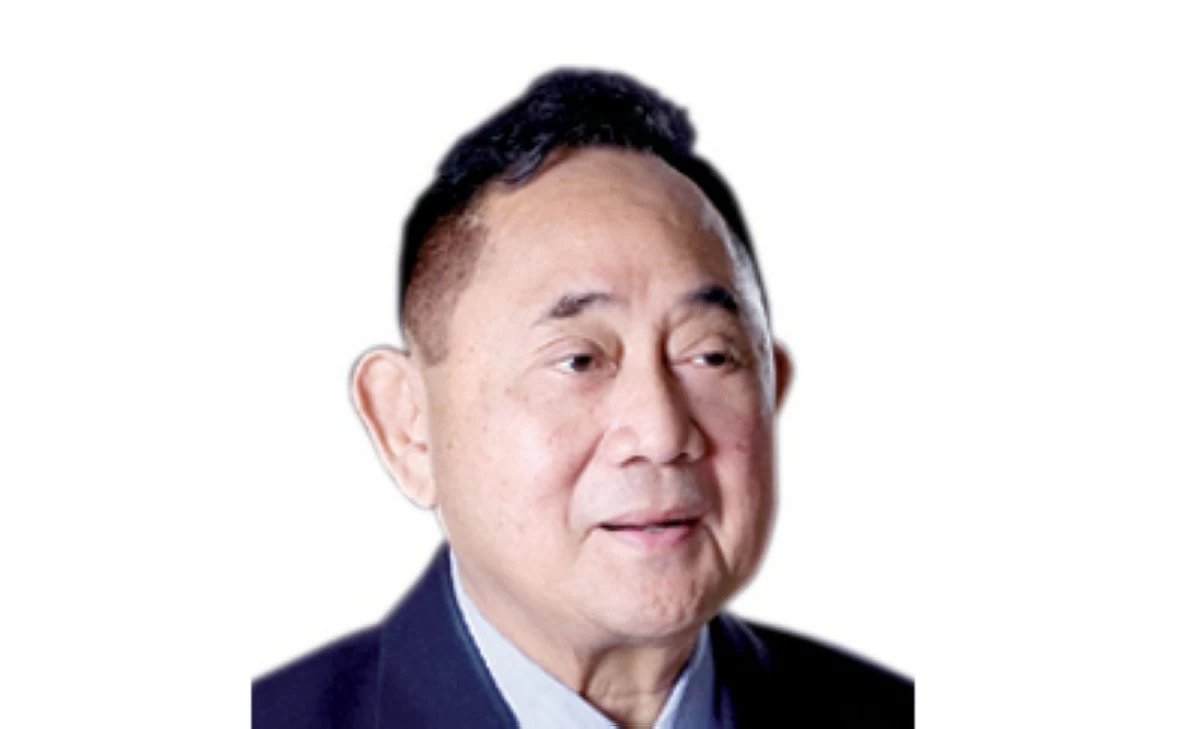
As the founder and chairman emeritus of the 352-member International Conference of Asian Political Parties (ICAPP), and as a lifelong advocate of diplomacy and regional harmony, we have witnessed firsthand how both Cambodian and Thai political leaders have played pivotal roles in our shared efforts to build bridges across political, religious, and ethnic divides. Through ICAPP and our sister organization, the Centrist Asia Pacific Democrats International (CAPDI), senior leaders from both countries have contributed immensely to the collective regional call for peace and cooperation.
We therefore appeal to the current leadership of Cambodia and Thailand to consider not only formal diplomatic channels, but also the constructive use of Track II Diplomacy—people-to-people exchanges, dialogue among political parties, academic discussions, and joint initiatives by civil society—as a viable means to defuse tensions and open paths to understanding. We wish to note that the current Prime Minister of Cambodia, Hun Manet, is the son of our dear friend, former Prime Minister Hun Sen, while Prime Minister Paetongtarn Shinawatra of Thailand is the daughter of our long-time friend, former Prime Minister Thaksin Shinawatra. Both Hun Sen and Thaksin Shinawatra have long been our unwavering partners in promoting peace and reconciliation in the international community through dialogue, cooperation, and mutual understanding.
History reminds us that Cambodia and Thailand have, in the past, been able to address differences through peaceful means. Notably, their cooperation following the International Court of Justice (ICJ) ruling in 1962 over the Preah Vihear Temple, and subsequent efforts to prevent large-scale conflict despite differing interpretations, are reminders that diplomacy, though sometimes slow and difficult, remains the most honorable path forward.
Let us be reminded that this current border disagreement is not the totality of their relationship. Cambodia and Thailand are neighbors not just in geography but in shared history, cultural affinity, and common aspirations for peace and progress. Their political parties, through their active participation in the ICAPP Standing Committee, our organization’s governing body, have consistently lent their voices in support of peacebuilding efforts not only in our region but across the world.
Indeed, both Cambodia and Thailand are peace-loving nations, guided by ancient traditions of tolerance, wisdom, and resilience. Their peoples have overcome colonialism, war, and economic hardship, and emerged stronger because they chose cooperation over conflict, dialogue over division.
Now more than ever, Southeast Asia—and the world—needs to see Cambodia and Thailand reaffirm their commitment to the culture of peace, enshrined in both ASEAN principles and the global values we collectively uphold.
We are optimistic that their leaders will once again rise to the occasion and demonstrate the same statesmanship and courage that have long defined their diplomacy.
With great respect and hope, we offer this humble appeal: Let us resolve differences not on the battlefield, but at the negotiating table. Let us not allow a line on the map to divide what history and humanity have long bound together.
In unity, understanding, and dialogue, we believe Cambodia and Thailand can and will overcome this challenge—peacefully and honorably—for the good of their peoples and for the peace of our region.
ADVERTISEMENT
.most-popular .layout-ratio{ padding-bottom: 79.13%; } @media (min-width: 768px) and (max-width: 1024px) { .widget-title { font-size: 15px !important; } }

{{ articles_filter_1561_widget.title }}

.most-popular .layout-ratio{ padding-bottom: 79.13%; } @media (min-width: 768px) and (max-width: 1024px) { .widget-title { font-size: 15px !important; } }

{{ articles_filter_1562_widget.title }}

.most-popular .layout-ratio{ padding-bottom: 79.13%; } @media (min-width: 768px) and (max-width: 1024px) { .widget-title { font-size: 15px !important; } }

{{ articles_filter_1563_widget.title }}

{{ articles_filter_1564_widget.title }}

.mb-article-details { position: relative; } .mb-article-details .article-body-preview, .mb-article-details .article-body-summary{ font-size: 17px; line-height: 30px; font-family: "Libre Caslon Text", serif; color: #000; } .mb-article-details .article-body-preview iframe , .mb-article-details .article-body-summary iframe{ width: 100%; margin: auto; } .read-more-background { background: linear-gradient(180deg, color(display-p3 1.000 1.000 1.000 / 0) 13.75%, color(display-p3 1.000 1.000 1.000 / 0.8) 30.79%, color(display-p3 1.000 1.000 1.000) 72.5%); position: absolute; height: 200px; width: 100%; bottom: 0; display: flex; justify-content: center; align-items: center; padding: 0; } .read-more-background a{ color: #000; } .read-more-btn { padding: 17px 45px; font-family: Inter; font-weight: 700; font-size: 18px; line-height: 16px; text-align: center; vertical-align: middle; border: 1px solid black; background-color: white; } .hidden { display: none; }
function initializeAllSwipers() { // Get all hidden inputs with cms_article_id document.querySelectorAll('[id^="cms_article_id_"]').forEach(function (input) { const cmsArticleId = input.value; const articleSelector = '#article-' + cmsArticleId + ' .body_images'; const swiperElement = document.querySelector(articleSelector); if (swiperElement && !swiperElement.classList.contains('swiper-initialized')) { new Swiper(articleSelector, { loop: true, pagination: false, navigation: { nextEl: '#article-' + cmsArticleId + ' .swiper-button-next', prevEl: '#article-' + cmsArticleId + ' .swiper-button-prev', }, }); } }); } setTimeout(initializeAllSwipers, 3000); const intersectionObserver = new IntersectionObserver( (entries) => { entries.forEach((entry) => { if (entry.isIntersecting) { const newUrl = entry.target.getAttribute("data-url"); if (newUrl) { history.pushState(null, null, newUrl); let article = entry.target; // Extract metadata const author = article.querySelector('.author-section').textContent.replace('By', '').trim(); const section = article.querySelector('.section-info ').textContent.replace(' ', ' '); const title = article.querySelector('.article-title h1').textContent; // Parse URL for Chartbeat path format const parsedUrl = new URL(newUrl, window.location.origin); const cleanUrl = parsedUrl.host + parsedUrl.pathname; // Update Chartbeat configuration if (typeof window._sf_async_config !== 'undefined') { window._sf_async_config.path = cleanUrl; window._sf_async_config.sections = section; window._sf_async_config.authors = author; } // Track virtual page view with Chartbeat if (typeof pSUPERFLY !== 'undefined' && typeof pSUPERFLY.virtualPage === 'function') { try { pSUPERFLY.virtualPage({ path: cleanUrl, title: title, sections: section, authors: author }); } catch (error) { console.error('ping error', error); } } // Optional: Update document title if (title && title !== document.title) { document.title = title; } } } }); }, { threshold: 0.1 } ); function showArticleBody(button) { const article = button.closest("article"); const summary = article.querySelector(".article-body-summary"); const body = article.querySelector(".article-body-preview"); const readMoreSection = article.querySelector(".read-more-background"); // Hide summary and read-more section summary.style.display = "none"; readMoreSection.style.display = "none"; // Show the full article body body.classList.remove("hidden"); } document.addEventListener("DOMContentLoaded", () => { let loadCount = 0; // Track how many times articles are loaded const offset = [1, 2, 3, 4, 5, 6, 7, 8, 9, 10]; // Offset values const currentUrl = window.location.pathname.substring(1); let isLoading = false; // Prevent multiple calls if (!currentUrl) { console.log("Current URL is invalid."); return; } const sentinel = document.getElementById("load-more-sentinel"); if (!sentinel) { console.log("Sentinel element not found."); return; } function isSentinelVisible() { const rect = sentinel.getBoundingClientRect(); return ( rect.top < window.innerHeight && rect.bottom >= 0 ); } function onScroll() { if (isLoading) return; if (isSentinelVisible()) { if (loadCount >= offset.length) { console.log("Maximum load attempts reached."); window.removeEventListener("scroll", onScroll); return; } isLoading = true; const currentOffset = offset[loadCount]; window.loadMoreItems().then(() => { let article = document.querySelector('#widget_1690 > div:nth-last-of-type(2) article'); intersectionObserver.observe(article) loadCount++; }).catch(error => { console.error("Error loading more items:", error); }).finally(() => { isLoading = false; }); } } window.addEventListener("scroll", onScroll); });

Sign up by email to receive news.