






Manila Bulletin
 Philippines
National
Marcos: Coconut processing push to raise farmer incomes, boost rural jobs
Philippines
National
Marcos: Coconut processing push to raise farmer incomes, boost rural jobs
Philippines
National
Marcos: Coconut processing push to raise farmer incomes, boost rural jobs
Marcos: Coconut processing push to raise farmer incomes, boost rural jobs
Published Jul 5, 2025 07:35 am
|
Updated Jul 5, 2025 02:20 pm


At A Glance
- President Marcos conveyed his support for its continued participation in national development.
President Marcos has reaffirmed his administration’s commitment to strengthening the country’s coconut industry, citing its potential to create more rural jobs and increase farmers’ incomes.
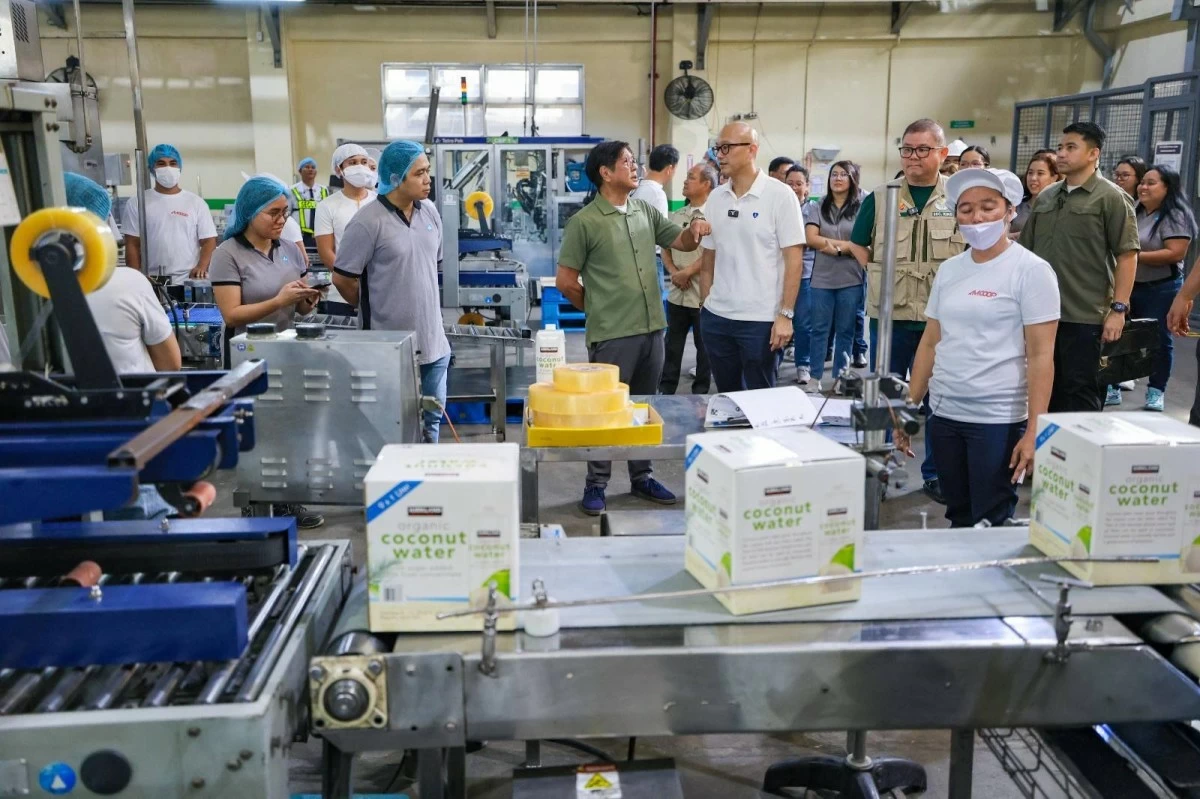
President Ferdinand 'Bongbong' Marcos Jr. tours the coconut processing facility of the Century Pacific Agricultural Ventures Inc. (CPAVI) in General Santos City, on July 4, 2025. (Malacañang photo)
Marcos said this as he visited the Century Pacific Agricultural Ventures Inc. (CPAVI) plant in General Santos City on Friday, July 4.
During his visit, the President conveyed his support for its continued participation in national development.
“We are working to build more coconut processing facilities across the country to help our farmers earn more,” he wrote on Instagram.
“Beyond raw coconuts, they will be able to generate income from coco water, oil, and flour. This will also create more jobs in our provinces and further strengthen our agriculture sector,” he added.
The President toured CPAVI’s General Santos City facility, which processes coconut water, milk, oil, flour, and desiccated coconut for export to 82 countries, including the United States, Japan, and South Korea.
The facility has a daily capacity of 820 metric tons, while another CPAVI plant in Tangub City handles up to 250 MT per day.
The CPAVI expects to generate P10 billion in direct economic value this year, 46 percent of which is allocated to suppliers and operating costs, 22 percent to farmer support, and 15 percent to employee compensation.
The company has created over 4,500 manufacturing jobs in the region.
According to Malacañang, plans are underway to double the company’s production capacity and deepen its impact on surrounding communities. Through its “Million Tree Project,” CPAVI has planted one million coconut trees, while its “Vita Coco Impact” program has distributed over 765,000 seedlings to farmers.