ADVERTISEMENT

AirAsia boosts fleet with 70 new aircraft amid global expansion

Published Jul 5, 2025 12:00 am  |  Updated Jul 5, 2025 03:34 pm
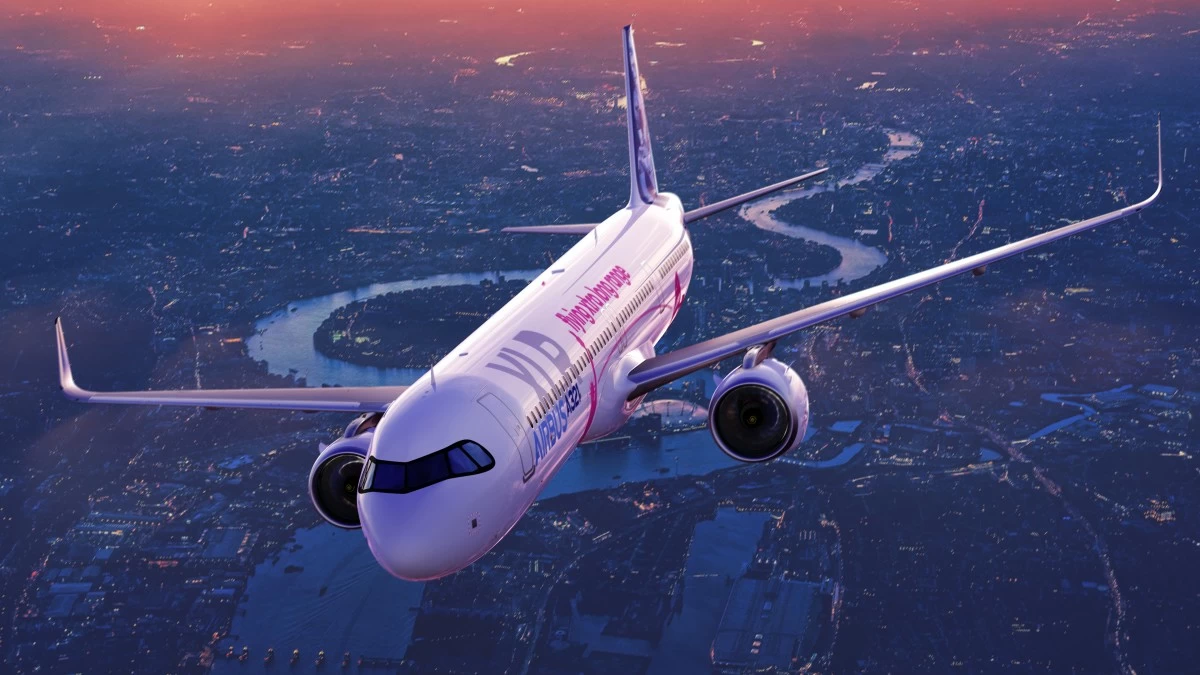
The A321XLR (Airbus photo)
Malaysia-based AirAsia, one of Asia’s leading low-cost carriers, is expanding its fleet with 70 new aircraft to meet the demand of its global ambitions, enhancing the Philippines’ connectivity to new destinations while maintaining budget-friendly fares.
AirAsia, a wholly owned subsidiary of Capital A Berhad, said it has signed an agreement with European aircraft manufacturer Airbus to buy 50 A321XLRs with conversion rights and another 20 of the long-range narrow-body jets.
The landmark deal is valued at $12.25 billion, or around ₱692.25 billion.
The aircraft are scheduled for delivery beginning in 2028 through 2032.
AirAsia, currently operating a fleet of 225 aircraft, is aggressively expanding as it aims to become the world’s first low-cost network carrier.
Driven by its multi-hub strategy, the airline seeks to serve longer-range and underserved routes in Central Asia, the Middle East, and Europe.
Given the A321XLRs’ range of up to 8,700 kilometers (km), AirAsia plans to establish hub airports to maximize the aircraft’s capabilities.
According to a Reuters report, the carrier is in talks with airports in Saudi Arabia, the United Arab Emirates (UAE), and Bahrain.
Entering a new chapter for the budget carrier, Capital A Chief Executive Officer (CEO) Tony Fernandes said this will make flying even more democratic for travelers from the Association of Southeast Asian Nations (ASEAN).
“We gave people in ASEAN the opportunity to explore Asia—now we want the world to see ASEAN, and ASEAN to see the world,” said Fernandes in a statement.
AirAsia’s multi-hub strategy is thriving in Southeast Asia, connecting Malaysia, Thailand, Indonesia, Cambodia, and the Philippines to bustling destinations domestically and beyond.
In the Philippines, AirAsia’s local affiliate AirAsia Philippines, operates out of main gateway Ninoy Aquino International Airport (NAIA).
Fernandes said its new aircraft order will include AirAsia Philippines, as its airline hub is seen as a “fantastic gateway” to the west coast of the United States (US) and islands in the Pacific Ocean.
“As to where we’re distributing them at the moment, that is too early to say,” he said.
With its global expansion, AirAsia is aiming to carry up to 150 million passengers annually by 2030.
Last year, AirAsia welcomed over 63 million passengers, with its Philippine affiliate carrying more than seven million guests.

Related Tags

AirAsia AirAsia Philippines Tony Fernandes
ADVERTISEMENT
.most-popular .layout-ratio{ padding-bottom: 79.13%; } @media (min-width: 768px) and (max-width: 1024px) { .widget-title { font-size: 15px !important; } }

{{ articles_filter_1561_widget.title }}

.most-popular .layout-ratio{ padding-bottom: 79.13%; } @media (min-width: 768px) and (max-width: 1024px) { .widget-title { font-size: 15px !important; } }

{{ articles_filter_1562_widget.title }}

.most-popular .layout-ratio{ padding-bottom: 79.13%; } @media (min-width: 768px) and (max-width: 1024px) { .widget-title { font-size: 15px !important; } }

{{ articles_filter_1563_widget.title }}

{{ articles_filter_1564_widget.title }}

.mb-article-details { position: relative; } .mb-article-details .article-body-preview, .mb-article-details .article-body-summary{ font-size: 17px; line-height: 30px; font-family: "Libre Caslon Text", serif; color: #000; } .mb-article-details .article-body-preview iframe , .mb-article-details .article-body-summary iframe{ width: 100%; margin: auto; } .read-more-background { background: linear-gradient(180deg, color(display-p3 1.000 1.000 1.000 / 0) 13.75%, color(display-p3 1.000 1.000 1.000 / 0.8) 30.79%, color(display-p3 1.000 1.000 1.000) 72.5%); position: absolute; height: 200px; width: 100%; bottom: 0; display: flex; justify-content: center; align-items: center; padding: 0; } .read-more-background a{ color: #000; } .read-more-btn { padding: 17px 45px; font-family: Inter; font-weight: 700; font-size: 18px; line-height: 16px; text-align: center; vertical-align: middle; border: 1px solid black; background-color: white; } .hidden { display: none; }
function initializeAllSwipers() { // Get all hidden inputs with cms_article_id document.querySelectorAll('[id^="cms_article_id_"]').forEach(function (input) { const cmsArticleId = input.value; const articleSelector = '#article-' + cmsArticleId + ' .body_images'; const swiperElement = document.querySelector(articleSelector); if (swiperElement && !swiperElement.classList.contains('swiper-initialized')) { new Swiper(articleSelector, { loop: true, pagination: false, navigation: { nextEl: '#article-' + cmsArticleId + ' .swiper-button-next', prevEl: '#article-' + cmsArticleId + ' .swiper-button-prev', }, }); } }); } setTimeout(initializeAllSwipers, 3000); const intersectionObserver = new IntersectionObserver( (entries) => { entries.forEach((entry) => { if (entry.isIntersecting) { const newUrl = entry.target.getAttribute("data-url"); if (newUrl) { history.pushState(null, null, newUrl); let article = entry.target; // Extract metadata const author = article.querySelector('.author-section').textContent.replace('By', '').trim(); const section = article.querySelector('.section-info ').textContent.replace(' ', ' '); const title = article.querySelector('.article-title h1').textContent; // Parse URL for Chartbeat path format const parsedUrl = new URL(newUrl, window.location.origin); const cleanUrl = parsedUrl.host + parsedUrl.pathname; // Update Chartbeat configuration if (typeof window._sf_async_config !== 'undefined') { window._sf_async_config.path = cleanUrl; window._sf_async_config.sections = section; window._sf_async_config.authors = author; } // Track virtual page view with Chartbeat if (typeof pSUPERFLY !== 'undefined' && typeof pSUPERFLY.virtualPage === 'function') { try { pSUPERFLY.virtualPage({ path: cleanUrl, title: title, sections: section, authors: author }); } catch (error) { console.error('ping error', error); } } // Optional: Update document title if (title && title !== document.title) { document.title = title; } } } }); }, { threshold: 0.1 } ); function showArticleBody(button) { const article = button.closest("article"); const summary = article.querySelector(".article-body-summary"); const body = article.querySelector(".article-body-preview"); const readMoreSection = article.querySelector(".read-more-background"); // Hide summary and read-more section summary.style.display = "none"; readMoreSection.style.display = "none"; // Show the full article body body.classList.remove("hidden"); } document.addEventListener("DOMContentLoaded", () => { let loadCount = 0; // Track how many times articles are loaded const offset = [1, 2, 3, 4, 5, 6, 7, 8, 9, 10]; // Offset values const currentUrl = window.location.pathname.substring(1); let isLoading = false; // Prevent multiple calls if (!currentUrl) { console.log("Current URL is invalid."); return; } const sentinel = document.getElementById("load-more-sentinel"); if (!sentinel) { console.log("Sentinel element not found."); return; } function isSentinelVisible() { const rect = sentinel.getBoundingClientRect(); return ( rect.top < window.innerHeight && rect.bottom >= 0 ); } function onScroll() { if (isLoading) return; if (isSentinelVisible()) { if (loadCount >= offset.length) { console.log("Maximum load attempts reached."); window.removeEventListener("scroll", onScroll); return; } isLoading = true; const currentOffset = offset[loadCount]; window.loadMoreItems().then(() => { let article = document.querySelector('#widget_1690 > div:nth-last-of-type(2) article'); intersectionObserver.observe(article) loadCount++; }).catch(error => { console.error("Error loading more items:", error); }).finally(() => { isLoading = false; }); } } window.addEventListener("scroll", onScroll); });

Sign up by email to receive news.