







Rice price drop cushions inflation increase in June
By Derco Rosal
Published Jul 4, 2025 11:54 am
|
Updated Jul 4, 2025 06:22 pm


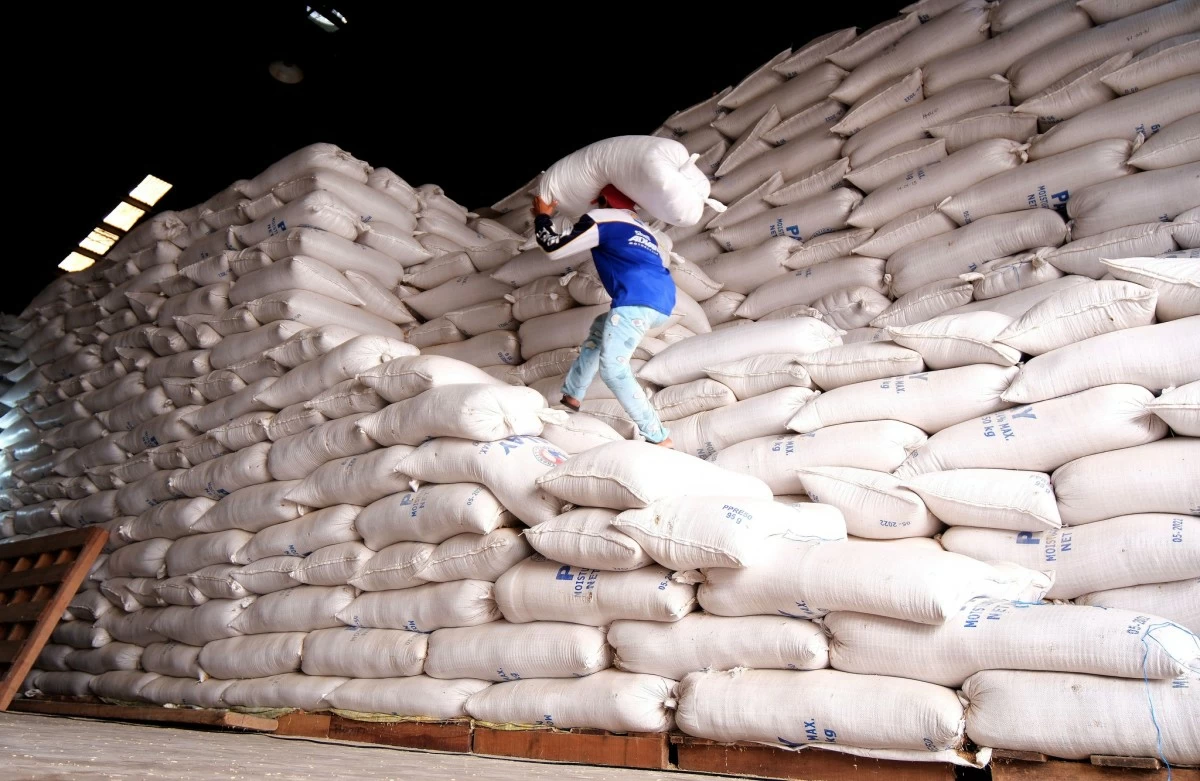
Department of Agriculture (DA) photo
While consumer price increases rose slightly in June to 1.4 percent from May's five-and-a-half-year low of 1.3 percent, a substantial drop in rice prices to their lowest in three decades since 1995 helped temper the overall inflation, according to the Philippine Statistics Authority (PSA).
PSA data showed that rice prices deflated faster in June, falling by 14.3 percent compared to a 12.8 percent drop in May.
“When we collect prices of goods from our sample outlets, we follow certain criteria in choosing where we get these data. But I was informed that even among our sample outlets, some are now selling rice at ₱20 per kilo. There are a few such outlets. That’s why the average price—particularly for regular-milled rice—continues to go down,” National Statistician and PSA Undersecretary Claire Dennis Mapa explained at a press briefing on Friday, July 4.
The Marcos administration recently launched its cheaper ₱20 rice program through Kadiwa Centers, in partnership with local government units (LGUs), specifically targeting vulnerable sectors. Reports indicated this program has expanded from Metro Manila to other regions. The government initially allotted ₱4.5 billion for the ₱20 rice subsidy, covering the purchase and distribution of rice through Kadiwa centers and LGU outlets.
Regional inflation, poorest households
Inflation in the National Capital Region (NCR) remained higher, clocking in at 2.6 percent in June, from 1.7 percent a month ago. This was primarily driven by higher annual increases in housing, water, electricity, gas, and other fuel costs, which grew by six percent in June from 3.1 percent the previous month.
Meanwhile, inflation in areas outside Metro Manila slowed to 1.1 percent from 1.2 percent due to zero percent hike in the prices of food and non-alcoholic beverages in June, compared to a modest 0.6 percent increase in May.
Notably, the zero inflation for the bottom 30 percent income or the poorest households seen in May further improved to a 0.4 percent deflation, or a drop in consumer prices. This brought their six-month average to less than one percent. The PSA stated that the decline in prices for the poorest households was due to a sharper drop in food and non-alcoholic beverage prices, which fell by 2.2 percent in June from a 1.6 percent decrease in May.
“First, in terms of food inflation, in general, prices of goods under the food and non-alcoholic beverages category are slowing down mainly because of rice. Rice makes up about 30% of our food basket—one third of the food category is rice—and as we saw earlier, rice posted negative inflation. That’s the major factor,” Mapa elaborated, emphasizing the significant impact of the negative inflation in rice prices.
Drivers of headline inflation
The uptick in headline inflation during June was primarily driven by increases in housing, water, electricity, gas, and other fuel costs, which climbed by 3.2 percent from 2.3 percent in May. A slower drop in transport prices—down 1.6 percent last month compared to a 2.4 percent decline in May—also contributed to the upward pressure.
Excluding May's 1.3 percent inflation rate, the June figure remained the slowest in nearly six years since November 2019. It also fell within the Bangko Sentral ng Pilipinas' (BSP) forecast range of 1.1 percent to 1.9 percent, though it remained below the government’s retained target band of two percent to four percent.
“Inflation is projected to remain below the lower end of the target in 2025, primarily due to the continued easing of rice prices. However, this could be partly offset by the recent spike in oil prices,” the BSP stated.
The central bank also noted that “global economic activity is showing signs of deceleration, influenced by uncertainty over US trade policy and ongoing geopolitical conflict in the Middle East. These developments may contribute to slower domestic growth.”
Economic outlook, policy
In the first three months of 2025, Philippine economic output expanded by 5.4 percent, a significant slowdown from 5.7 percent in the same period last year, and nearly stagnant compared to the previous quarter.
Mapa indicated that the impact of the Israel-Iran conflict, currently under a ceasefire, will likely be delayed, with its effects on inflation only becoming apparent after a few months.
Department of Economy, Planning, and Development (DEPDev) Secretary Arsenio M. Balisacan stated on Friday, July 4, that the continued “sharp” decline in food inflation since 2024 reflects the progress of the government’s “coordinated efforts to boost local production, improve logistics, and implement calibrated trade and biosecurity measures.”
Balisacan assured the public that the Marcos government “will sustain these interventions and complement them with targeted initiatives to ensure a continuous, stable supply and shield consumers from future price pressures.”
He cautioned, however, that “while the continued easing of food inflation is encouraging, we will maintain our vigilance against possible external and domestic risks. Volatile global markets and climate-related disruptions affecting fuel and electricity costs continue to threaten price stability.”
“On balance, a more accommodative monetary policy stance is warranted,” the BSP concluded. The day before the inflation data release, BSP Governor Eli M. Remolona Jr. hinted at two additional cuts in key interest rates instead of one, attributing this to growth deceleration stemming from consumer and business uncertainty.
“Emerging risks to inflation from rising geopolitical tensions and external policy uncertainty will require closer monitoring, alongside the continued assessment of the impact of prior monetary policy adjustments,” the BSP added.