






Manila Bulletin
 Business
Trade & Industry
Philip Morris sees 'big progress' in Philippine smoke-free adoption
Business
Trade & Industry
Philip Morris sees 'big progress' in Philippine smoke-free adoption
Business
Trade & Industry
Philip Morris sees 'big progress' in Philippine smoke-free adoption
Philip Morris sees 'big progress' in Philippine smoke-free adoption
Published Jul 4, 2025 02:43 pm


JAKARTA, Indonesia—Tobacco giant Philip Morris International (PMI), which has emerged as a leading force in the pursuit of a smoke-free future, expects the Philippines to be among the pioneers in transitioning to smoke-free products.
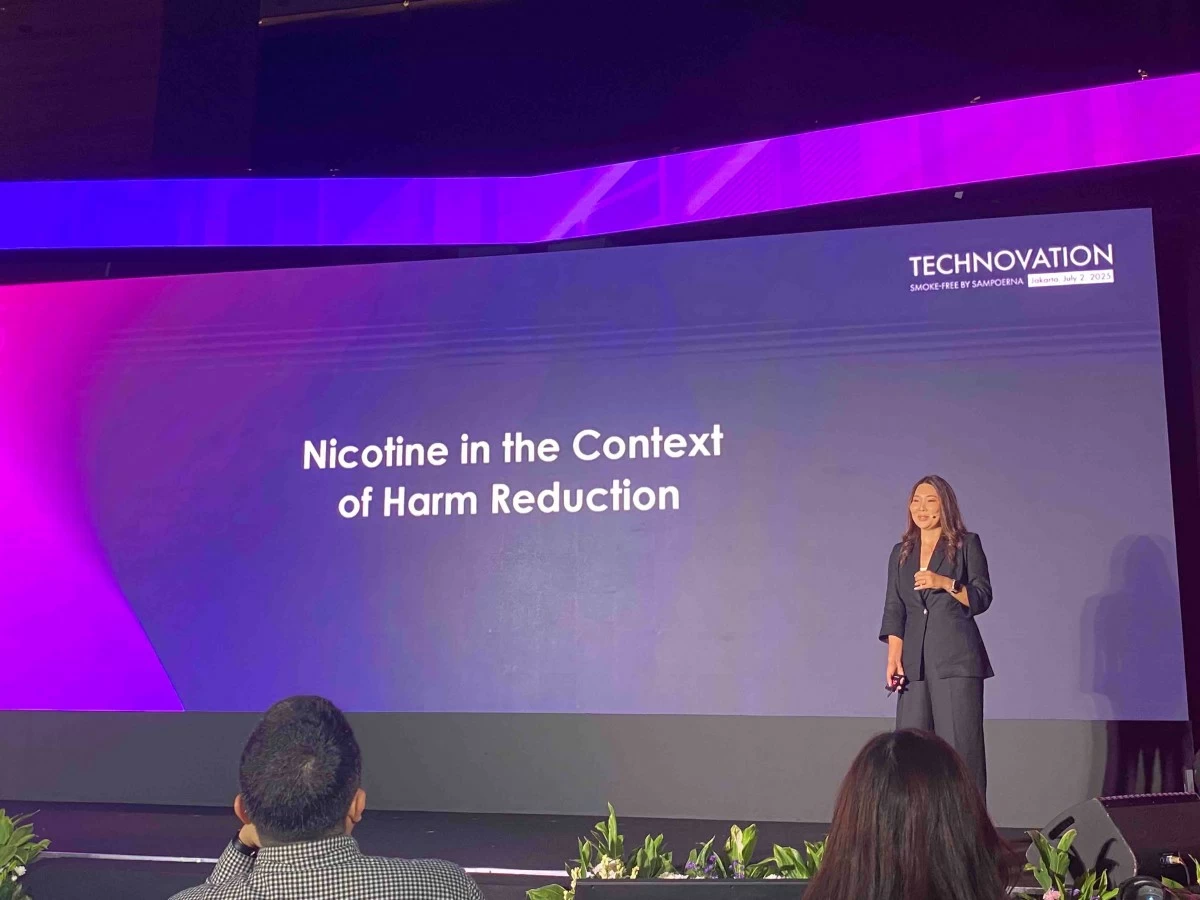
PMI Director of Scientific Engagement Tomoko Iida speaking at the Technovation: Smoke-free by Sampoerna (Dexter Barro II/MANILA BULLETIN)
On the sidelines of Technovation: Smoke-free by Sampoerna, held here, PMI Director of Scientific Engagement Tomoko Iida told reporters that the Philippines is one of the few countries where smoke-free alternatives are already gaining traction.
Tomoko, who oversees scientific awareness of smoke-free products with a focus on Southeast Asia, said the country is making big progress by broadening access for smokers looking for a new start.
“In other words, it's making it easier for smokers to pick the product that will move them away from cigarettes and switch completely,“ she said.
PMFTC Inc., the Philippine affiliate of PMI, currently offers the heated tobacco device IQOS Iluma and nicotine pouch Zyn in local markets, with additional alternatives currently under development.
Offering such alternatives is a radical shift for the Connecticut-based multinational company, which once solely relied on people lighting up cigarettes, such as the best-selling brand Marlboro.
Backed by years of research to address health concerns, PMI made its most significant move in 2014 to pursue a smoke-free future.
Over a decade later, the company has invested over $14 billion, or roughly ₱790 billion, in science-based innovation to develop breakthrough products that are not only smoke-free but also designed to attract cigarette smokers into transitioning.
PMI has made it clear that it wants all smokers to drop the habit. However, for those not yet ready, its smoke-free products would serve as a bridge towards a non-smoking lifestyle.
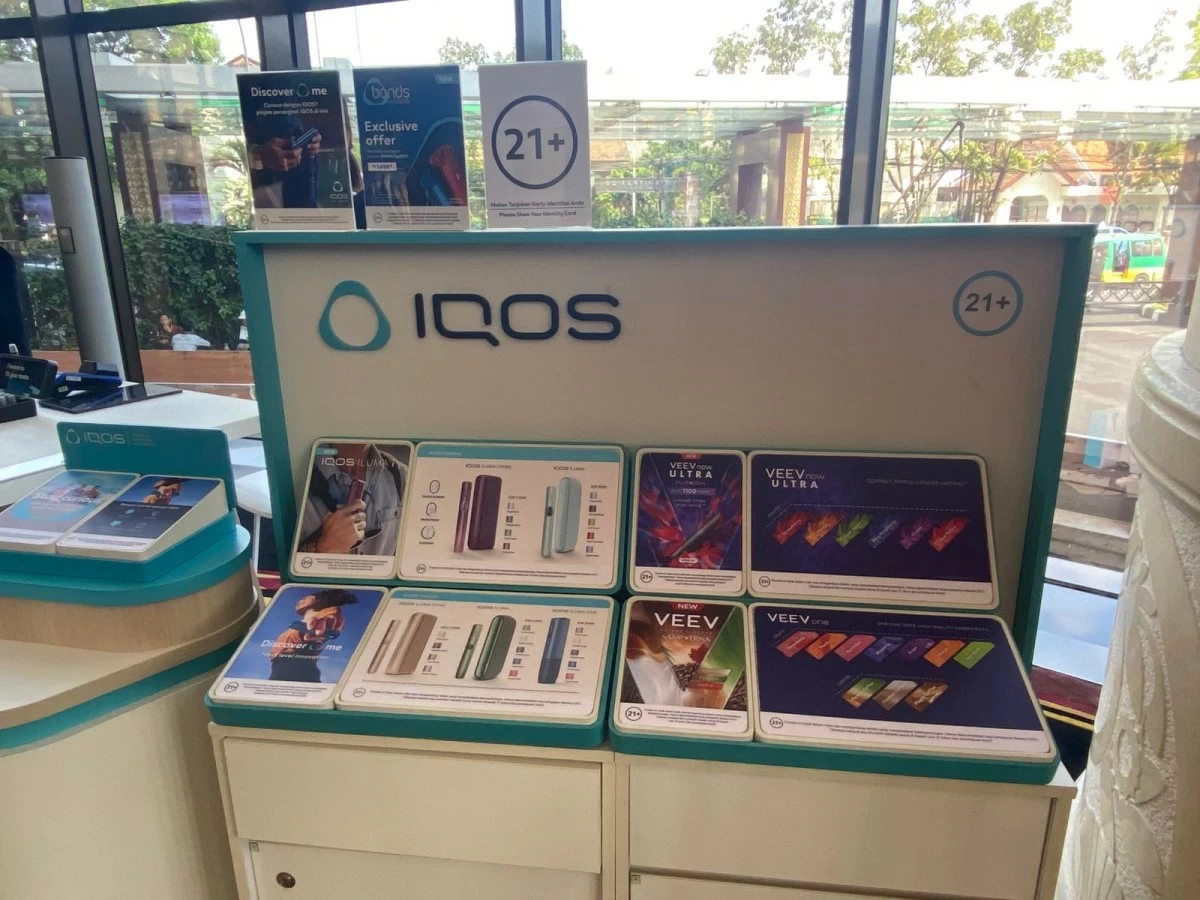
An IQOS stall in the city of Bandung (Dexter Barro II/MANILA BULLETIN)
For smokers in the Philippines, they can opt to utilize IQOS Iluma, which uses induction to heat tobacco to release nicotine-containing vapor instead of burning, which produces chemicals that have been intensified as potential causes of diseases.
While it is not risk-free and provides nicotine, which is addictive, a heated tobacco product emits, on average, around 90-95 percent lower levels of harmful chemicals compared to a typical cigarette.
Meanwhile, Zyn is consumed by placing the pouch between the gum and the cheek or upper lip, containing nicotine and flavors that do not contain tobacco leaves and are inherently smoke-free.
Tomoko said the company has conducted a preliminary study on the Philippines, which showed that the rising popularity of these products is resulting in a “slight decrease” in cigarette consumption.
“So I think it's a matter of time. As the switching gets accelerated, and more people learn accurate information, and they have a right to access and switch, we will see that decline much faster,” she explained.
According to Tomoko, countries such as Sweden and Japan took 10 and 9 years, respectively, for smoke-free products to overtake cigarette sales.
“So Philippines, I think it will still take maybe five, six, seven years. But every year, you're going to see the difference if people are either quitting or switching,” she said.
Last year, PMI reported that around 40 percent of its net revenue came from its smoke-free business. Based on its financial report, the company saw its revenues reach $37.88 billion.
By 2030, the company is targeting to grow this segment to more than two-thirds of its total net revenues, driven by the steady shift to smoke-free alternatives on the global stage.
In the Philippines, perhaps the most vital driver in its transformation is the implementation of Republic Act (RA) No. 11900 or the Vaporized Nicotine and Non-Nicotine Products Regulation Act—or to put it simply, the Vape Law.
This law sets out strict guidelines in smoke-free products, providing the structure for their legal and regulation-adherent consumption.
“I think you're one of the first countries to have a vape law. From my perspective, looking from outside, the Philippines is actually leading this transformation,” said Tomoko. “And I really think your smokers are being benefited from this transformation.”
The PMI official said the full enforcement of the Vape Law will ultimately expedite the country’s transition to smoke-free alternatives.
She particularly cited the need to enforce the proof-of-age verification provision to deter individuals below 18 years old to purchase their products.
Another key aspect, she said, is to crack down on illicit products which is seen to only drive misinformation as these goods, more than likely, did not went through a rigorous scientific process.
“We cannot protect the consumer from using not substantiated products. So I think for that perspective, collaboration with the government and actually having them enforce the law strongly is one of the key for success,” Tomoko said.
“You have availability and accessibility of products, but when consumers are misinformed that this is not a better alternative, then it's harder for them to switch,” she added.
PMI has committed to strengthen its collaboration with policymakers, regulators, and scientific and medical communities to address misconceptions about smoke-free products, providing the proper platform to smokers to make the jump to a better future.