






Manila Bulletin
 Philippines
Metro Manila
'Kinse kilometro para sa tao': Fishermen protest vs commercial fishing
Philippines
Metro Manila
'Kinse kilometro para sa tao': Fishermen protest vs commercial fishing
Philippines
Metro Manila
'Kinse kilometro para sa tao': Fishermen protest vs commercial fishing
'Kinse kilometro para sa tao': Fishermen protest vs commercial fishing
Published Jul 4, 2025 02:15 pm


Around 300 fishermen from nine cities and provinces gathered in front of the Supreme Court in Manila on Friday, July 4, to protest its decision to allow commercial fishing vessels to operate within the 15-kilometer municipal waters reserved for small-scale fishers.

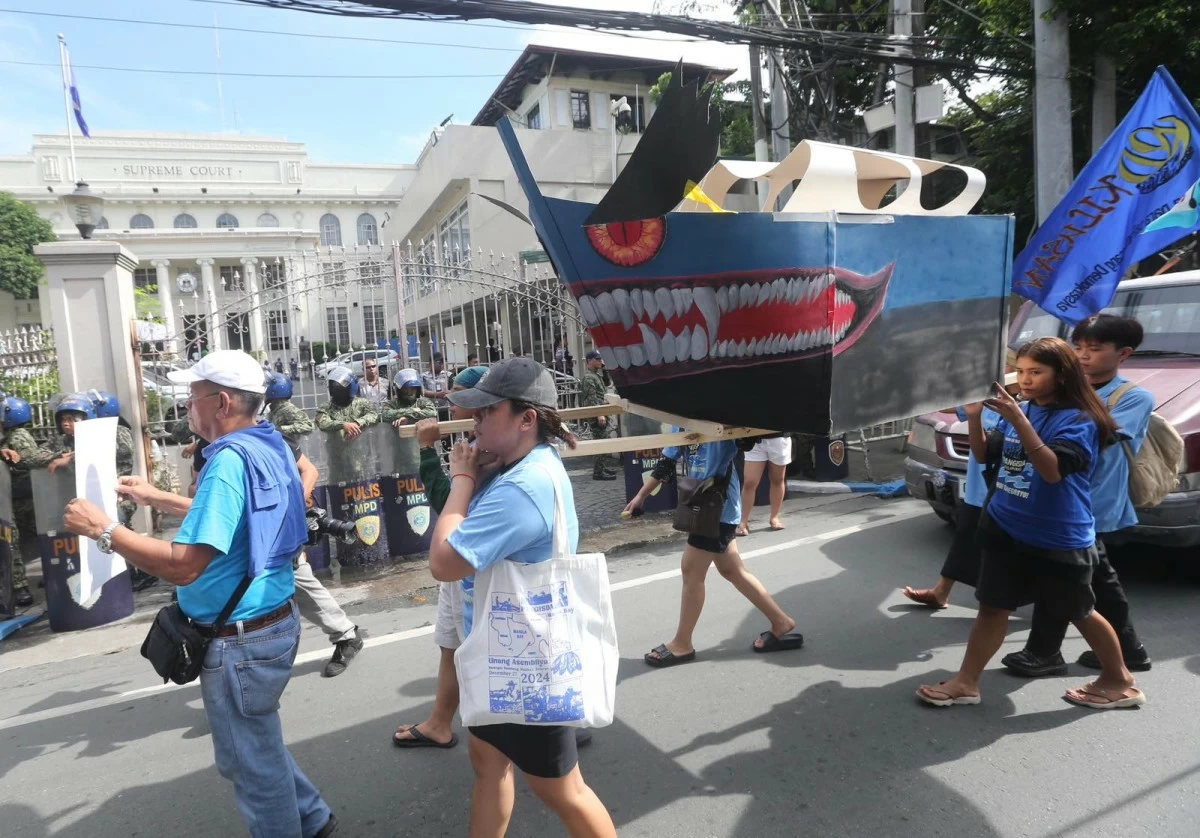
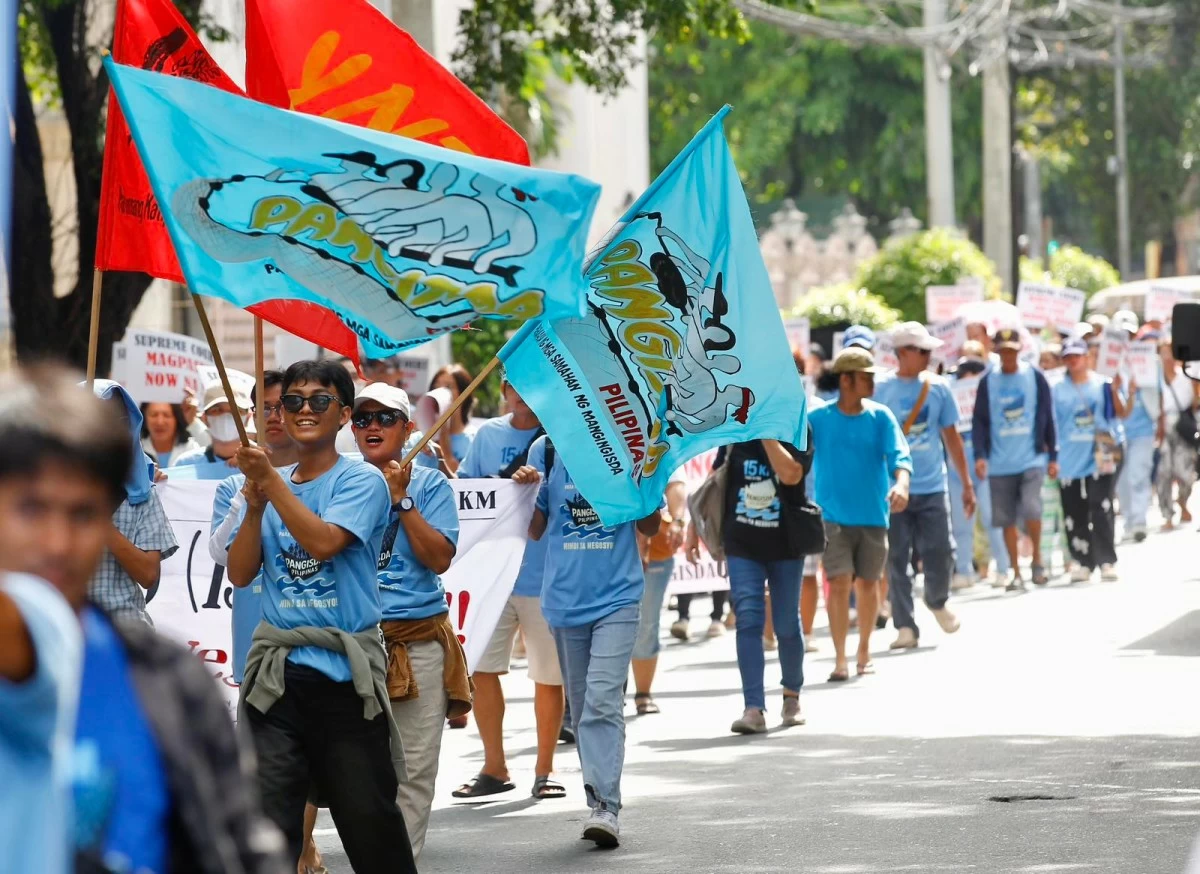
Fishermen from nine cities and provinces (Quezon, Cavite, Bataan, Zambales, Batangas, Bulacan, Navotas, Las Piñas, and Parañaque), along with representatives from the NGO for Fisheries Reform (NFR), held a protest in front of the Supreme Court. They brought an effigy of a fishing vessel to represent commercial and large-scale fishing activities in municipal waters. (Photos by Mark Balmores)

Fishermen from nine cities and provinces (Quezon, Cavite, Bataan, Zambales, Batangas, Bulacan, Navotas, Las Piñas, and Parañaque), along with representatives from the NGO for Fisheries Reform (NFR), held a protest in front of the Supreme Court. They brought an effigy of a fishing vessel to represent commercial and large-scale fishing activities in municipal waters. (Photos by Mark Balmores)
Fishermen from nine cities and provinces (Quezon, Cavite, Bataan, Zambales, Batangas, Bulacan, Navotas, Las Piñas, and Parañaque), along with representatives from the NGO for Fisheries Reform (NFR), held a protest in front of the Supreme Court. They brought an effigy of a fishing vessel to represent commercial and large-scale fishing activities in municipal waters. (Photos by Mark Balmores)
Fishermen from nine cities and provinces (Quezon, Cavite, Bataan, Zambales, Batangas, Bulacan, Navotas, Las Piñas, and Parañaque), along with representatives from the NGO for Fisheries Reform (NFR), held a protest in front of the Supreme Court. They brought an effigy of a fishing vessel to represent commercial and large-scale fishing activities in municipal waters. (Photos by Mark Balmores)
The Pangingisda Pilipinas, an alliance of artisanal, small-scale, municipal, and subsistence fishers and fisherfolk organizations, said the protesters included participants from Quezon, Cavite, Bataan, Zambales, Batangas, Bulacan, Navotas, Las Piñas, and Parañaque, along with representatives from the NGO for Fisheries Reform (NFR).
“Kinse kilometro (15 KM) para sa tao, hindi sa negosyo! (The 15-kilometer zone is for the people, not for commercial interests),” they chanted.
They also urged the Supreme Court to respond to the concerns raised by the small-scale fishing sector, noting that nearly a year has passed since the ruling was issued and three months since the latest Motion for Intervention was filed, with no official response from the Court.
Their placards read: “Supreme Court, magpasya now na! (Decide now!)”; “Supreme Court, hustisya sa 15 KM now na (Justice for the 15 KM now!)”; and “15 KM municipal na pangisdaan para sa pagkain, kabuhayan, at hanapbuhay ng mangingisda at mamamayan, ipaglaban! (The 15-kilometer municipal fishing zone is for food, livelihood, and survival of fishers and communities, defend it!).”
They also brought an effigy of a fishing vessel to represent commercial and large-scale fishing activities in municipal waters.
On August 19, 2024, the Supreme Court issued a resolution affirming the decision of the Malabon Regional Trial Court (RTC) that allowed commercial fishing vessels to operate within the 15-kilometer municipal waters, which are designated under existing laws primarily for municipal or small-scale fishers.
In January, Bicol Saro Party-list Rep. and Chairman of the House Committee on Aquaculture and Fisheries Resources, Brian Raymund Yamsuan, questioned the decision to allow commercial fishing in municipal waters, as he warned of its consequences amid the Philippines’ declining fisheries production.
“We need to make sure that the impact of every decision made would not imperil efforts to boost our food security and endanger the sustainability of our marine resources,” Yamsuan said.
“Our primary concerns here are the livelihood and welfare of our 2.5 million small-scale fisherfolk, and our food security,” he added.
Citing data from the Philippine Statistics Authority (PSA), the lawmaker noted that the Philippines produced 1.02 million metric tons (MT) of fish in the second quarter of 2024. This was a noticeable decrease of 6.2 percent from the 1.07 million MT output recorded in the same period in 2023.