






 Environment and Sustainability
In Mindanao, establishments make the journey to solar energy
Environment and Sustainability
In Mindanao, establishments make the journey to solar energy
In Mindanao, establishments make the journey to solar energy
Solar power in the region pushes for lower electricity expenses and emissions
By Mat Richter


It took us ages to recognize the star of the show. Never was it the dirty emissions that have irreversibly jeopardized the planet. It’s the sun, awaiting the stardom that humanity should have long acknowledged. In a region in the Philippines, establishments allow the sun to “steal the show” across their operations.
Solar panels here provide power for properties day and night. Today, they reap the rewards of their trust in this star to do its job: providing environmental and financial sustainability amid climate warming and economic uncertainty. The pen checks two boxes with one stroke. Look to Mindanao, where five establishments agree that “it simply makes sense” to harness the sun’s power for electricity generation.
Here’s a closer look at their journey to solar energy.
Demetrio’s
Imagine eating pizza “powered by the sun.” No emissions. No fuss. Perhaps a more sustainable way to dine in or dig in.

Nearing two years after installing the panels, the pizza place pushes for solar to save cash and help our shared home.
“The main goal is to be sustainable,” said Demetrio’s owner Daniel Mejia, stating that solar allows the shop’s temperatures to remain crisp-cold for buyers.
“It ensures na hindi ako magtitipid sa aircon sa customers ko (It ensures that I won't cut back on air conditioning for my customers),” he added.
They will open a new branch downtown, Mejia said, and part of their standard will be to explore the possibilities of using solar as standard.
“It’s a little more expensive when you talk abut the setup cost, but if we’re talking about a business that is set to last a long time, then it makes sense,” he told Manila Bulletin in his pursuit of solar energy.
“Most city power plant companies like Cepalco, when you get solar, you apply for net metering. That means whatever you harness from the sun in your area, you can put back on the grid,” he explained.
Madonna and Child Medical Center
Solar energy use in hospitals might sound scary to some misinformed individuals, but the news is that it’s sustainable and possible, as proven by this leading children's hospital in CDO.

Its lighting and air conditioning are powered by 40 to 60 percent solar, depending on the weather, allowing the establishment to save as much as ₱200,000 to ₱400,000 monthly.
Solar panels are supplied by Greenergy PH. After they expire, buyers don’t need to purchase another, and they just need to upgrade and avail, according to Kit Macahilos, company marketing staff.
“The monitoring is part of the package. They will be taught how to do the basics with inverters, looking for the solar,” he said.
Macahilos explained the hospital just wanted to cut costs, then solar panels became the goal.
“We survey customers first, then when we get the right computation, and that will be the recommendable package for them. Our edge is we give the right package to the residential, commercial, and industrial type of buildings and projects,” he claimed.
“A misconception is that when we install, it’s the heat that’s needed, but it’s actually the light. Our solar panels are photovoltaic and 715 watts,” he said, believing it is the biggest the country has.
For hospitals, he explained that they have an “emergency backup for problems” as they do troubleshooting and monitoring. Considering the sensitive nature of healthcare, only professionals from Greenergy PH are allowed to perform maintenance.
Asked if they import the solar panels from China, Macahilos said yes.
Mirabueno Farm
A 21-hectare land? No problem. Coffee machines, pools, farming fences, lighting, air conditioning — you name it, the sun can handle it.

Farm owner Raymund Mirabueno attended a 2013 Meralco seminar on solar installation, which pushed him to install the solar panels himself, both on his farm in Bukidnon and on parts of his peers’ land.
“All of our guest rooms here have lights that are connected to the battery. There is one outlet per room,” he said, confident to brave brownouts and power outages.
“Your battery backup is not for you to continuously run your place like normal. It should only be for what’s essential,” he added.
Without the Meralco certification, he won’t be able to have the skill to install the solar panels, although it’s very simple to learn, he said.
“The normal problem is the sizing. How many panels can you put in one converter? But you can ask that with the supplier,” he explained.
What grid-tied does, he said, is if you’re consuming 2,000 watts at the moment, and you install solar panels producing 1,000 watts, then that will discount what you get from, say, Meralco or Cepalco.
"Everything you plug into your system, your solar will discount,” he assured.
Mad Cafe
A hotel and coffee shop in the region began its solar journey last year, and only wishes it had done so sooner.
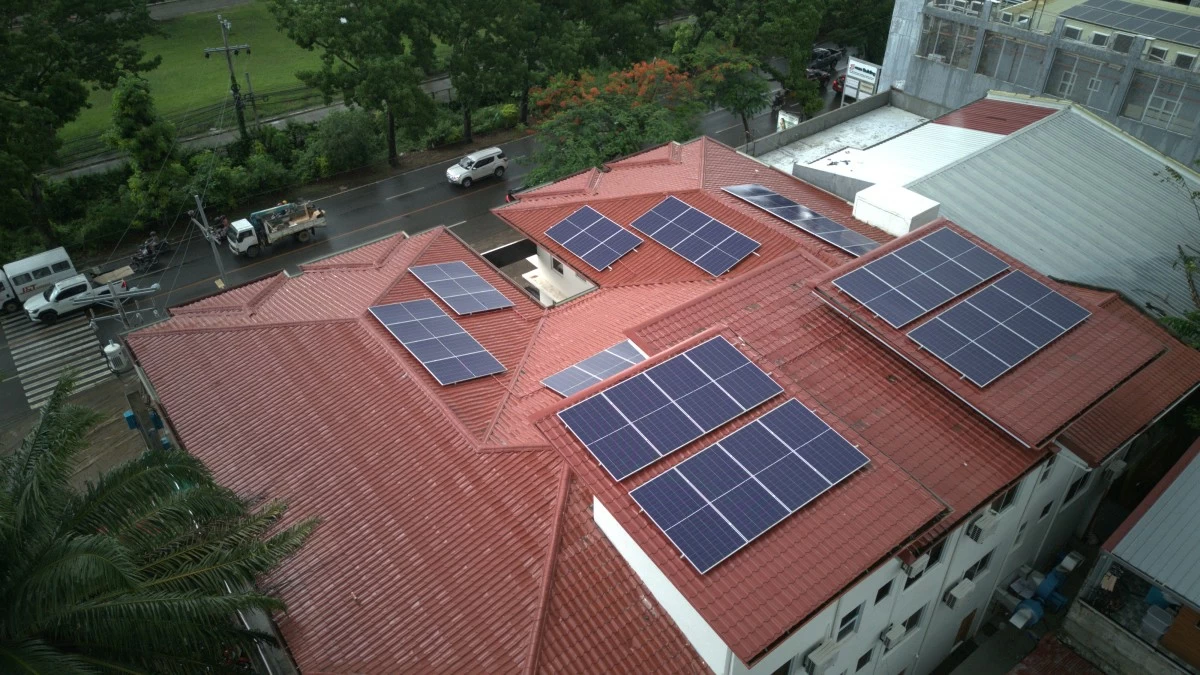
The restaurant uses more solar energy than the hotel. In daytime, it runs on full solar.
“We set a certain amount for the cafe and the hotel. Even though they have solar and kilowatt itself, the cafe is operated more. For us, the technical team, we have the delimiter to allot a specific amount,” said Macahilos.
“The electricity of Mad Cafe from morning to afternoon is fully operated by the sun, 100 percent. Its total capacity is enough to power the hotel,” he added.
Apart from lighting and air conditioning, the hotel elevators operate using solar. The hotel manager takes action on the maintenance and cleanliness of the panels.
Meanwhile, Greenergy PH conducts maintenance every six months to keep them fully functioning.
Chali Resort and Conference Center
A resort tucked in Cagayan de Oro has reduced its total energy costs by six digits with solar.
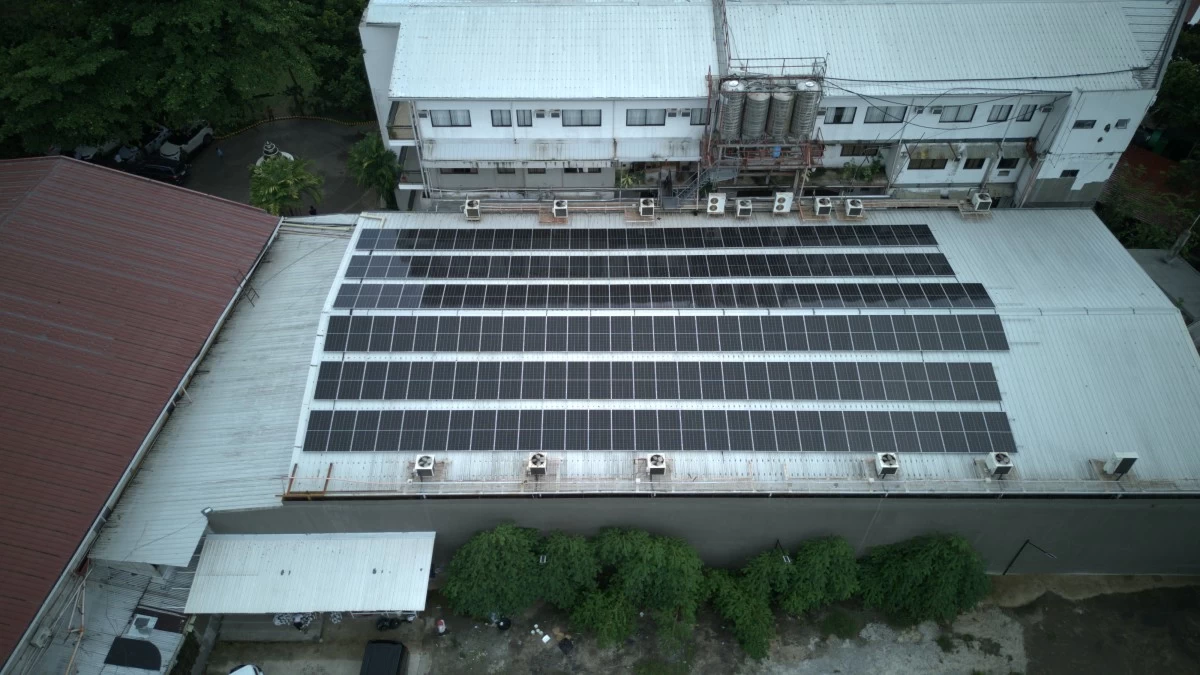
This amounts to ₱150,000 or 15 percent through off-grid power generation, just six months after the center installed the panels.
Today, 150 panels totaling 100 kilowatts sit on the resort’s rooftop, enough to help power 77 rooms and its conference center.
Simply put, what solar energy cannot provide, Cepalco will.
The solar company it’s partnered with will conduct the maintenance for the first year. Afterward, the resort employees need to do it themselves with an app for monitoring energy consumption.
According to the center, an advantage of doing solar is the savings, stating it “saw a drop in operational costs.”