ADVERTISEMENT

If Congress won't end dynasties, the people must

Published Jul 4, 2025 12:05 am  |  Updated Jul 3, 2025 06:04 pm
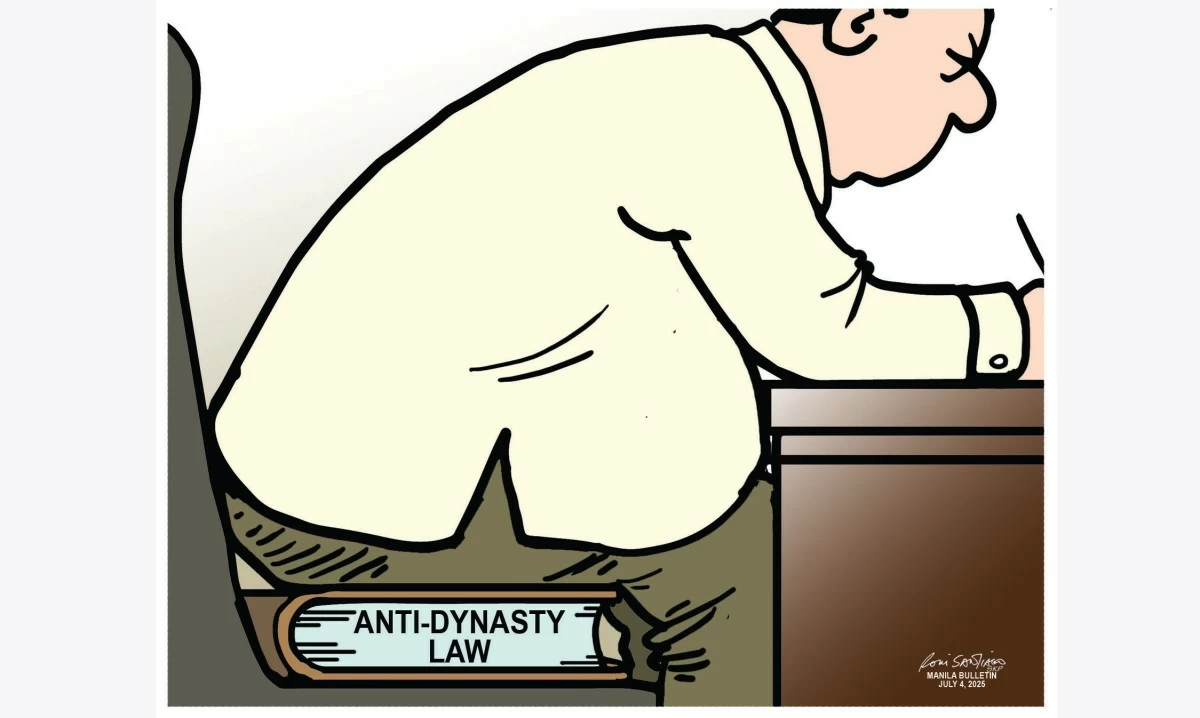
Once again, a bill seeking to enforce the constitutional prohibition on political dynasties has been filed in the House of Representatives. And once again, it stands little chance of surviving the very halls where such dynasties have entrenched themselves for decades. Likely, it will be buried, ignored, or quietly killed with deliberate inaction.
Article II, Section 26 of the 1987 Philippine Constitution is crystal clear: “The State shall guarantee equal access to opportunities for public service, and prohibit political dynasties as may be defined by law.” But here lies the catch—as may be defined by law. For nearly four decades, Congress has refused to define what the Constitution requires. Why? Because many of its members are part of the very problem the law seeks to solve.
The refusal to pass an anti-dynasty law is an act of self-preservation. Dynastic politicians, cloaked in campaign promises and familiar surnames, have mastered the art of political survival—often at the expense of real progress, inclusive governance, and democratic renewal. They flood communities with patronage, and romanticize service while building empires. They silence dissent, co-opt the youth, and buy loyalty with cash aid and convenience. They thrive because they are well-entrenched, wealthy, and ruthless.
To be clear, not every political family is corrupt or inept. Some have served their people with vision and integrity. Yet the issue is not about the intentions of a few. It is about a system that enables exclusivity, concentrates power, and discourages new leaders from emerging. The very idea of a dynasty—where one family monopolizes power—is the enemy of equal opportunity, fresh ideas, and grassroots leadership.
If Congress remains unwilling to pass the law the Constitution demands, what are we to do? The answer lies in the very foundation of our democracy: the power of the vote.
We, the electorate, are not helpless. We are not pawns to be manipulated by name recall, patronage, or empty promises. We are the ultimate sovereigns in a democracy. If our legislators will not break the chains of dynastic politics, then we must do it ourselves—one ballot at a time. Let us not forget: Dynasties persist not just because they run, they exist because we keep on electing them.
To start with, don’t vote for names, vote for values. Don’t choose based on lineage, vote based on leadership, service, and vision. Scrutinize the track record, not the family tree. Ask the hard questions: Has this family lifted people out of poverty? Has their leadership made lives better, or merely richer for themselves?
This is not an easy task. The machinery of political families runs deep. They will cry about legacy, pretend to be servants, and shower you with kindness every election cycle. But kindness is not governance. Legacy is not a license to rule forever. We must remember the power we hold. Change has never come easy in this country, but it has come—when people decided they had enough.
If we want to see new leaders, we must create space for them. If we want laws to be fair, we must send fair-minded people to write them. We must make public office a place of merit again, not a throne passed down like a crown. And if we want to enforce the Constitution, we must elect those who believe in upholding it and not those who undermine it.
If Congress continues to betray its duty, the people must not. We hold the power. We shape our future.
All we need is one principled stand at a time. Vote them out, one dynasty at a time.
ADVERTISEMENT
.most-popular .layout-ratio{ padding-bottom: 79.13%; } @media (min-width: 768px) and (max-width: 1024px) { .widget-title { font-size: 15px !important; } }

{{ articles_filter_1561_widget.title }}

.most-popular .layout-ratio{ padding-bottom: 79.13%; } @media (min-width: 768px) and (max-width: 1024px) { .widget-title { font-size: 15px !important; } }

{{ articles_filter_1562_widget.title }}

.most-popular .layout-ratio{ padding-bottom: 79.13%; } @media (min-width: 768px) and (max-width: 1024px) { .widget-title { font-size: 15px !important; } }

{{ articles_filter_1563_widget.title }}

{{ articles_filter_1564_widget.title }}

.mb-article-details { position: relative; } .mb-article-details .article-body-preview, .mb-article-details .article-body-summary{ font-size: 17px; line-height: 30px; font-family: "Libre Caslon Text", serif; color: #000; } .mb-article-details .article-body-preview iframe , .mb-article-details .article-body-summary iframe{ width: 100%; margin: auto; } .read-more-background { background: linear-gradient(180deg, color(display-p3 1.000 1.000 1.000 / 0) 13.75%, color(display-p3 1.000 1.000 1.000 / 0.8) 30.79%, color(display-p3 1.000 1.000 1.000) 72.5%); position: absolute; height: 200px; width: 100%; bottom: 0; display: flex; justify-content: center; align-items: center; padding: 0; } .read-more-background a{ color: #000; } .read-more-btn { padding: 17px 45px; font-family: Inter; font-weight: 700; font-size: 18px; line-height: 16px; text-align: center; vertical-align: middle; border: 1px solid black; background-color: white; } .hidden { display: none; }
function initializeAllSwipers() { // Get all hidden inputs with cms_article_id document.querySelectorAll('[id^="cms_article_id_"]').forEach(function (input) { const cmsArticleId = input.value; const articleSelector = '#article-' + cmsArticleId + ' .body_images'; const swiperElement = document.querySelector(articleSelector); if (swiperElement && !swiperElement.classList.contains('swiper-initialized')) { new Swiper(articleSelector, { loop: true, pagination: false, navigation: { nextEl: '#article-' + cmsArticleId + ' .swiper-button-next', prevEl: '#article-' + cmsArticleId + ' .swiper-button-prev', }, }); } }); } setTimeout(initializeAllSwipers, 3000); const intersectionObserver = new IntersectionObserver( (entries) => { entries.forEach((entry) => { if (entry.isIntersecting) { const newUrl = entry.target.getAttribute("data-url"); if (newUrl) { history.pushState(null, null, newUrl); let article = entry.target; // Extract metadata const author = article.querySelector('.author-section').textContent.replace('By', '').trim(); const section = article.querySelector('.section-info ').textContent.replace(' ', ' '); const title = article.querySelector('.article-title h1').textContent; // Parse URL for Chartbeat path format const parsedUrl = new URL(newUrl, window.location.origin); const cleanUrl = parsedUrl.host + parsedUrl.pathname; // Update Chartbeat configuration if (typeof window._sf_async_config !== 'undefined') { window._sf_async_config.path = cleanUrl; window._sf_async_config.sections = section; window._sf_async_config.authors = author; } // Track virtual page view with Chartbeat if (typeof pSUPERFLY !== 'undefined' && typeof pSUPERFLY.virtualPage === 'function') { try { pSUPERFLY.virtualPage({ path: cleanUrl, title: title, sections: section, authors: author }); } catch (error) { console.error('ping error', error); } } // Optional: Update document title if (title && title !== document.title) { document.title = title; } } } }); }, { threshold: 0.1 } ); function showArticleBody(button) { const article = button.closest("article"); const summary = article.querySelector(".article-body-summary"); const body = article.querySelector(".article-body-preview"); const readMoreSection = article.querySelector(".read-more-background"); // Hide summary and read-more section summary.style.display = "none"; readMoreSection.style.display = "none"; // Show the full article body body.classList.remove("hidden"); } document.addEventListener("DOMContentLoaded", () => { let loadCount = 0; // Track how many times articles are loaded const offset = [1, 2, 3, 4, 5, 6, 7, 8, 9, 10]; // Offset values const currentUrl = window.location.pathname.substring(1); let isLoading = false; // Prevent multiple calls if (!currentUrl) { console.log("Current URL is invalid."); return; } const sentinel = document.getElementById("load-more-sentinel"); if (!sentinel) { console.log("Sentinel element not found."); return; } function isSentinelVisible() { const rect = sentinel.getBoundingClientRect(); return ( rect.top < window.innerHeight && rect.bottom >= 0 ); } function onScroll() { if (isLoading) return; if (isSentinelVisible()) { if (loadCount >= offset.length) { console.log("Maximum load attempts reached."); window.removeEventListener("scroll", onScroll); return; } isLoading = true; const currentOffset = offset[loadCount]; window.loadMoreItems().then(() => { let article = document.querySelector('#widget_1690 > div:nth-last-of-type(2) article'); intersectionObserver.observe(article) loadCount++; }).catch(error => { console.error("Error loading more items:", error); }).finally(() => { isLoading = false; }); } } window.addEventListener("scroll", onScroll); });

Sign up by email to receive news.