






Manila Bulletin
 Philippines
National
DepEd: Marcos-backed feeding program fuels summer literacy gains in 2025
Philippines
National
DepEd: Marcos-backed feeding program fuels summer literacy gains in 2025
Philippines
National
DepEd: Marcos-backed feeding program fuels summer literacy gains in 2025
DepEd: Marcos-backed feeding program fuels summer literacy gains in 2025
Food support boosts reading and attendance among early grade learners under BBMP, National Learning Camp
Published Jul 4, 2025 08:22 pm


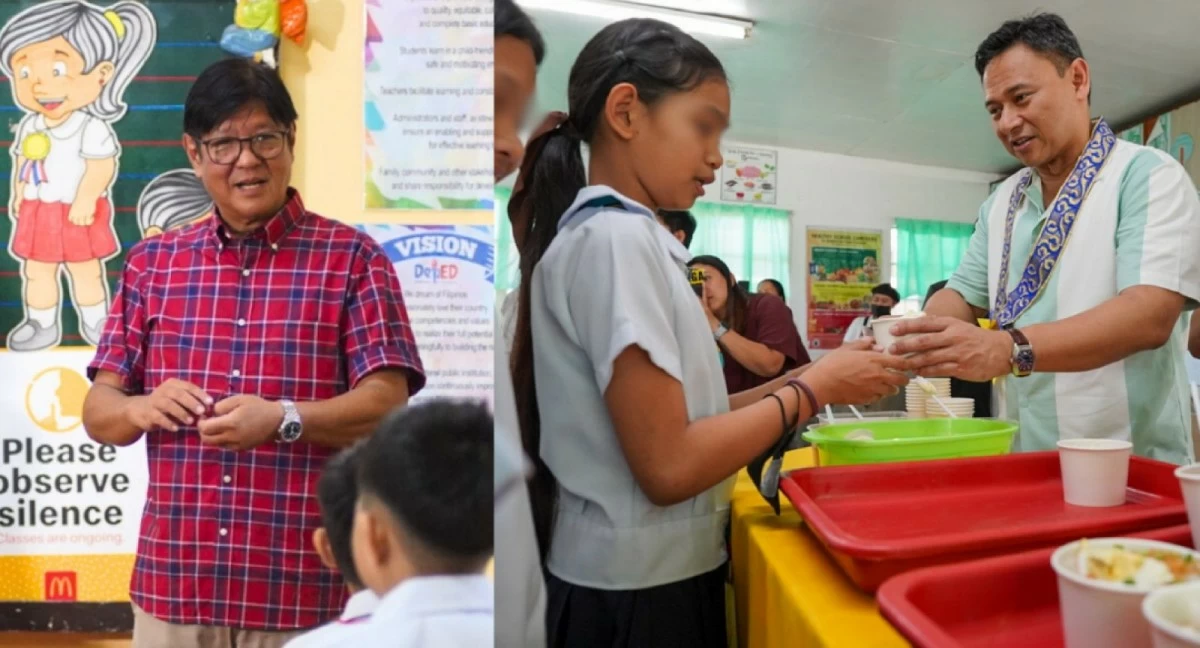
Driven by President Marcos' advocacy for learning recovery and child nutrition, the Department of Education (DepEd) found that providing food support during its 2025 summer programs made a critical difference in enhancing reading skills among young learners. (Photo from DepEd)
The Department of Education (DepEd) highlighted significant improvements in early grade reading outcomes during its 2025 summer programs, attributing the gains to food support initiatives aligned with President Marcos’ push for stronger learning recovery and child nutrition.
DepEd said the integration of feeding programs into its summer interventions—particularly the Bawat Bata Bumabasa Program (BBMP) and the National Learning Camp (NLC)—played a decisive role in improving learner attendance, engagement, and academic performance.
“Ang pagkain ay hindi lang insentibo, ito ay pundasyon ng pagkatuto (Food is not just an incentive; it is the foundation of learning),” said Education Secretary Sonny Angara.
“Kapag may lakas ang katawan, mas handa ang bata sa pagbabasa, pakikinig, at pag-unawa (When the body is strong, the child is better prepared to read, listen, and understand),” he added.
Food support boosts summer reading program outcomes
The BBMP, which focused on improving reading skills among early grade learners, recorded an 80.83 percent average attendance rate among over 70,000 participants during the five-week intervention, according to DepEd.
In schools that implemented snack incentives and reward-based systems, teachers observed higher learner engagement, reduced absenteeism, and improved focus during sessions.
Post-program assessments showed encouraging gains: 32.85 percent of Grade 3 learners reached grade-level proficiency in Filipino reading, 26.04 percent achieved the same in English, and the number of “Low Emerging” readers dropped significantly.
Over 1.13 million learners served under NLC
Meanwhile, DepEd reported that the NLC served more than 1.13 million learners across 157 school divisions, offering 15-day learning interventions focused on reading and mathematics.
DepEd ensured that all participants received hot meals and nutritious food products, which helped sustain attendance and improve cognitive readiness.
Field reports highlighted how school-based meals, home-distributed food packs, and support from local government units (LGUs) contributed to learner morale and consistency, the agency said.
In many cases, school administrators integrated feeding directly into daily instructional time to reinforce the connection between health and academic performance.
Private sector, LGUs bolster program reach
DepEd also acknowledged the growing role of the private sector and civic organizations in supporting the summer learning efforts.
Various companies and non-profits partnered with school divisions to provide snacks, hygiene kits, and reading materials—especially in underserved areas, DepEd added.
These partnerships, coordinated through DepEd’s field offices, helped incentivize learner participation and improve access to essential learning resources.
Feeding and learning: A proven formula
DepEd emphasized that the results affirm the Marcos administration’s policy of integrating nutrition into basic education.
“Sa bawat batang natutong bumasa dahil busog ang tiyan at buo ang suporta, doon natin tunay na makikita ang saysay ng edukasyon—may malasakit at may pagkalinga (With every child who learns to read because their stomach is full and support is complete, that’s where we truly see the meaning of education—rooted in compassion and care),” Angara said.
Education and health advocates have long called for stronger linkages between nutrition and academic outcomes—a strategy now gaining momentum under DepEd’s year-round learning recovery initiatives.