






Manila Bulletin
 Philippines
National
DepEd expands 'Gulayan sa Paaralan' to nearly 45,000 schools in 2025 to boost nutrition, education
Philippines
National
DepEd expands 'Gulayan sa Paaralan' to nearly 45,000 schools in 2025 to boost nutrition, education
Philippines
National
DepEd expands 'Gulayan sa Paaralan' to nearly 45,000 schools in 2025 to boost nutrition, education
DepEd expands 'Gulayan sa Paaralan' to nearly 45,000 schools in 2025 to boost nutrition, education
Program supports the Marcos administration's push to integrate nutrition and food security into basic education
Published Jul 4, 2025 07:21 pm


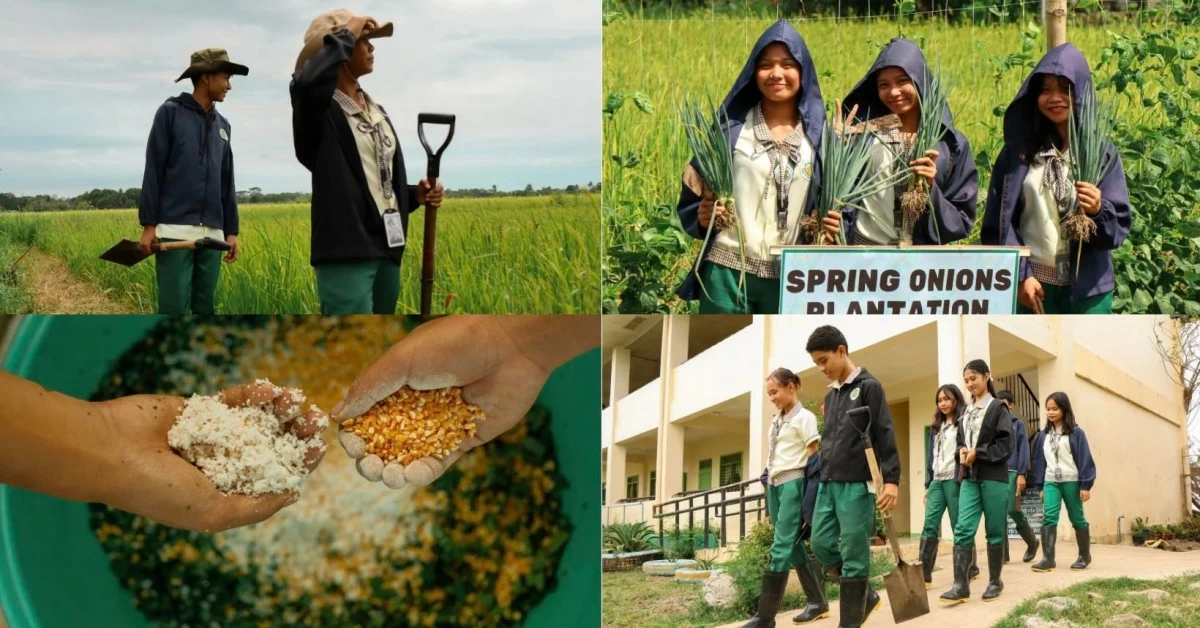
From garden to classroom: DepEd cultivates healthy habits and agri-skills through school gardens and farm education (Photo from DepEd)
The Department of Education (DepEd) announced that it has expanded the Gulayan sa Paaralan Program (GPP) to 44,965 schools nationwide for School Year 2025–2026—a 50.6 percent increase from the 2022–2023 school year.
This initiative aligns with President Marcos’ directive to integrate nutrition into education and strengthen the connection between agriculture, food security, and student welfare.
The GPP plays a critical role in supporting DepEd’s School-Based Feeding Program (SBFP) by providing fresh, locally grown produce to improve the health and nutrition of learners, especially in underserved and last-mile communities.
Gardens that teach: Nutrition, agriculture, and sustainability
Through a combination of school-level funding and SBFP resources, schools are now growing organic vegetables that directly enhance daily school meals.
These gardens also serve as outdoor learning laboratories, where students learn the value of agriculture, environmental stewardship, and self-reliance.
“Kapag natuto ang mga bata kung saan nanggagaling ang pagkain nila at paano ito pinapalaki, mas naeengganyo silang kumain nang masustansya (When children learn where their food comes from and how it is grown, they become more encouraged to eat healthily),” said Education Secretary Sonny Angara.
“Hindi lang ito tungkol sa gulay. Disiplina, pagtutulungan, at malasakit sa kalikasan at kapwa ang tinuturo natin dito (This isn’t just about vegetables. We are also teaching discipline, cooperation, and care for the environment and others),” he added.
As of 2025, DepEd said 94 percent of public schools are implementing garden interventions.
Budget allocations for the GPP have also increased—from P10 million in 2021 to P20 million in 2024, with a projected P21.8 million for 2025. This growth, DepEd said, underscores its strong commitment to sustainable nutrition education and community engagement.
Expansion of farm schools to strengthen agricultural education
Complementing the success of the GPP is the continued expansion of Farm Schools, a concept originally championed by the late Senator Ed Angara and institutionalized through Republic Act No. 10618.
Currently, 152 farm schools are operating across four regions, offering agriculture-focused education, technical training, and entrepreneurship development—especially tailored for learners in rural and agricultural communities.
Angara has reiterated the importance of investing in farm schools to prepare the next generation for careers in agriculture and agribusiness, key pillars of the Marcos administration’s agenda for food security and inclusive economic growth.
DepEd’s holistic approach to student development
By aligning its programs with national goals for nutrition, education, and rural development, DepEd said it is empowering students not just with academic knowledge, but also with the health, skills, and values necessary for long-term success.
As Angara emphasized, nutrition education, school gardens, and farm schools are not only investments in learning—they are investments in nation-building and future resilience.
Naomi Tito, the school head of Culandanum Elementary School in Palawan, shared that school gardens have become community-led projects involving teachers, parents, and local stakeholders.
“Tuloy-tuloy ang aming pagsisikap para matulungan ang mga batang kulang o sobra sa timbang na maabot ang tamang nutrisyon (We are continuously working to help children who are underweight or overweight achieve proper nutrition),” she added.