






Manila Bulletin
 Business
The Economy
Philippine debt nears ₱17 trillion at end-May on higher domestic borrowings
Business
The Economy
Philippine debt nears ₱17 trillion at end-May on higher domestic borrowings
Business
The Economy
Philippine debt nears ₱17 trillion at end-May on higher domestic borrowings
Philippine debt nears ₱17 trillion at end-May on higher domestic borrowings
Gov't says debt remains 'manageable'
By Derco Rosal
Published Jul 3, 2025 03:29 pm


At A Glance
- Marcos administration's total outstanding debt reached ₱16.92 trillion in May, setting a new record high as it neared the ₱17 trillion mark from ₱16.75 trillion in end-April.
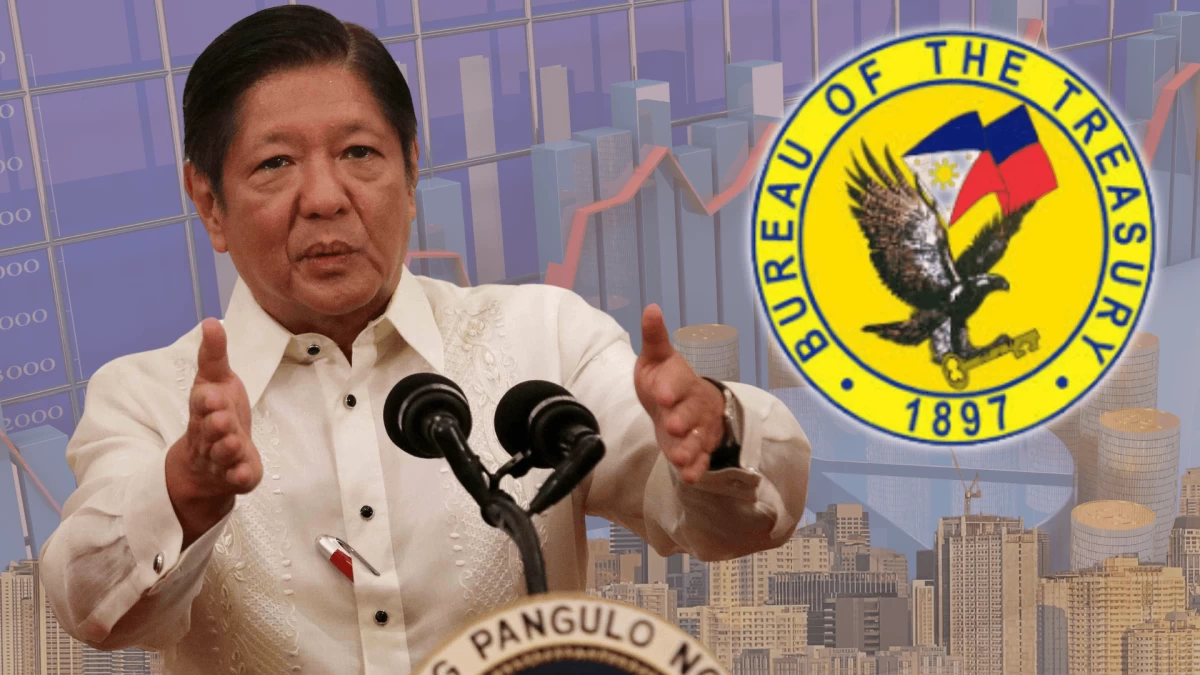
The national government’s outstanding debt reached ₱16.92 trillion in May, setting a new record high as it neared the ₱17-trillion mark, from ₱16.75 trillion at end-April.
According to the latest data reported by the Bureau of the Treasury (BTr), the one-percent, or ₱166.2-billion, increase from the end-April level was mainly because of fresh loans from domestic lenders.
Despite nearly breaching ₱17 trillion, the debt increase in May was still “minimal” and remained at a level that is “manageable,” the BTr said.
It said in a statement released on Thursday, July 3, that the month-on-month increase was “primarily driven by the successful net issuances of new domestic securities, which reflect sustained investor confidence in the Philippine economy.”
A faster bloating of the debt stock was “partially offset by the valuation effects of a stronger peso, helping reduce the value of external obligations.” Before nearly slumping to the ₱58:$1 level in June amid the Israel-Iran conflict, the local currency had been at its highs in May, hovering at the ₱56 level against the United States (US) dollar.
Specifically, debt sourced from domestic lenders accounted for 69.6 percent or the majority of the end-May debt stock, while foreign obligations accounted for the remaining 30.4 percent. For this year, the government aims to source 80 percent of its debt from domestic creditors, and 20 percent from foreign lenders.
According to the BTr, the nearly 70-percent share of domestic borrowings reflects the government’s “strong bias for domestically sourced financing, which helps mitigate foreign exchange (forex) risks and strengthen the local capital market.”
Domestic debt climbed by 1.6 percent, or ₱190 billion, to ₱11.78 trillion as of end-May 2025, from ₱11.59 trillion in April. This increase was mainly due to net issuances totaling ₱190.9 billion, but it was slightly tempered by the ₱910-million downward valuation effect of a stronger peso against the greenback in May.
Meanwhile, foreign debt continued its decline, falling by 0.5 percent to ₱5.14 trillion as of end-May 2025, down from ₱5.16 trillion in the previous month.
This was mainly driven by ₱3.6 billion in net repayments and the stronger peso, which trimmed the peso value of foreign debt by ₱29.4 billion. This drop was partially offset by a ₱9.1-billion upward revaluation due to third-currency movements against the US dollar.
Meanwhile, government-guaranteed debt increased by 1.8 percent to ₱343.6 billion as of end-May 2025. This was driven by ₱6.5 billion in new domestic guarantees and a ₱530-million adjustment from third-currency exchange rate changes.
Since end-2024, government-guaranteed debt has declined by 0.9 percent, and by 1.9 percent compared to the same period last year.
For its part, the government assured that it “remains committed to its prudent debt management strategy, ensuring borrowings are strategically aligned with fiscal objectives and overall macroeconomic stability.”
Based on the latest BTr data, the end-May public debt was mostly comprised of peso-denominated borrowings, amounting to ₱11.68 trillion. The remainder amounting to ₱5.24 trillion, or about $94.26 billion, were denominated in foreign currencies.
In terms of debt instrument, outstanding government securities as of May reached ₱14.45 trillion, while the rest are bilateral and multilateral loans worth ₱2.47 trillion.
The government borrows more from the liquid domestic debt market—and in the local currency—mainly through the weekly issuance of treasury bills and bonds not only to take advantage of Philippine-based creditors who are awash in cash, but also to temper forex risks for future repayments.
By maturity, long-term debts, or those maturing in over 10 years’ time, accounted for over four-fifths of the total, amounting to ₱13.88 trillion.
Medium-term debt reached ₱2.19 trillion, while the remainder or ₱846.58 billion were short-term borrowings maturing within a year or less.
Last month, the Marcos Jr. administration’s chief economic manager allayed concerns about the rising public debt level, claiming that the national government maintains prudent fiscal management.
Asked if there’s anything to worry about regarding debt accumulation, especially as the nominal amount breaches new highs, Department of Finance (DOF) Secretary Ralph G. Recto told Manila Bulletin: “Credit rating agencies have upgraded us. They’re not worried.”
The Philippines enjoys investment-grade credit ratings from the so-called Big Three debt watchers: Fitch Ratings, Moody’s Ratings, and S&P Global Ratings. S&P has currently assigned the Philippines its highest rating—one notch below “A-”—while Moody’s and Fitch have given the country the minimum investment grade.
At the end of the first quarter of 2025, the debt-to-gross domestic product (GDP) ratio climbed to 62 percent—the highest since the previous Duterte administration ramped up borrowings at the height of the pandemic to fight the health and socioeconomic crises wrought by Covid-19.
The Marcos Jr. administration aims to reduce debt-to-GDP to below 60 percent by the time the President steps down in 2028. Before the Covid-19 pandemic struck, the public debt ratio fell to a record low of 39.6 percent in 2019.