







MMDA tightens traffic supervision in Metro Manila school zones
By Trixee Rosel
Published Jul 3, 2025 04:51 pm


At A Glance
- MMDA tightens traffic supervision in school zones across Metro Manila due to persistent congestion during peak hours.
- CCTV cameras are being installed to improve real-time monitoring and traffic response.
- School and LGU officials raise concerns over daily gridlocks and limited space for vehicle queues.
- CCTV expansion supports preparations for the reimplementation of the No Contact Apprehension Policy (NCAP).
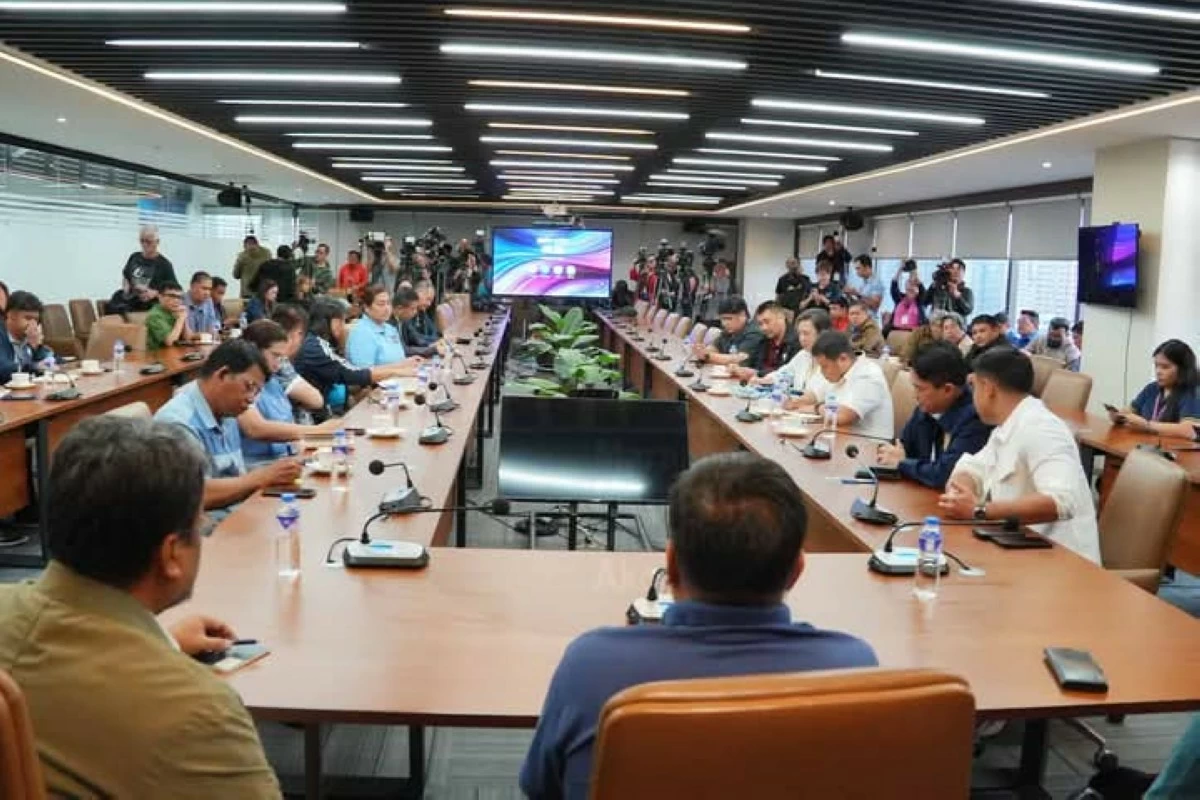
Officials from the Metropolitan Manila Development Authority (MMDA) meet with representatives from Metro Manila schools and local government units to address worsening traffic congestion during student drop-off and pickup hours, as part of intensified efforts to improve road supervision in school zones. (Photo courtesy of MMDA)
The Metropolitan Manila Development Authority (MMDA) has intensified road monitoring in school zones across Metro Manila as persistent vehicle buildup during student drop-off and pickup hours continues to disrupt traffic on major thoroughfares.
MMDA chairperson Don Artes reported heavy congestion near schools in Ortigas, with multiple lanes blocked by waiting vehicles during peak hours.
To address this, the MMDA has begun installing additional closed-circuit television (CCTV) cameras to enhance real-time traffic surveillance and improve field response.
“We have observed traffic buildup near several schools due to the volume of vehicles conveying and fetching students, occupying two or three lanes,” Artes said, noting that such obstructions affect not only local traffic but also spill into adjoining roads.
In a recent coordination meeting, officials from La Salle Greenhills, Saint Pedro Poveda College, Ateneo de Manila University, Miriam College, Xavier School, and Immaculate Conception Academy raised concerns over daily traffic buildup and limited space for vehicle queues within school premises.
Quezon City Assistant City Administrator for Operations Alberto Kimpo cited the zipper lane scheme along Katipunan Avenue as an effective traffic solution in an area with overlapping class schedules.
Artes added that the expanded CCTV coverage also supports the agency’s preparations for the reimplementation of the No Contact Apprehension Policy (NCAP), a camera-based traffic enforcement system backed by President Ferdinand Marcos Jr.
He noted, however, that enforcers will remain deployed in school zones to assist pedestrians and respond to on-site situations as they arise.