






Manila Bulletin
 Philippines
Mindanao
Mining firm affirms legal commitment amid land dispute in Mati City
Philippines
Mindanao
Mining firm affirms legal commitment amid land dispute in Mati City
Philippines
Mindanao
Mining firm affirms legal commitment amid land dispute in Mati City
Mining firm affirms legal commitment amid land dispute in Mati City
By Ivy Tejano
Published Jul 3, 2025 12:43 pm


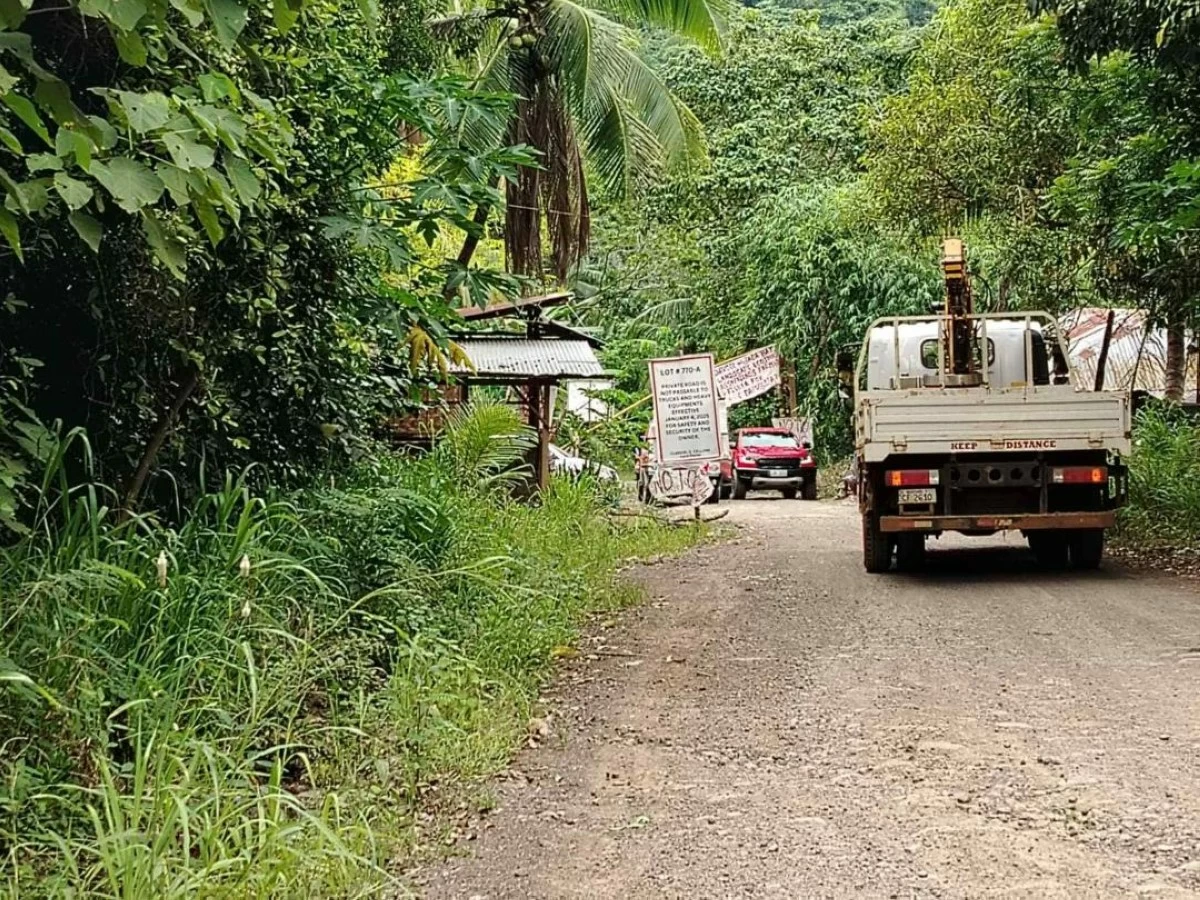
DAVAO CITY – Hallmark Mining Corp. reiterated on Wednesday, July 2, its commitment to legal compliance and social responsibility as tensions mount over a controversial road barricade in Barangay Macambol in Mati City, prompting public outcry and renewed debate on ancestral domain, public access, and land rights.
In an official statement, the mining corporation emphasized its adherence to mining regulations and ongoing efforts to support marginalized communities in its host and neighboring areas.
“The Hallmark Mining Corp. remains steadfast in its commitment to full compliance with all regulations governing the mining industry,” they said.
It said that the mining corporation upholds pro-people and pro-environment principles and continues implementing development projects to improve the lives of the poor and marginalized.
The statement comes after a contentious blockade on a road leading to the remote sitios of Catmonan and Magum, where residents said this access route has been used continuously for nearly 30 years.
Hallmark expressed “deep concern” over the sudden barricade, claiming the road is a vital lifeline for indigenous and rural communities.
Reports said the blockade, attributed to businesswoman Claridel dela Cruz Cellona, has ignited outrage among residents and barangay officials, who insist the road is part of the provincial network and not private property.
Cellona and two farmer leaders were arrested on June 28 after allegedly obstructing Hallmark trucks from passing through the area. She maintains that the road crosses her titled land.
However, community leaders, environmental advocates, and former program beneficiaries of the mining firm have pushed back against her claims, questioning both the legal foundation and timing of her actions.
Barangay Captain Cerino Danzalan Salazar, in a phone interview, said that the route connecting the barangays of Dawan, Mamali, Macambol, and Cabuaya has served as a public road since the 1990s and was recognized as a provincial road during the administration of former Gov. Palma Gil.
“The community has relied on this road for decades. It was open to the public long before mining operations began here,” Salazar said, adding that former Barangay Captain Braulio Cheng supports this assertion.
According to Chen, the road’s origins in the 1970s initially opened during early exploration activities by a now-defunct mining company, later improved by both Hallmark and the provincial government.
Salazar cited a previous incident in which Cellona allegedly blocked another community road leading to Catmonan Elementary School, causing disruption for students, teachers, and parents.
“Despite multiple appeals from local officials, the road remained closed for an extended period. She ignored the calls from the community,” the barangay captain said, recalling the hardship suffered by schoolchildren from the blockade.
Cellona’s past links with the mining company she now opposes add to the controversy. Helen Seliote, a retired educator and volunteer for Hallmark’s Social Development and Management Program, confirmed that Cellona’s family was among its beneficiaries.
“She and her daughters received help from us. Her college student is one of our scholars. Her sudden opposition surprises many of us in the community,” Seliote said.
The emergence of a group named Davao Oriental Pujada Bay Landscape Eco Tourism Association, Farmers, Fisherfolk, Family and Friends – or DAPUBPLETA F4 – further complicated the situation.
The group formed just two weeks before the blockade and now backing Cellona alleged environmental harm by the mining company, Salazar said.
Residents questioned the group’s makeup and motives. They claimed that many of its members are not locals, casting doubt on the group’s representation of affected communities.
One of the group’s key claims is that mining operations have led to a decline in fish catch. However, marine scientists and environmental groups point to broader causes such as climate change, overfishing, and pollution as the main culprits behind dwindling marine resources.
Cellona and the two detained farmers have posted bail. The provincial government has yet to issue a formal statement addressing the situation and communities and stakeholders are awaiting clarity on the road’s legal status and access rights.
Hallmark reaffirmed its intention to work closely with local leaders to find peaceful and lawful solutions, noting that the disputed road is crucial for company operations and residents’ daily lives across several barangays.