ADVERTISEMENT

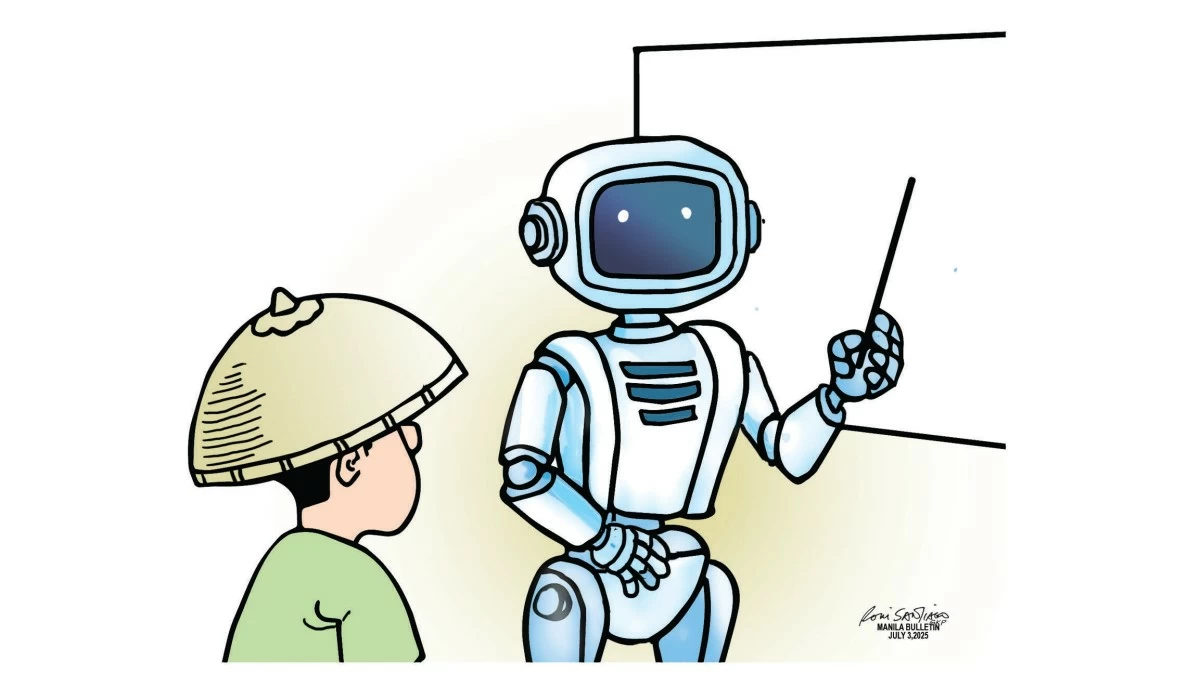
AI training: A bold step toward a future-ready workforce

Published Jul 3, 2025 12:05 am  |  Updated Jul 2, 2025 05:38 pm
President Ferdinand Marcos Jr.’s recent approval of the National AI Upskilling Roadmap presents a decisive shift in the government’s approach to preparing Filipinos for the future of work—one where artificial intelligence (AI) is expected to reshape industries, redefine job roles, and create new economic opportunities.
During a meeting with the Private Sector Advisory Council (PSAC) last week, the government and private sector jointly unveiled ambitious plans to expand AI literacy, fast-track digital skills training, and integrate real-world work experiences into education. Aligning education with emerging technologies aims to ensure that Filipino workers and students won’t just adapt to the AI era—they will thrive in it.
The roadmap will include digital literacy for the public, specialized training for professionals, and deep integration into the Education Commission 2 (EDCOM 2)’s National Education and Workforce Development Plan.
The roadmap includes collaboration with the Commission on Higher Education (CHED), the Technical Education and Skills Development Authority (TESDA), and the Analytics & AI Association of the Philippines. It emphasizes digital literacy for the general public, specialized AI training for professionals, and practical immersion for senior high school students.
The private sector is also working with the Department of Education (DepEd) and the Private Sector Jobs and Skills Corporation to enhance the Senior High School work immersion program. A full pilot will be launched in School Year 2025–2026 after a successful mini-pilot yielded a 96 percent completion rate.
Recognizing that seamless coordination is key, PSAC has urged the President to form a Cabinet Cluster on Education—bringing DepEd, CHED, and TESDA together to synchronize education and workforce initiatives.
But the government’s commitment to AI upskilling doesn’t stop with training. The Department of Science and Technology (DOST) plans to invest over ₱2.6 billion in AI projects until 2028. This includes developing AI applications in disaster risk reduction, healthcare, and mobility, as well as building infrastructure like the Computing and Archiving Research Environment (COARE) and launching the AI Virtual Hub. These investments are designed not just to use AI, but to enable Filipinos to build AI systems themselves.
The country’s progress is already being recognized. According to the 2024 AI Readiness Index by Oxford Insights, the Philippines climbed from 65th place in 2023 to 56th in 2024.
In February, the DepEd launched the Education Center for AI Research (E-CAIR), the first AI research hub focused on transforming basic education. E-CAIR is already delivering AI-driven solutions such as optimizing voucher distributions, screening learners with disabilities, and even mapping schools vulnerable to natural hazards. These innovations are critical steps toward making Filipino education globally competitive and inclusive.
Preparing for AI isn’t just a technical challenge; it’s a human one. As AI systems become proactive partners—capable of planning, executing, and learning autonomously—organizations must also invest in empathetic change management. Employees need reassurance, clear communication, and opportunities to reskill so they see AI not as a threat but as a collaborator.
President Marcos’ AI roadmap offers a once-in-a-generation opportunity to build a workforce ready for an AI-driven world. But it will require sustained collaboration across government, private sector, schools, and communities—alongside a commitment to ensuring no Filipino is left behind in the march toward progress.
This is not merely an investment in technology; it is an investment in people—empowering them with the skills, knowledge, and confidence to succeed in the dynamic world of tomorrow.
ADVERTISEMENT
.most-popular .layout-ratio{ padding-bottom: 79.13%; } @media (min-width: 768px) and (max-width: 1024px) { .widget-title { font-size: 15px !important; } }

{{ articles_filter_1561_widget.title }}

.most-popular .layout-ratio{ padding-bottom: 79.13%; } @media (min-width: 768px) and (max-width: 1024px) { .widget-title { font-size: 15px !important; } }

{{ articles_filter_1562_widget.title }}

.most-popular .layout-ratio{ padding-bottom: 79.13%; } @media (min-width: 768px) and (max-width: 1024px) { .widget-title { font-size: 15px !important; } }

{{ articles_filter_1563_widget.title }}

{{ articles_filter_1564_widget.title }}

.mb-article-details { position: relative; } .mb-article-details .article-body-preview, .mb-article-details .article-body-summary{ font-size: 17px; line-height: 30px; font-family: "Libre Caslon Text", serif; color: #000; } .mb-article-details .article-body-preview iframe , .mb-article-details .article-body-summary iframe{ width: 100%; margin: auto; } .read-more-background { background: linear-gradient(180deg, color(display-p3 1.000 1.000 1.000 / 0) 13.75%, color(display-p3 1.000 1.000 1.000 / 0.8) 30.79%, color(display-p3 1.000 1.000 1.000) 72.5%); position: absolute; height: 200px; width: 100%; bottom: 0; display: flex; justify-content: center; align-items: center; padding: 0; } .read-more-background a{ color: #000; } .read-more-btn { padding: 17px 45px; font-family: Inter; font-weight: 700; font-size: 18px; line-height: 16px; text-align: center; vertical-align: middle; border: 1px solid black; background-color: white; } .hidden { display: none; }
function initializeAllSwipers() { // Get all hidden inputs with cms_article_id document.querySelectorAll('[id^="cms_article_id_"]').forEach(function (input) { const cmsArticleId = input.value; const articleSelector = '#article-' + cmsArticleId + ' .body_images'; const swiperElement = document.querySelector(articleSelector); if (swiperElement && !swiperElement.classList.contains('swiper-initialized')) { new Swiper(articleSelector, { loop: true, pagination: false, navigation: { nextEl: '#article-' + cmsArticleId + ' .swiper-button-next', prevEl: '#article-' + cmsArticleId + ' .swiper-button-prev', }, }); } }); } setTimeout(initializeAllSwipers, 3000); const intersectionObserver = new IntersectionObserver( (entries) => { entries.forEach((entry) => { if (entry.isIntersecting) { const newUrl = entry.target.getAttribute("data-url"); if (newUrl) { history.pushState(null, null, newUrl); let article = entry.target; // Extract metadata const author = article.querySelector('.author-section').textContent.replace('By', '').trim(); const section = article.querySelector('.section-info ').textContent.replace(' ', ' '); const title = article.querySelector('.article-title h1').textContent; // Parse URL for Chartbeat path format const parsedUrl = new URL(newUrl, window.location.origin); const cleanUrl = parsedUrl.host + parsedUrl.pathname; // Update Chartbeat configuration if (typeof window._sf_async_config !== 'undefined') { window._sf_async_config.path = cleanUrl; window._sf_async_config.sections = section; window._sf_async_config.authors = author; } // Track virtual page view with Chartbeat if (typeof pSUPERFLY !== 'undefined' && typeof pSUPERFLY.virtualPage === 'function') { try { pSUPERFLY.virtualPage({ path: cleanUrl, title: title, sections: section, authors: author }); } catch (error) { console.error('ping error', error); } } // Optional: Update document title if (title && title !== document.title) { document.title = title; } } } }); }, { threshold: 0.1 } ); function showArticleBody(button) { const article = button.closest("article"); const summary = article.querySelector(".article-body-summary"); const body = article.querySelector(".article-body-preview"); const readMoreSection = article.querySelector(".read-more-background"); // Hide summary and read-more section summary.style.display = "none"; readMoreSection.style.display = "none"; // Show the full article body body.classList.remove("hidden"); } document.addEventListener("DOMContentLoaded", () => { let loadCount = 0; // Track how many times articles are loaded const offset = [1, 2, 3, 4, 5, 6, 7, 8, 9, 10]; // Offset values const currentUrl = window.location.pathname.substring(1); let isLoading = false; // Prevent multiple calls if (!currentUrl) { console.log("Current URL is invalid."); return; } const sentinel = document.getElementById("load-more-sentinel"); if (!sentinel) { console.log("Sentinel element not found."); return; } function isSentinelVisible() { const rect = sentinel.getBoundingClientRect(); return ( rect.top < window.innerHeight && rect.bottom >= 0 ); } function onScroll() { if (isLoading) return; if (isSentinelVisible()) { if (loadCount >= offset.length) { console.log("Maximum load attempts reached."); window.removeEventListener("scroll", onScroll); return; } isLoading = true; const currentOffset = offset[loadCount]; window.loadMoreItems().then(() => { let article = document.querySelector('#widget_1690 > div:nth-last-of-type(2) article'); intersectionObserver.observe(article) loadCount++; }).catch(error => { console.error("Error loading more items:", error); }).finally(() => { isLoading = false; }); } } window.addEventListener("scroll", onScroll); });

Sign up by email to receive news.