






Manila Bulletin
 Entertainment
Movies and TV
Saved from extinction: A review of 'Jurassic World Rebirth'
Entertainment
Movies and TV
Saved from extinction: A review of 'Jurassic World Rebirth'
Entertainment
Movies and TV
Saved from extinction: A review of 'Jurassic World Rebirth'
Saved from extinction: A review of 'Jurassic World Rebirth'
Published Jul 2, 2025 12:44 pm


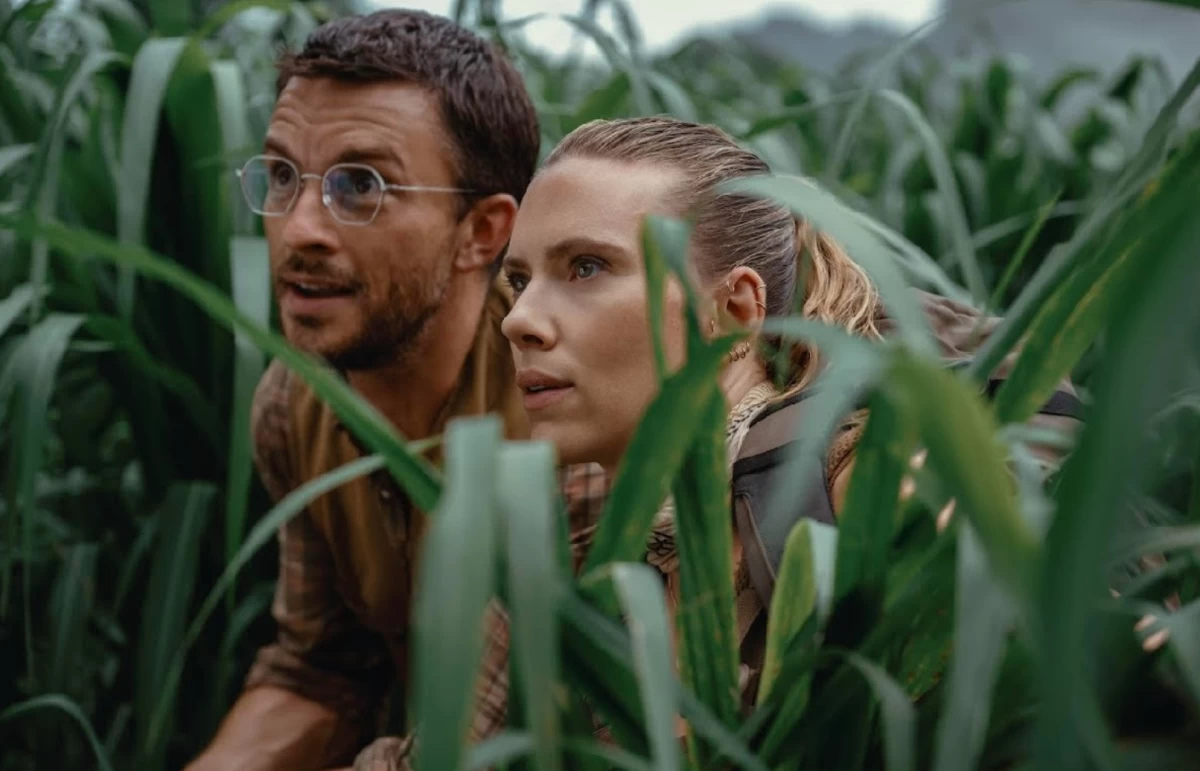
A scene from 'Jurassic World Rebirth'
As a standalone sequel to Jurassic World: Dominion (2022), this Jurassic World Rebirth is the fourth film in the Jurassic World series and the seventh overall in the Jurassic Park franchise. Now, some may question why we are still bothering, keeping this franchise from going the way of the dinosaurs, extinct. The World trilogy left me cold; the chemistry between Chris Pratt and Bryce Dallas Howard never struck me as convincing or something we’d care about. And for many, it’s been a downhill trend ever since that first Spielberg-directed 1993 film.
This Rebirth did possess promising signs. It’s directed by Gareth Edwards, who gave us a decent Godzilla remake, followed by Rogue One, and most recently, the sci-fi gem of a film, The Creator. David Koepp, who co-wrote the original Jurassic Park in 1993, is responsible for this new film’s screenplay. And in fairness to the producers, they’ve come up with a new set of characters.
Leading the mission to extract dinosaur DNA is Zora Bennett (Scarlett Johansson), and Duncan (Mahershala Ali), with the academic paleontologist Dr. Henry Loomis (Jonathan Bailey) providing the nerdy element. They’re on this mission at the behest of Martin Krebs (Rupert Friend), representing big pharma. A parallel narrative follows Reuben (Manuel Garcia-Rulfo), who takes his two daughters and the boyfriend of the elder daughter on a sea journey aboard a sailboat. The narrative intersects as prehistoric sea creatures attack the family boat, and they’re rescued by the ship carrying Zora and Duncan.
Cast as a member of Zora’s team is an actress with the unique name of Philippine Velge. She plays Nina, and the actress is Belgian, with an American mother. So I was wondering how she came by her first name.
The events in this film take place five years after the events of Dominion. The premise is to secure genetic material from three types of dinosaurs for medical research reasons, and it’s a race against time, as the team descends on an island that’s been declared off limits to all comers. It’s an island research facility that was the home of experiments in mutation, and it’s impressed upon us that this is where the worst of the worst were just left behind, as humans evacuated the island. The mutations include a Distortus Rex — a deformed Tyrannosaurus Rex, but with six limbs.
Filmed in Thailand, Malta, and the UK, the mission involves blood from three types of dinosaurs, which are found in the air, the sea, and on land. This provides us with good excuses to get up close to different species of dinosaurs. After a rather lengthy prologue and exposition, the moment we’re at sea and bearing towards the island, the action picks up, and I’m reminded of the charm, tension, and jump scares that made the first film such a thrilling joy to watch.
Building up the tension and providing shafts of humor that release the suspense all work well here, and I’d suggest watching it with friends and in big groups, as IT's the kind of film that’s best enjoyed communally. I would smile inwardly as the audience of the advanced screening I caught would react collectively to what was happening, and even break into spontaneous applause.
By going back to its roots, this Rebirth succeeds in a manner that the three previous Jurassic World films never did. And if this does end up as the last film of the franchise, it’s nice to report that at least it’s doing so on a high note. Saved by the bell, the franchise is back on solid ground with this Rebirth! Take a bow, Gareth Edwards. This 50-year-old from England may have been a replacement director for Rebirth, but he’s recaptured the spirit of the J Park films.