

ADVERTISEMENT

North Koreans swim and play at a beach resort touted as a boost for tourism

Published Jul 2, 2025 12:07 pm

At A Glance

  • The official Korean Central News Agency reported the Wonsan-Kalma area began service Tuesday, drawing a large number of North Koreans who enjoyed open water swimming, slides and other attractions at a water park and various water activities in the area.
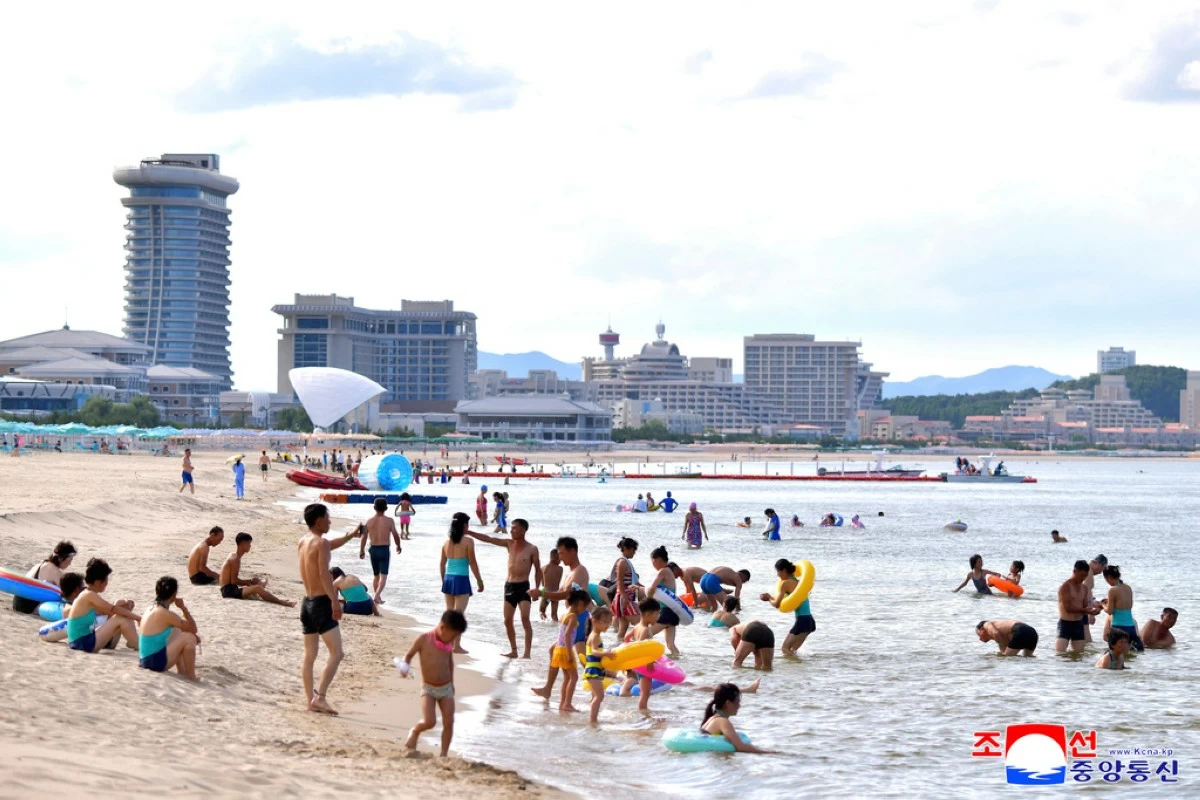
This photo provided on July 2, 2025, by the North Korean government, shows a beach resort in the Wonsan-Kalma eastern coastal tourist zone on July 1, 2025. (Korean Central News Agency/Korea News Service via AP)
SEOUL, South Korea (AP) — North Koreans swam, rode water park slides and enjoyed other water activities at a newly opened mammoth beach resort, state media reported Wednesday, as the country largely maintains a ban on the entry of foreign tourists.
The Wonsan-Kalma eastern coastal tourist zone, which North Korea says can accommodate nearly 20,000 people, is at the heart of leader Kim Jong Un's push to boost tourism as a way to improve his country's struggling economy. But prospects for the resort, the biggest tourist complex in North Korea, aren't clear, as the country won't likely fully reopen its borders and embrace Western tourists anytime soon, observers say.
The official Korean Central News Agency reported the Wonsan-Kalma area began service Tuesday, drawing a large number of North Koreans who enjoyed open water swimming, slides and other attractions at a water park and various water activities in the area.
The guests' hearts were filled with overwhelming emotion as they felt the astonishing new heights of our-style tourism culture blossoming under the era of the Workers' Party, KCNA said in a typical propaganda-driven dispatch.
Photos released by North Korean state media showed children with tubes and inflatable balls dipping into the sea, while others in colorful swimsuits beamed while sitting beneath red-and-white parasols.
Kim said at the opening ceremony last week the site would be recorded as one of the greatest successes this year and called its opening the proud first step toward realizing the government's policy of developing tourism. State media said North Korea has plans to build similar tourist zones around the country.
North Korea, however, hasn't said whether and when it would fully resume international tourism that is key to their success.
Since 2022, North Korea has been slowly easing the curbs imposed during the COVID-19 pandemic and reopening its borders in phases.
But Chinese group tours, which made up more than 90% of visitors before the pandemic, remain stalled while there are questions about ties between the two socialist neighbors. In February this year, North Korea allowed a small group of international tourists to visit its northeastern border city of Rason, only to stop that tour program in less than a month.
Since February 2024, North Korea has been accepting Russian tourists amid expanding military cooperation between the countries. But Russian government records seen by South Korean experts show a little more than 2,000 Russians, only about 880 of them tourists, visited North Korea last year, a number that is too small to revive North Korea's tourism.
Russia's Primorsky region, which borders North Korea, said last week that the first group of Russian tourists to the Wonsan-Kalma resort will depart on July 7 for a eight-day trip that includes a visit to Pyongyang.

Related Tags

WORLDNEWS North Korea
ADVERTISEMENT
.most-popular .layout-ratio{ padding-bottom: 79.13%; } @media (min-width: 768px) and (max-width: 1024px) { .widget-title { font-size: 15px !important; } }

{{ articles_filter_1561_widget.title }}

.most-popular .layout-ratio{ padding-bottom: 79.13%; } @media (min-width: 768px) and (max-width: 1024px) { .widget-title { font-size: 15px !important; } }

{{ articles_filter_1562_widget.title }}

.most-popular .layout-ratio{ padding-bottom: 79.13%; } @media (min-width: 768px) and (max-width: 1024px) { .widget-title { font-size: 15px !important; } }

{{ articles_filter_1563_widget.title }}

{{ articles_filter_1564_widget.title }}

.mb-article-details { position: relative; } .mb-article-details .article-body-preview, .mb-article-details .article-body-summary{ font-size: 17px; line-height: 30px; font-family: "Libre Caslon Text", serif; color: #000; } .mb-article-details .article-body-preview iframe , .mb-article-details .article-body-summary iframe{ width: 100%; margin: auto; } .read-more-background { background: linear-gradient(180deg, color(display-p3 1.000 1.000 1.000 / 0) 13.75%, color(display-p3 1.000 1.000 1.000 / 0.8) 30.79%, color(display-p3 1.000 1.000 1.000) 72.5%); position: absolute; height: 200px; width: 100%; bottom: 0; display: flex; justify-content: center; align-items: center; padding: 0; } .read-more-background a{ color: #000; } .read-more-btn { padding: 17px 45px; font-family: Inter; font-weight: 700; font-size: 18px; line-height: 16px; text-align: center; vertical-align: middle; border: 1px solid black; background-color: white; } .hidden { display: none; }
function initializeAllSwipers() { // Get all hidden inputs with cms_article_id document.querySelectorAll('[id^="cms_article_id_"]').forEach(function (input) { const cmsArticleId = input.value; const articleSelector = '#article-' + cmsArticleId + ' .body_images'; const swiperElement = document.querySelector(articleSelector); if (swiperElement && !swiperElement.classList.contains('swiper-initialized')) { new Swiper(articleSelector, { loop: true, pagination: false, navigation: { nextEl: '#article-' + cmsArticleId + ' .swiper-button-next', prevEl: '#article-' + cmsArticleId + ' .swiper-button-prev', }, }); } }); } setTimeout(initializeAllSwipers, 3000); const intersectionObserver = new IntersectionObserver( (entries) => { entries.forEach((entry) => { if (entry.isIntersecting) { const newUrl = entry.target.getAttribute("data-url"); if (newUrl) { history.pushState(null, null, newUrl); let article = entry.target; // Extract metadata const author = article.querySelector('.author-section').textContent.replace('By', '').trim(); const section = article.querySelector('.section-info ').textContent.replace(' ', ' '); const title = article.querySelector('.article-title h1').textContent; // Parse URL for Chartbeat path format const parsedUrl = new URL(newUrl, window.location.origin); const cleanUrl = parsedUrl.host + parsedUrl.pathname; // Update Chartbeat configuration if (typeof window._sf_async_config !== 'undefined') { window._sf_async_config.path = cleanUrl; window._sf_async_config.sections = section; window._sf_async_config.authors = author; } // Track virtual page view with Chartbeat if (typeof pSUPERFLY !== 'undefined' && typeof pSUPERFLY.virtualPage === 'function') { try { pSUPERFLY.virtualPage({ path: cleanUrl, title: title, sections: section, authors: author }); } catch (error) { console.error('ping error', error); } } // Optional: Update document title if (title && title !== document.title) { document.title = title; } } } }); }, { threshold: 0.1 } ); function showArticleBody(button) { const article = button.closest("article"); const summary = article.querySelector(".article-body-summary"); const body = article.querySelector(".article-body-preview"); const readMoreSection = article.querySelector(".read-more-background"); // Hide summary and read-more section summary.style.display = "none"; readMoreSection.style.display = "none"; // Show the full article body body.classList.remove("hidden"); } document.addEventListener("DOMContentLoaded", () => { let loadCount = 0; // Track how many times articles are loaded const offset = [1, 2, 3, 4, 5, 6, 7, 8, 9, 10]; // Offset values const currentUrl = window.location.pathname.substring(1); let isLoading = false; // Prevent multiple calls if (!currentUrl) { console.log("Current URL is invalid."); return; } const sentinel = document.getElementById("load-more-sentinel"); if (!sentinel) { console.log("Sentinel element not found."); return; } function isSentinelVisible() { const rect = sentinel.getBoundingClientRect(); return ( rect.top < window.innerHeight && rect.bottom >= 0 ); } function onScroll() { if (isLoading) return; if (isSentinelVisible()) { if (loadCount >= offset.length) { console.log("Maximum load attempts reached."); window.removeEventListener("scroll", onScroll); return; } isLoading = true; const currentOffset = offset[loadCount]; window.loadMoreItems().then(() => { let article = document.querySelector('#widget_1690 > div:nth-last-of-type(2) article'); intersectionObserver.observe(article) loadCount++; }).catch(error => { console.error("Error loading more items:", error); }).finally(() => { isLoading = false; }); } } window.addEventListener("scroll", onScroll); });

Sign up by email to receive news.