ADVERTISEMENT

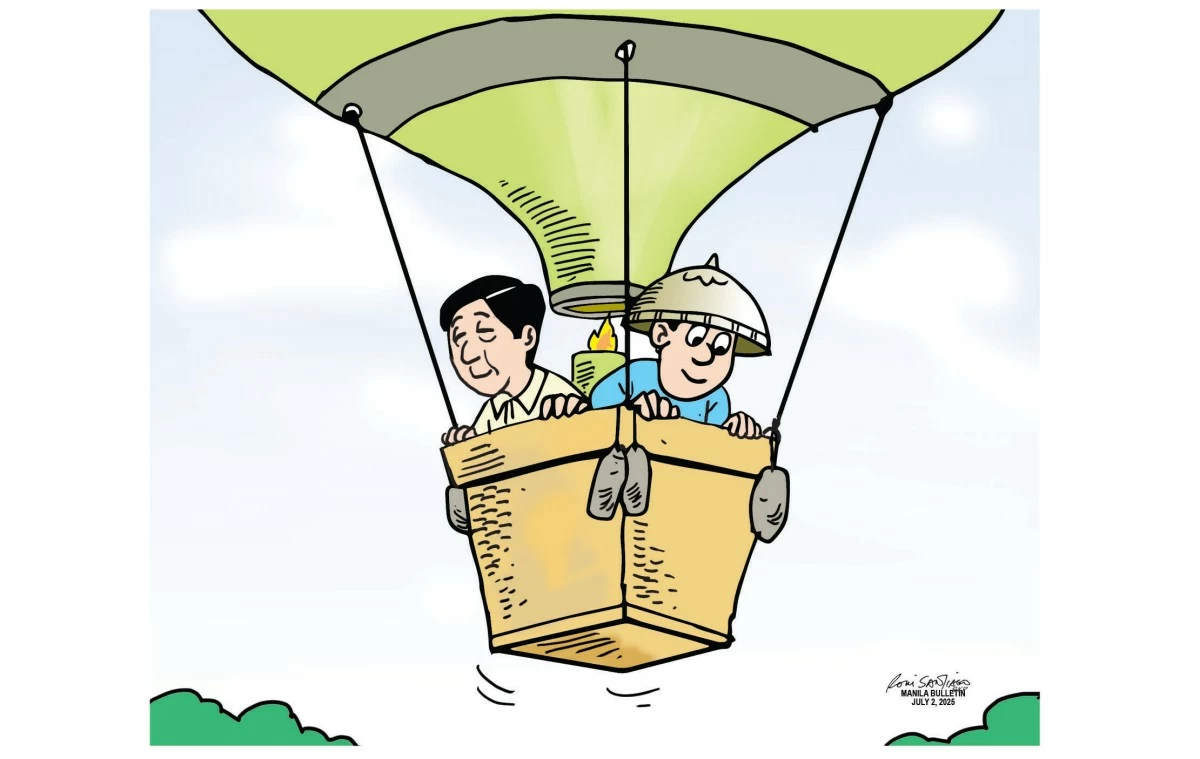
Midterm pulse: Rating the Marcos administration's performance

Published Jul 2, 2025 12:05 am  |  Updated Jul 1, 2025 04:46 pm
“We made a change for the better.”
With these words, President Ferdinand Marcos Jr. marked his third year in office on June 30. The phrase also serves as the administration’s implicit benchmark: that Filipinos must be able to feel, not just hear about, the results of reform and governance.
As we cross the midpoint of 2025, and with the State of the Nation Address (SONA) on the horizon, it is fitting to take stock of the nation’s direction under this promise.
Infrastructure and transportation remain at the heart of the President’s economic strategy. The continued rollout of airports, expressways, seaports, and rail systems under the “Build Better More” program has driven employment and improved connectivity. These projects, however, must translate into direct benefits for commuters and countryside producers alike—shorter travel times, safer transport, and easier access to markets.
Agriculture and food security, another cornerstone of President Marcos’s platform, have seen targeted interventions. Fertilizer subsidies, irrigation projects, and mechanization support have been mobilized. Yet the aspiration of ₱20 per kilo rice—a symbolic pledge of affordability and food sufficiency—remains elusive amid high production costs and extreme weather events. Farmers still need stronger safety nets, and consumers still await tangible price relief.
In his June 30 message, the President emphasized improvements in peace and order, particularly in rural and conflict-prone areas. He cited the reintegration of former rebels and stronger law enforcement. A significant shift in the government’s drug policy—from punitive crackdowns to a health-centered, rehabilitative approach—marks a pivot with long-term implications. Its success will depend on robust local government engagement and sufficient resources for community-based programs.
On the global stage, the administration has actively pursued alliance-building and independent foreign policy, balancing traditional ties with broader regional cooperation. The Philippines’ deepening engagement with ASEAN, the United States, Japan, and the European Union signals a strategic response to complex geopolitical currents in the Indo-Pacific.
President Marcos also pointed to how the country has faced crisis after crisis—from typhoons to energy shocks—with stronger institutional coordination and economic resilience. Indeed, headwinds persist, including inflationary pressures and global uncertainty. Yet the Philippines has maintained relative economic stability, even modest growth, bolstered by remittances, domestic consumption, and a young, dynamic workforce.
All these notwithstanding, it has been surfaced by the Social Weather Stations survey on self-rated poverty conducted last April and reported early last month, that the number of Filipino families who rate themselves as “poor” remains steady at 51 percent – an indicator that the poverty reduction remains imperative for the administration.
The message on June 30 was clear: There is progress, but the work is not yet done. With the Barangay and SK elections in October, and SONA approaching, the second half of 2025 presents an opportunity for deeper reforms and stronger delivery.
Three years into the Marcos administration, the public expectation is for more than incremental progress. “We made a change for the better” must move from a retrospective statement to a forward-driving principle. It must be evident in classrooms and clinics, in rice fields and city streets, in every Filipino household striving for a better future.
The time for vision has passed. The time for tangible, measurable, and inclusive results is now.
ADVERTISEMENT
.most-popular .layout-ratio{ padding-bottom: 79.13%; } @media (min-width: 768px) and (max-width: 1024px) { .widget-title { font-size: 15px !important; } }

{{ articles_filter_1561_widget.title }}

.most-popular .layout-ratio{ padding-bottom: 79.13%; } @media (min-width: 768px) and (max-width: 1024px) { .widget-title { font-size: 15px !important; } }

{{ articles_filter_1562_widget.title }}

.most-popular .layout-ratio{ padding-bottom: 79.13%; } @media (min-width: 768px) and (max-width: 1024px) { .widget-title { font-size: 15px !important; } }

{{ articles_filter_1563_widget.title }}

{{ articles_filter_1564_widget.title }}

.mb-article-details { position: relative; } .mb-article-details .article-body-preview, .mb-article-details .article-body-summary{ font-size: 17px; line-height: 30px; font-family: "Libre Caslon Text", serif; color: #000; } .mb-article-details .article-body-preview iframe , .mb-article-details .article-body-summary iframe{ width: 100%; margin: auto; } .read-more-background { background: linear-gradient(180deg, color(display-p3 1.000 1.000 1.000 / 0) 13.75%, color(display-p3 1.000 1.000 1.000 / 0.8) 30.79%, color(display-p3 1.000 1.000 1.000) 72.5%); position: absolute; height: 200px; width: 100%; bottom: 0; display: flex; justify-content: center; align-items: center; padding: 0; } .read-more-background a{ color: #000; } .read-more-btn { padding: 17px 45px; font-family: Inter; font-weight: 700; font-size: 18px; line-height: 16px; text-align: center; vertical-align: middle; border: 1px solid black; background-color: white; } .hidden { display: none; }
function initializeAllSwipers() { // Get all hidden inputs with cms_article_id document.querySelectorAll('[id^="cms_article_id_"]').forEach(function (input) { const cmsArticleId = input.value; const articleSelector = '#article-' + cmsArticleId + ' .body_images'; const swiperElement = document.querySelector(articleSelector); if (swiperElement && !swiperElement.classList.contains('swiper-initialized')) { new Swiper(articleSelector, { loop: true, pagination: false, navigation: { nextEl: '#article-' + cmsArticleId + ' .swiper-button-next', prevEl: '#article-' + cmsArticleId + ' .swiper-button-prev', }, }); } }); } setTimeout(initializeAllSwipers, 3000); const intersectionObserver = new IntersectionObserver( (entries) => { entries.forEach((entry) => { if (entry.isIntersecting) { const newUrl = entry.target.getAttribute("data-url"); if (newUrl) { history.pushState(null, null, newUrl); let article = entry.target; // Extract metadata const author = article.querySelector('.author-section').textContent.replace('By', '').trim(); const section = article.querySelector('.section-info ').textContent.replace(' ', ' '); const title = article.querySelector('.article-title h1').textContent; // Parse URL for Chartbeat path format const parsedUrl = new URL(newUrl, window.location.origin); const cleanUrl = parsedUrl.host + parsedUrl.pathname; // Update Chartbeat configuration if (typeof window._sf_async_config !== 'undefined') { window._sf_async_config.path = cleanUrl; window._sf_async_config.sections = section; window._sf_async_config.authors = author; } // Track virtual page view with Chartbeat if (typeof pSUPERFLY !== 'undefined' && typeof pSUPERFLY.virtualPage === 'function') { try { pSUPERFLY.virtualPage({ path: cleanUrl, title: title, sections: section, authors: author }); } catch (error) { console.error('ping error', error); } } // Optional: Update document title if (title && title !== document.title) { document.title = title; } } } }); }, { threshold: 0.1 } ); function showArticleBody(button) { const article = button.closest("article"); const summary = article.querySelector(".article-body-summary"); const body = article.querySelector(".article-body-preview"); const readMoreSection = article.querySelector(".read-more-background"); // Hide summary and read-more section summary.style.display = "none"; readMoreSection.style.display = "none"; // Show the full article body body.classList.remove("hidden"); } document.addEventListener("DOMContentLoaded", () => { let loadCount = 0; // Track how many times articles are loaded const offset = [1, 2, 3, 4, 5, 6, 7, 8, 9, 10]; // Offset values const currentUrl = window.location.pathname.substring(1); let isLoading = false; // Prevent multiple calls if (!currentUrl) { console.log("Current URL is invalid."); return; } const sentinel = document.getElementById("load-more-sentinel"); if (!sentinel) { console.log("Sentinel element not found."); return; } function isSentinelVisible() { const rect = sentinel.getBoundingClientRect(); return ( rect.top < window.innerHeight && rect.bottom >= 0 ); } function onScroll() { if (isLoading) return; if (isSentinelVisible()) { if (loadCount >= offset.length) { console.log("Maximum load attempts reached."); window.removeEventListener("scroll", onScroll); return; } isLoading = true; const currentOffset = offset[loadCount]; window.loadMoreItems().then(() => { let article = document.querySelector('#widget_1690 > div:nth-last-of-type(2) article'); intersectionObserver.observe(article) loadCount++; }).catch(error => { console.error("Error loading more items:", error); }).finally(() => { isLoading = false; }); } } window.addEventListener("scroll", onScroll); });

Sign up by email to receive news.