

ADVERTISEMENT

DOT taps new Vietnam route to respond to evolving Filipino travel trends

Published Jul 2, 2025 03:20 pm

At A Glance

  • The Department of Tourism (DOT) supports the launch of direct flights between Manila and Da Nang, Vietnam to strengthen regional connectivity.
  • DOT Undersecretary Shahlimar Hofer Tamano, representing Tourism Secretary Christina Garcia-Frasco, led the July 1 send-off ceremony at Ninoy Aquino International Airport (NAIA) Terminal 1.
  • The initiative forms part of DOT's push to decentralize tourism and promote emerging destinations in Southeast Asia.
  • Da Nang is drawing more Filipino travelers seeking affordable and culturally immersive experiences.
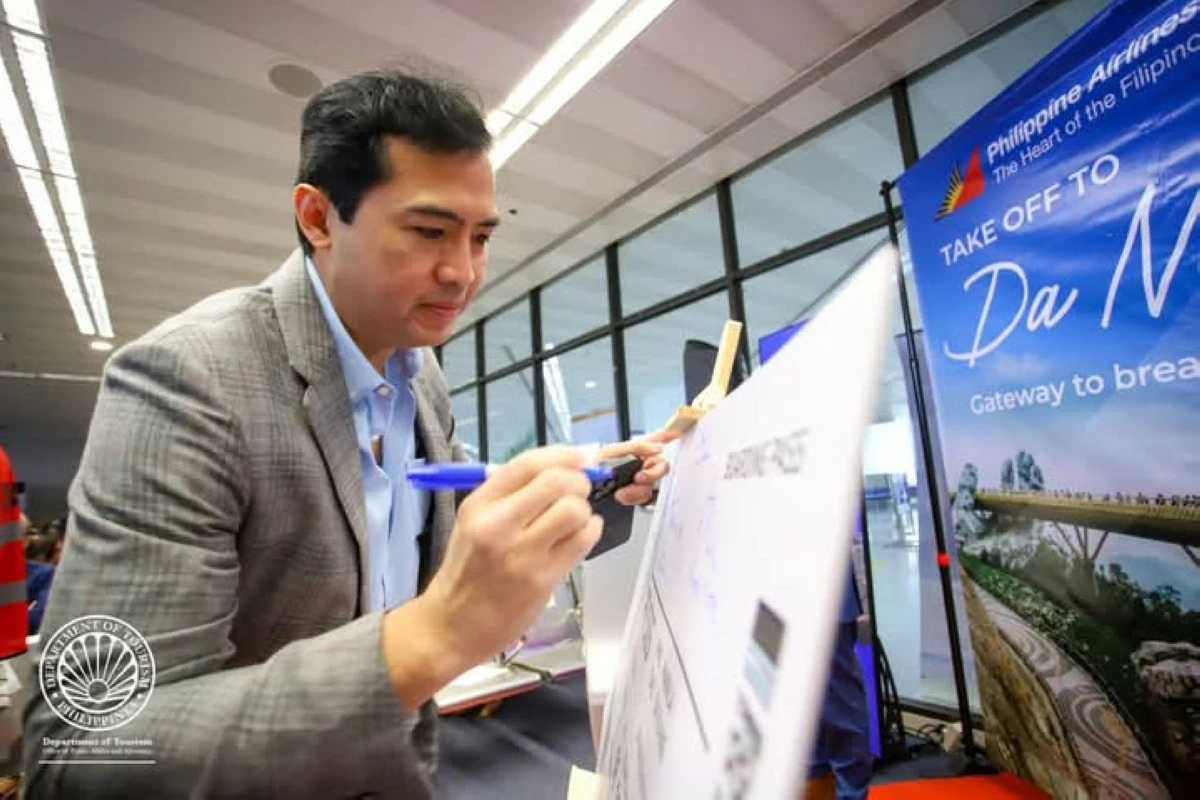
DOT Undersecretary Shahlimar Hofer Tamano signs a ceremonial boarding pass during the send-off ceremony for the inaugural Manila–Da Nang flight at NAIA Terminal 1 on July 1, highlighting the agency’s push for regional travel and tourism decentralization. (Photo: DOT)
The Department of Tourism (DOT) is banking on the launch of direct flights between Manila and Da Nang in Vietnam to strengthen regional mobility and cater to the shifting travel preferences of Filipino tourists.
During the July 1 send-off ceremony for Philippine Airlines (PAL) Flight 585 at NAIA Terminal 1, DOT Undersecretary Shahlimar Hofer Tamano, representing Tourism Secretary Christina Garcia-Frasco, said the initiative supports the agency’s push to decentralize tourism by promoting emerging destinations across Southeast Asia.
“This is more than just a new route. It is a bridge that connects two vibrant cultures, strengthens our regional ties, and reflects our shared commitment to seamless and meaningful travel within ASEAN,” Tamano said.
The DOT said Da Nang, a rising destination in Central Vietnam, has grown in popularity among younger Filipino travelers, families, and solo tourists seeking authentic and affordable experiences beyond traditional city tours.
The Philippines, in turn, continues to welcome Vietnamese tourists for leisure and education, helping strengthen two-way tourism flows in the region.
According to the DOT, the Manila–Da Nang route reflects the shift in outbound travel behavior, with Filipino tourists placing greater value on proximity, cultural connection, and regional accessibility.

Related Tags

DOT Manila–Da Nang flights Philippine Airlines (PAL)
ADVERTISEMENT
.most-popular .layout-ratio{ padding-bottom: 79.13%; } @media (min-width: 768px) and (max-width: 1024px) { .widget-title { font-size: 15px !important; } }

{{ articles_filter_1561_widget.title }}

.most-popular .layout-ratio{ padding-bottom: 79.13%; } @media (min-width: 768px) and (max-width: 1024px) { .widget-title { font-size: 15px !important; } }

{{ articles_filter_1562_widget.title }}

.most-popular .layout-ratio{ padding-bottom: 79.13%; } @media (min-width: 768px) and (max-width: 1024px) { .widget-title { font-size: 15px !important; } }

{{ articles_filter_1563_widget.title }}

{{ articles_filter_1564_widget.title }}

.mb-article-details { position: relative; } .mb-article-details .article-body-preview, .mb-article-details .article-body-summary{ font-size: 17px; line-height: 30px; font-family: "Libre Caslon Text", serif; color: #000; } .mb-article-details .article-body-preview iframe , .mb-article-details .article-body-summary iframe{ width: 100%; margin: auto; } .read-more-background { background: linear-gradient(180deg, color(display-p3 1.000 1.000 1.000 / 0) 13.75%, color(display-p3 1.000 1.000 1.000 / 0.8) 30.79%, color(display-p3 1.000 1.000 1.000) 72.5%); position: absolute; height: 200px; width: 100%; bottom: 0; display: flex; justify-content: center; align-items: center; padding: 0; } .read-more-background a{ color: #000; } .read-more-btn { padding: 17px 45px; font-family: Inter; font-weight: 700; font-size: 18px; line-height: 16px; text-align: center; vertical-align: middle; border: 1px solid black; background-color: white; } .hidden { display: none; }
function initializeAllSwipers() { // Get all hidden inputs with cms_article_id document.querySelectorAll('[id^="cms_article_id_"]').forEach(function (input) { const cmsArticleId = input.value; const articleSelector = '#article-' + cmsArticleId + ' .body_images'; const swiperElement = document.querySelector(articleSelector); if (swiperElement && !swiperElement.classList.contains('swiper-initialized')) { new Swiper(articleSelector, { loop: true, pagination: false, navigation: { nextEl: '#article-' + cmsArticleId + ' .swiper-button-next', prevEl: '#article-' + cmsArticleId + ' .swiper-button-prev', }, }); } }); } setTimeout(initializeAllSwipers, 3000); const intersectionObserver = new IntersectionObserver( (entries) => { entries.forEach((entry) => { if (entry.isIntersecting) { const newUrl = entry.target.getAttribute("data-url"); if (newUrl) { history.pushState(null, null, newUrl); let article = entry.target; // Extract metadata const author = article.querySelector('.author-section').textContent.replace('By', '').trim(); const section = article.querySelector('.section-info ').textContent.replace(' ', ' '); const title = article.querySelector('.article-title h1').textContent; // Parse URL for Chartbeat path format const parsedUrl = new URL(newUrl, window.location.origin); const cleanUrl = parsedUrl.host + parsedUrl.pathname; // Update Chartbeat configuration if (typeof window._sf_async_config !== 'undefined') { window._sf_async_config.path = cleanUrl; window._sf_async_config.sections = section; window._sf_async_config.authors = author; } // Track virtual page view with Chartbeat if (typeof pSUPERFLY !== 'undefined' && typeof pSUPERFLY.virtualPage === 'function') { try { pSUPERFLY.virtualPage({ path: cleanUrl, title: title, sections: section, authors: author }); } catch (error) { console.error('ping error', error); } } // Optional: Update document title if (title && title !== document.title) { document.title = title; } } } }); }, { threshold: 0.1 } ); function showArticleBody(button) { const article = button.closest("article"); const summary = article.querySelector(".article-body-summary"); const body = article.querySelector(".article-body-preview"); const readMoreSection = article.querySelector(".read-more-background"); // Hide summary and read-more section summary.style.display = "none"; readMoreSection.style.display = "none"; // Show the full article body body.classList.remove("hidden"); } document.addEventListener("DOMContentLoaded", () => { let loadCount = 0; // Track how many times articles are loaded const offset = [1, 2, 3, 4, 5, 6, 7, 8, 9, 10]; // Offset values const currentUrl = window.location.pathname.substring(1); let isLoading = false; // Prevent multiple calls if (!currentUrl) { console.log("Current URL is invalid."); return; } const sentinel = document.getElementById("load-more-sentinel"); if (!sentinel) { console.log("Sentinel element not found."); return; } function isSentinelVisible() { const rect = sentinel.getBoundingClientRect(); return ( rect.top < window.innerHeight && rect.bottom >= 0 ); } function onScroll() { if (isLoading) return; if (isSentinelVisible()) { if (loadCount >= offset.length) { console.log("Maximum load attempts reached."); window.removeEventListener("scroll", onScroll); return; } isLoading = true; const currentOffset = offset[loadCount]; window.loadMoreItems().then(() => { let article = document.querySelector('#widget_1690 > div:nth-last-of-type(2) article'); intersectionObserver.observe(article) loadCount++; }).catch(error => { console.error("Error loading more items:", error); }).finally(() => { isLoading = false; }); } } window.addEventListener("scroll", onScroll); });

Sign up by email to receive news.