






Manila Bulletin
 World
A look at the tensions with Cambodia that led to the suspension of Thailand's prime minister
World
A look at the tensions with Cambodia that led to the suspension of Thailand's prime minister
World
A look at the tensions with Cambodia that led to the suspension of Thailand's prime minister
A look at the tensions with Cambodia that led to the suspension of Thailand's prime minister
Published Jul 2, 2025 11:06 am


At A Glance
- The phone call between Paetongtarn and Cambodian Senate President Hun Sen was reportedly made on June 15 and was leaked days after. Hun Sen said on his Facebook post that he recorded the conversation and had shared it with at least 80 people.
BANGKOK (AP) — Thailand's Constitutional Court suspended Prime Minister Paetongtarn Shinawatra from office Tuesday pending an ethics investigation over a leaked phone call with a senior Cambodian leader that followed a border row that erupted on May 28. The leaked call has set off political turmoil in Thailand as Paetongtarn faces growing dissatisfaction over her handling of the conflict.
Here's what to know about the latest controversy and the dispute between the two Southeast Asian neighbors.
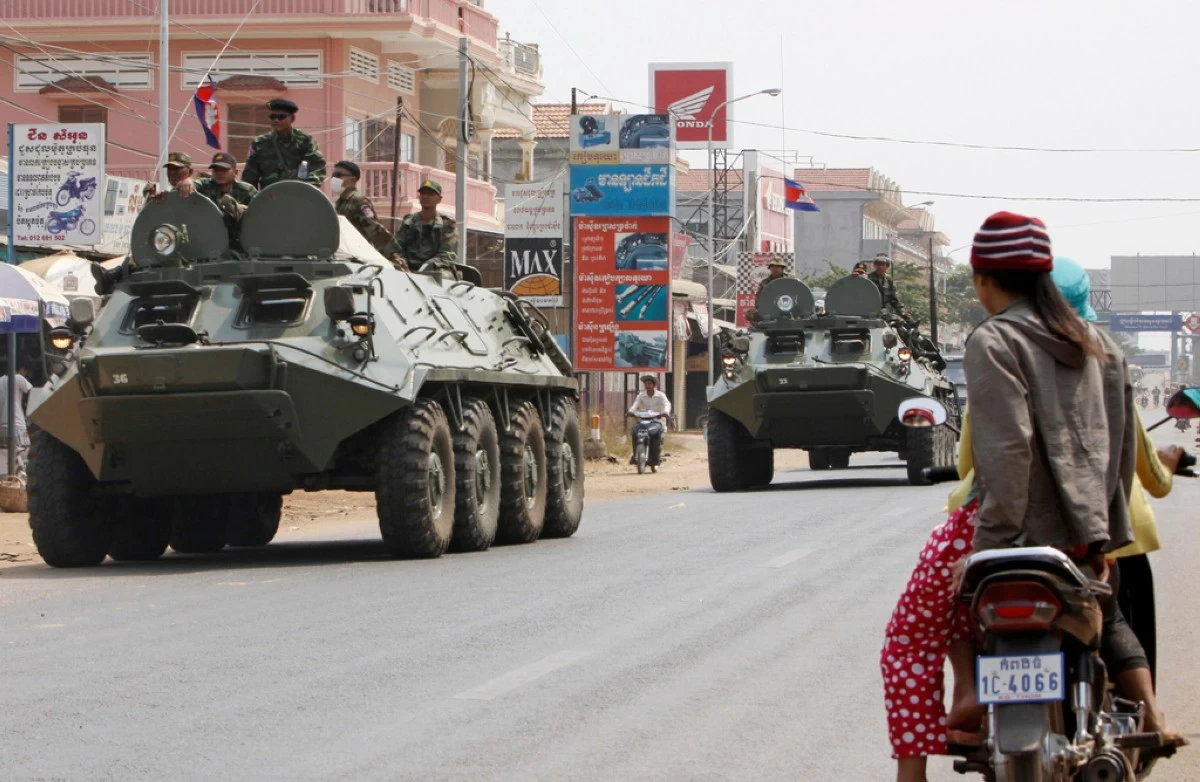
Armored personnel carriers of Cambodian Army drive through a road at Kampong Thom town, about 168 kilometers (104 mikes) north of Phnom Penh, Cambodia, Saturday, Feb. 12, 2011. (AP Photo/Heng Sinith, File)
What was said in the leaked call
The phone call between Paetongtarn and Cambodian Senate President Hun Sen was reportedly made on June 15 and was leaked days after. Hun Sen said on his Facebook post that he recorded the conversation and had shared it with at least 80 people.
In the call, the two were heard talking through a translator discussing the tensions at the border, and about whether they should lift restrictions imposed after the deadly clash.
Paetongtarn could be heard addressing Hun Sen as uncle. He is a longtime friend of her father, Thaksin Shinawatra, a popular but divisive former Prime Minister. She urged him not to listen to a Thai regional army commander who had publicly criticized Cambodia about the border dispute, and called him an opponent. She also told Hun Sen to let her know what he wanted, and she would try to manage that.
Critics said she went too far in appeasing Hun Sen, and that what she said, especially her comments about the army commander, damaged Thailand's interests and image.
Paetongtarn has apologized but said she didn't do any damage to Thailand, arguing that her comments were a negotiating tactic.
How the dispute began
The recent dispute was triggered in May after armed forces of Thailand and Cambodia briefly fired at each other in a relatively small contested border area that both countries claim as their own.
Both sides have said they acted in self-defense. One Cambodian soldier was killed.
While the countries said afterwards they have agreed to de-escalate the situation, Cambodian and Thai authorities continue to implement or threaten measures short of armed force, keeping tensions high.
Thailand has added tight restrictions at its border with Cambodia that stopped almost all crossings in and out of Thailand except for students, medical patients and others with essential needs.
Cambodia has banned Thai movies and TV shows, stopped the import of Thai fruits and vegetables and boycotted some of its neighbor's international internet links and power supply. It also stopped importing fuel from Thailand.
Border claims cause periodic tensions
Border disputes are long-standing issues that have caused periodic tensions between the two neighbors. Thailand and Cambodia share more than 800 kilometers (500 miles) of land border.
The contesting claims stem largely from a 1907 map drawn under French colonial rule that was used to separate Cambodia from Thailand.
Cambodia has been using the map as a reference to claim territory, while Thailand has argued the map is inaccurate.
In February, Cambodian troops and their family members entered an ancient temple along the border in one of the disputed areas and sang the Cambodian national anthem, leading to a brief argument with Thai troops.
The most prominent and violent conflicts broke out around the 1,000-year-old Preah Vihear temple.
In 1962, the International Court of Justice awarded sovereignty over the area to Cambodia and that became a major irritant in relations.
Cambodia went back to the court in 2011, following several clashes between its army and Thai forces which killed about 20 and displaced thousands of people. The court reaffirmed the ruling in 2013, a decision that still rattled Thailand.
What happens next
Similar to the Preah Vihear area, Cambodia is seeking a ruling again from the ICJ over several disputed areas, including where the deadly clash happened.
Thailand has said it doesn't accept the jurisdiction of the ICJ and that any conflicting border claims between the two should be solved by the existing bilateral mechanism, including a joint committee which was established in 2000 as a technical means to discuss the survey and demarcation of the land border.
Cambodia nevertheless said it has submitted the case to the ICJ, and insisted that it would no longer discuss these areas under the two countries' bilateral mechanism.
Tensions have soared as they engaged in a war of words that appeared intended to mollify nationalistic critics on both sides of the border.
Bickering neighbors
The ill feeling between the two neighbors is not just about overlapping border claims, but also deep-seated cultural enmity that has its roots from centuries ago, when they were large and competing empires.
In more modern times, bad feelings have lingered, as Cambodia's development, hindered by French colonialism and, in the 1970s, the brutal rule of the communist Khmer Rouge, has fallen well behind Thailand.
Both have fought over claims on cultural products ranging from boxing, mask dancing, traditional clothing and food.