ADVERTISEMENT

Uplifting the GIDAs: Toward inclusive national progress

Published Jul 1, 2025 12:05 am
The recent distribution of SIM cards — spearheaded by the Department of Information and Communication Technology in partnership with Globe Telecoms — to students of Kalawakan Elementary School in Doña Remedios Trinidad, Bulacan, is more than a gesture of connectivity. It is a strong statement of commitment to bridge the digital divide in the Philippines’ geographically isolated and disadvantaged areas (GIDAs). At the same site, Kalawakan Proper, Governor Daniel Fernando also led the planting of over 1,000 tree seedlings to mark Arbor Day on June 25, reaffirming the deep link between environmental stewardship and inclusive development.
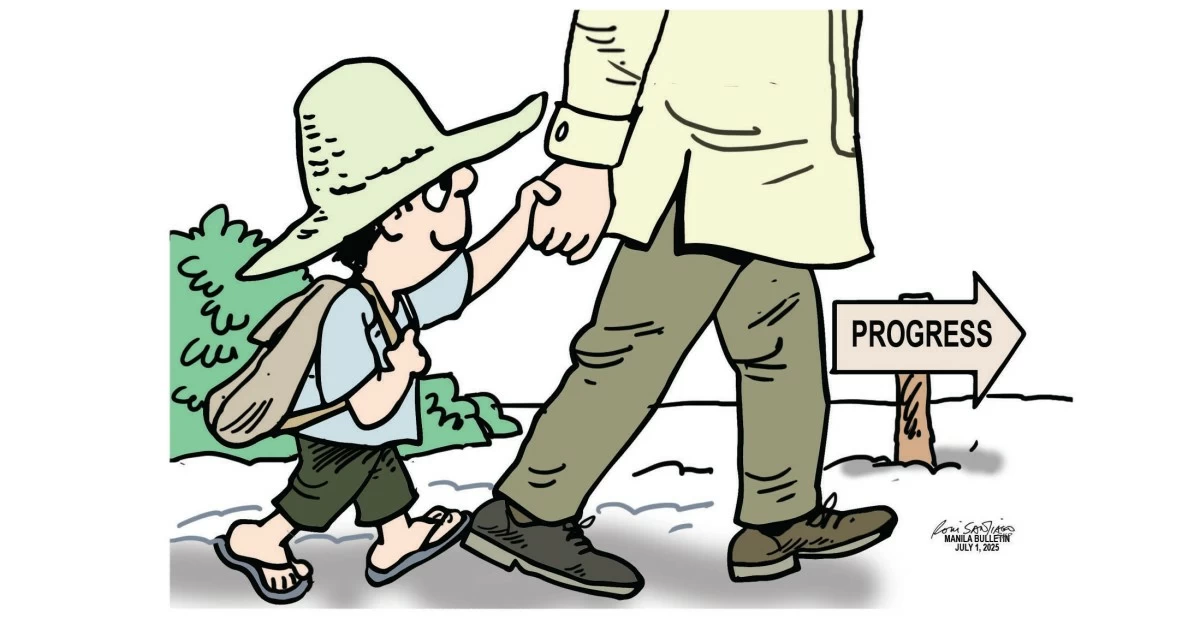
These two acts — providing students with access to digital tools and nurturing the environment — underscore a larger narrative: that true national progress cannot be achieved without uplifting the lives of our most remote and underserved communities. For the Philippines to realize the vision set out in Ambisyon 2040 — “matatag, maginhawa, at panatag na buhay,” or “a strongly rooted, comfortable, and secure life for all Filipinos” — GIDAs must be brought firmly into the fold of inclusive growth.
Across the archipelago, GIDAs face a confluence of challenges: limited access to quality education and health services, unreliable infrastructure, weak internet connectivity, and minimal economic opportunities. Yet they are home to some of the most resilient Filipinos—communities often rich in culture, natural resources, and social solidarity. These areas must not be left behind.
The effort in Kalawakan, though modest in scope, presents a compelling case for how multisectoral collaboration — between local government, education stakeholders, and national agencies — can yield tangible progress. The SIM cards can serve as lifelines to knowledge, communication, and opportunity, especially in remote schools that remain outside the digital mainstream. Tree-planting initiatives, meanwhile, protect the natural ecosystems on which many GIDA communities rely, while instilling environmental values in the next generation.
To build on this momentum, several key priorities should be pursued.
First: Digital inclusion through infrastructure and training. Internet connectivity is no longer a luxury — it is a prerequisite for participation in modern life. Expanding broadband networks to cover far-flung barangays must be matched with digital literacy programs for both students and teachers.
Second: Improved transportation and mobility. Roads, bridges, and transport services are essential to link GIDA communities to markets, schools, and hospitals. Continued investment in infrastructure — especially under the “Build Better More” program—should prioritize last-mile connectivity.
Third: Education and teacher support. Special incentives for teachers assigned to GIDAs, coupled with mobile or modular learning innovations, can ensure that no child is deprived of learning simply due to geography.
Fourth: Local economic development. Livelihood programs tailored to the resources and potential of each area — such as agri-forestry, eco-tourism, and sustainable farming — can empower GIDA residents and prevent rural depopulation.
Fifth: Climate resilience and environmental protection. Arbor Day efforts like the one in Kalawakan are critical. Reforestation, watershed management, and community-led conservation must be institutionalized to combat climate risks that disproportionately affect remote communities.
Bridging the gaps in our geographically isolated and disadvantaged areas is not only a matter of equity; it is a matter of national interest. A truly resilient and prosperous Philippines depends on the full participation of all its citizens — urban and rural, central and remote. GIDA upliftment is not peripheral to Ambisyon 2040; it is central to its success.
Let the seeds planted in Kalawakan grow not only into trees but into enduring symbols of inclusive progress.
ADVERTISEMENT
.most-popular .layout-ratio{ padding-bottom: 79.13%; } @media (min-width: 768px) and (max-width: 1024px) { .widget-title { font-size: 15px !important; } }

{{ articles_filter_1561_widget.title }}

.most-popular .layout-ratio{ padding-bottom: 79.13%; } @media (min-width: 768px) and (max-width: 1024px) { .widget-title { font-size: 15px !important; } }

{{ articles_filter_1562_widget.title }}

.most-popular .layout-ratio{ padding-bottom: 79.13%; } @media (min-width: 768px) and (max-width: 1024px) { .widget-title { font-size: 15px !important; } }

{{ articles_filter_1563_widget.title }}

{{ articles_filter_1564_widget.title }}

.mb-article-details { position: relative; } .mb-article-details .article-body-preview, .mb-article-details .article-body-summary{ font-size: 17px; line-height: 30px; font-family: "Libre Caslon Text", serif; color: #000; } .mb-article-details .article-body-preview iframe , .mb-article-details .article-body-summary iframe{ width: 100%; margin: auto; } .read-more-background { background: linear-gradient(180deg, color(display-p3 1.000 1.000 1.000 / 0) 13.75%, color(display-p3 1.000 1.000 1.000 / 0.8) 30.79%, color(display-p3 1.000 1.000 1.000) 72.5%); position: absolute; height: 200px; width: 100%; bottom: 0; display: flex; justify-content: center; align-items: center; padding: 0; } .read-more-background a{ color: #000; } .read-more-btn { padding: 17px 45px; font-family: Inter; font-weight: 700; font-size: 18px; line-height: 16px; text-align: center; vertical-align: middle; border: 1px solid black; background-color: white; } .hidden { display: none; }
function initializeAllSwipers() { // Get all hidden inputs with cms_article_id document.querySelectorAll('[id^="cms_article_id_"]').forEach(function (input) { const cmsArticleId = input.value; const articleSelector = '#article-' + cmsArticleId + ' .body_images'; const swiperElement = document.querySelector(articleSelector); if (swiperElement && !swiperElement.classList.contains('swiper-initialized')) { new Swiper(articleSelector, { loop: true, pagination: false, navigation: { nextEl: '#article-' + cmsArticleId + ' .swiper-button-next', prevEl: '#article-' + cmsArticleId + ' .swiper-button-prev', }, }); } }); } setTimeout(initializeAllSwipers, 3000); const intersectionObserver = new IntersectionObserver( (entries) => { entries.forEach((entry) => { if (entry.isIntersecting) { const newUrl = entry.target.getAttribute("data-url"); if (newUrl) { history.pushState(null, null, newUrl); let article = entry.target; // Extract metadata const author = article.querySelector('.author-section').textContent.replace('By', '').trim(); const section = article.querySelector('.section-info ').textContent.replace(' ', ' '); const title = article.querySelector('.article-title h1').textContent; // Parse URL for Chartbeat path format const parsedUrl = new URL(newUrl, window.location.origin); const cleanUrl = parsedUrl.host + parsedUrl.pathname; // Update Chartbeat configuration if (typeof window._sf_async_config !== 'undefined') { window._sf_async_config.path = cleanUrl; window._sf_async_config.sections = section; window._sf_async_config.authors = author; } // Track virtual page view with Chartbeat if (typeof pSUPERFLY !== 'undefined' && typeof pSUPERFLY.virtualPage === 'function') { try { pSUPERFLY.virtualPage({ path: cleanUrl, title: title, sections: section, authors: author }); } catch (error) { console.error('ping error', error); } } // Optional: Update document title if (title && title !== document.title) { document.title = title; } } } }); }, { threshold: 0.1 } ); function showArticleBody(button) { const article = button.closest("article"); const summary = article.querySelector(".article-body-summary"); const body = article.querySelector(".article-body-preview"); const readMoreSection = article.querySelector(".read-more-background"); // Hide summary and read-more section summary.style.display = "none"; readMoreSection.style.display = "none"; // Show the full article body body.classList.remove("hidden"); } document.addEventListener("DOMContentLoaded", () => { let loadCount = 0; // Track how many times articles are loaded const offset = [1, 2, 3, 4, 5, 6, 7, 8, 9, 10]; // Offset values const currentUrl = window.location.pathname.substring(1); let isLoading = false; // Prevent multiple calls if (!currentUrl) { console.log("Current URL is invalid."); return; } const sentinel = document.getElementById("load-more-sentinel"); if (!sentinel) { console.log("Sentinel element not found."); return; } function isSentinelVisible() { const rect = sentinel.getBoundingClientRect(); return ( rect.top < window.innerHeight && rect.bottom >= 0 ); } function onScroll() { if (isLoading) return; if (isSentinelVisible()) { if (loadCount >= offset.length) { console.log("Maximum load attempts reached."); window.removeEventListener("scroll", onScroll); return; } isLoading = true; const currentOffset = offset[loadCount]; window.loadMoreItems().then(() => { let article = document.querySelector('#widget_1690 > div:nth-last-of-type(2) article'); intersectionObserver.observe(article) loadCount++; }).catch(error => { console.error("Error loading more items:", error); }).finally(() => { isLoading = false; }); } } window.addEventListener("scroll", onScroll); });

Sign up by email to receive news.