






Manila Bulletin
 Business
The Economy
Justification sought on UN body's emissions baseline adjustment
Business
The Economy
Justification sought on UN body's emissions baseline adjustment
Business
The Economy
Justification sought on UN body's emissions baseline adjustment
Justification sought on UN body's emissions baseline adjustment
Published Jul 1, 2025 02:00 pm


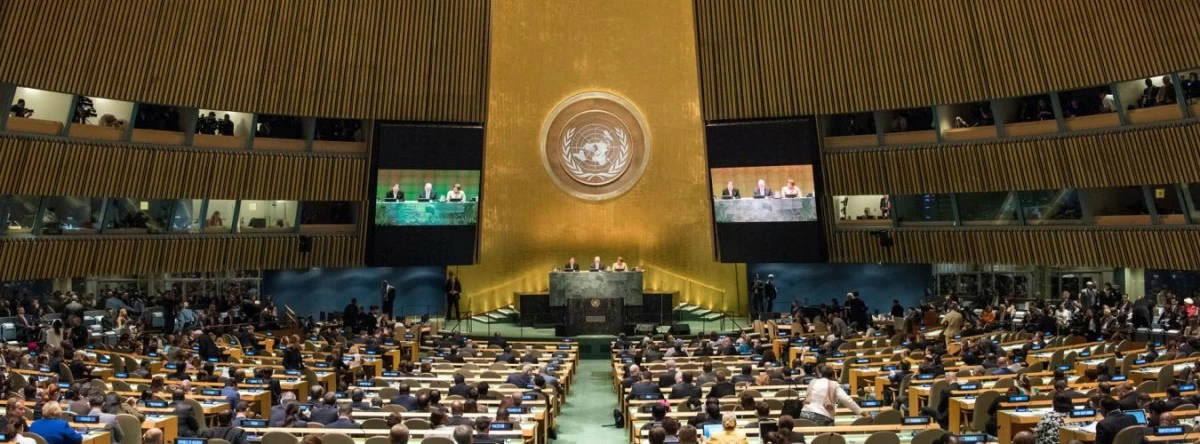
(United Nations photo)
BONN, Germany – A solid justification is being sought from the United Nations’ Supervisory Body for the prescribed 1.0 percent annual increase in the downward adjustment baseline for emissions reduction under the Paris Agreement Crediting Mechanism, to be operationalized as a UN-backed global carbon market.
In the recently concluded SB62 climate meetings, UN Supervisory Body Chairperson Martin Hession declared that “there is a one percent per year reduction of crediting levels, which we think is aligning with the Paris ambition,” specifying that the starting point “is 10 percent lower for historic emissions.”
He noted that the baseline standard for Article 6.4 emissions reduction - provisionally referred to as A6.4ERs, “has progressive ambition built into it,” adding that it is important to make crediting levels “consistent with pathways to zero, and it also leaves more of the mitigation benefit at home with host countries.”
Nevertheless, independent research body Carbon Market Watch, which specializes in carbon pricing and market-based climate policies, has slammed the proposed 1.0 percent annual baseline cut as too weak to raise real climate ambition or align with the Paris Agreement’s warming limit endgame.
“The current proposal of at least 1.0 percent increase in the downward adjustment does not ensure that the adjustment will achieve its stated objective of raising ambition over time and aligning with long-term temperature goal of the Paris Agreement,” the group has stated in its submitted document to the United Nations Framework Convention on Climate Change.
It qualified that there had been “no rationale provided for selecting the 1.0 percent rate, and it appears too low to guarantee that the objectives will be met in all cases.”
With doubts raised, the group urged the UN supervisory body to “request the MEP (methodological expert panel) to provide a clear justification for this choice and to explore whether a more ambitious annual increase is needed.”
Initial breakthrough and forward action plan
The crediting mechanism under Article 6.4 of the Paris Agreement initially reached a breakthrough as an international carbon market at the COP29 summit in Baku, Azerbaijan, last year; and the preliminary works carried out had been those on baseline-setting, methodologies, and standards.
Referencing on the push for steeper emission cuts, Hession emphasized that “this year, we’ve managed to adopt an additionality standard and a baseline standard and they are quite radical and different.”
The subsequent work plan of the UN supervisory body, he highlighted, shall delve with outlining priorities for the coming year – including those on guidance on removals, risk assessment tool and identifying targeted support to help countries engage with the mechanism.
As fleshed out under Article 6.4 Rules, Modalities and Procedures (RMPs), “the annual increase in the downward adjustment shall correspond to at least 1.0% of the baseline emissions in the calendar year of the start date of the first crediting period,” expounding that “a pro rata approach may be used to apply this minimum value to periods other than a full calendar year.”
In particular, project developers - in collaboration with host countries - must develop emissions reduction projects that meet Article 6.4’s standards; then submit them to the UN supervisory body for approval. Once greenlit, these projects will generate carbon credits to help nations meet climate goals, based on their submitted nationally determined contributions or NDCs.
Not allowed for corporate offsetting
Unlike Article 6.2, which allows countries to transfer mitigation outcomes via bilateral or multilateral deals, the key distinction of Article 6.4 is that the resulting credits, classified as ‘mitigation contribution units’, are not intended for companies to offset emissions.
On that precept then, the companies can still engage in voluntary carbon markets, but they cannot use Article 6.4 credits to claim they have neutralized their emissions; instead, they shall opt to decarbonize their own supply chains.
It was expounded that the primary purpose of A6.4ERs would be to enable countries to achieve their national climate goals through international cooperation, rather than allowing companies to ‘buy their way out’ of emissions reduction.