






Conclusion
Missed opportunities
Manila Bulletin
 Business
Trade & Industry
Beyond praise: Business groups push Marcos Jr. for key reforms
Business
Trade & Industry
Beyond praise: Business groups push Marcos Jr. for key reforms
Business
Trade & Industry
Beyond praise: Business groups push Marcos Jr. for key reforms
Beyond praise: Business groups push Marcos Jr. for key reforms
Published Jul 1, 2025 12:01 am


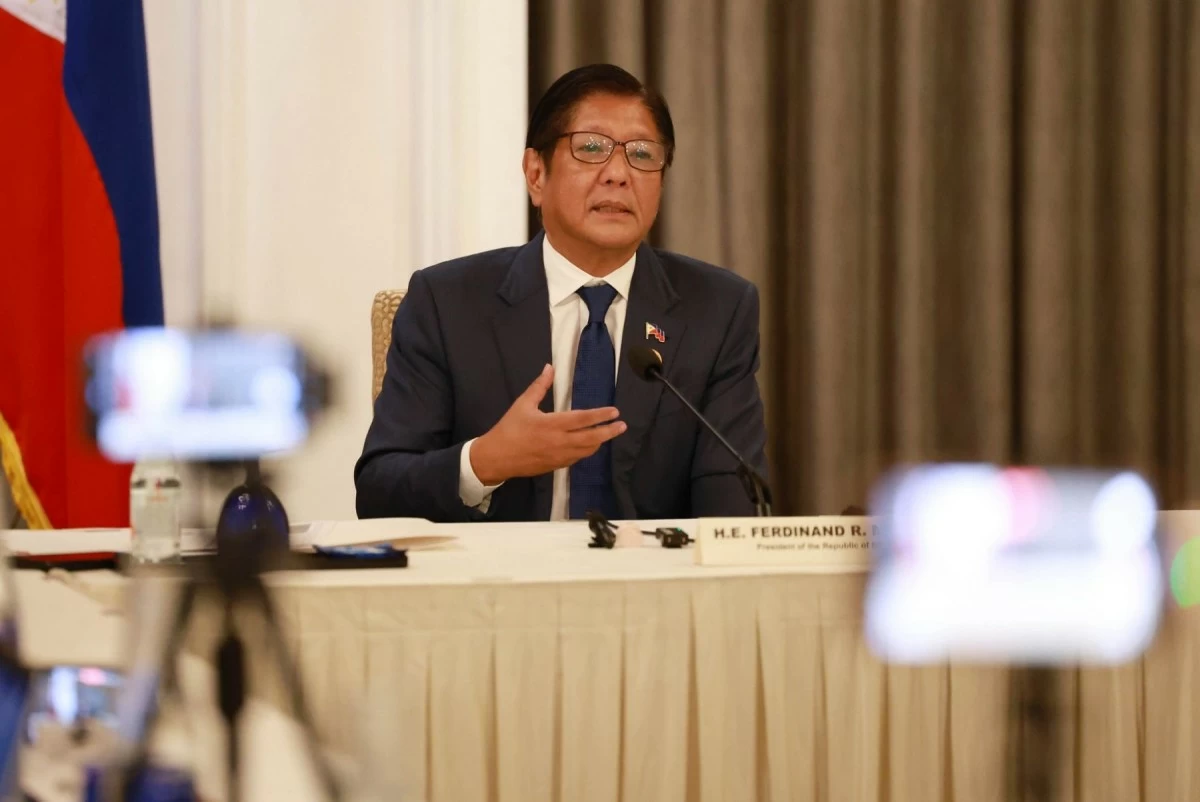
President Ferdinand 'Bongbong' Marcos Jr. (Photo by Mark Balmores)
Federation of Filipino Chinese Chambers of Commerce and Industry Inc. (FFCCCII) President Victor Lim stated that the government must focus on stringent reforms to attract foreign direct investments (FDIs).
In a report by the United Nations Conference on Trade and Development (UNCTAD), the Philippines was found to lag behind its peers in the Association of Southeast Asian Nations (ASEAN).
Last year, the country saw $8.94 billion in FDI net inflows, only the sixth highest among the 10 countries belonging to ASEAN.
Lim, who heads the prominent Filipino Chinese business group comprising over 170 business and trade associations, said there should also be a focus on improving tourism arrivals by addressing concerns in peace and order, alongside the improvement of infrastructure systems.
For Financial Executives Institute of the Philippines (FINEX) President EJ Qua Hiansen, he said the administration should have a close eye on the country’s increasing fiscal deficit, with the budget shortfall reaching ₱523.9 billion as of end-May.
He also sounded the alarm amid the rise in public debt from ₱14.62 trillion at end‑2023 to the record-high ₱16.75 trillion by the end of April, alongside the debt-to-gross domestic product (GDP) ratio which stands at 62 percent.
With this, Qua Hiansen is urging the government to consult more stakeholders in the development of the country’s annual budgets.
In February of this year, FINEX joined the Makati Business Club (MBC) and other influential business organizations in appealing to Marcos to make the budget process more transparent.
The groups, in particular, questioned the allocations for aid programs in the 2025 national budget, which reduced allocations for projects covering healthcare, social services, and education.
As the incoming new slate of lawmakers prepares to deliberate on next year’s budget, President Marcos has since vowed to keep an eye on the process, particularly with the highly controversial “adjustments” during bicameral conference committee deliberations.
Responsive leadership
Business groups are optimistic that reforms to further strengthen the economy will be seen in the last three years of Marcos’ presidency, given his close collaboration with the private sector.
MBC Executive Director Rafael Ongpin explained that unlike the administration of former president Rodrigo Duterte, who is currently in The Hague to face his crimes against humanity case, the current administration is more responsive.
“The private sector had a very contentious time in the Duterte administration. And this [Marcos administration] is really much, much better,” he told Manila Bulletin.
FFCCCII’s Lim specifically emphasized the establishment of the Private Sector Advisory Council (PSAC), which serves as an advisory council to the President, as a transformational bridge between the private and public sectors.
“The President and his economic team have been actively engaging with business leaders through PSAC and through other channels as well,” he said.
In the same manner, Qua Hiansen hailed the creation of the Office of the Special Assistant to the President for Investment and Economic Affairs (OSAPIEA), headed by Secretary Frederick Go, for fostering “greater collaboration and alignment with the private sector.”
In terms of Cabinet members that are close to the heart of the private sector, both MBC and FINEX mentioned Department of Budget and Management (DBM) Secretary Amenah F. Pangandaman among the best performers of the administration.
Pangandaman earned the praise of the private sector over her advocacy in championing the enactment of the long-languishing freedom of information (FOI) bill.
Moving forward
FOI, which aims to address corruption and government inefficiency through transparency, has long been advocated for by the country’s business groups.
With the upcoming start of the 20th Congress, MBC remains upbeat that the bill will finally get its long-awaited enactment, especially with support from Pangandaman.
Apart from the FOI bill, the group is calling for the strict implementation of three vital measures aimed at economic reform, which are nearing approval by the President.
During the final session week of the 19th Congress, the House of Representatives approved the Right-of-Way Act and the Foreign Investors’ Long-Term Lease Act, as well as the bill proposing the E-Governance Act.
“MBC advocates for improvements in governance, infrastructure, and transparency as key drivers to attract more investors, thereby creating more jobs. We believe that these reforms are aligned with these advocacies,” it said in a previous statement.
FFCCCII, meanwhile, wants the next Congress to also prioritize the proposed National Land Use Act, amendments to the Build-Operate-and-Transfer (BOT) Act, besides measures strengthening the Anti-Red Tape Authority (ARTA) and fine-tuning of tax incentives under CREATE MORE.
Lim added that legislators could look into bills that would strengthen the country’s energy sector, given the country’s potential to be a leader in green manufacturing.
On the other hand, Qua Hiansen noted that further support to the education sector is crucial to make future graduates more competitive on the global stage.
Qua Hiansen further stated that improvements to the agriculture sector and capital markets are necessary to have a more robust economy.
According to Lim, the Marcos administration has built a strong foundation for the next three years. He asserted that “now is the time for bold execution.”
“The private sector stands ready to partner with the government to ensure sustainable, inclusive and globally competitive Philippine economic development,” he added.